



Refugee families face hardship during Ramadan due to cuts to assistance
Refugee families face hardship during Ramadan due to cuts to assistance

Jasim Shareef sits in a small room inside an unfinished school building where he and other vulnerable refugee families live.
From the outside, the building looks abandoned, and its construction seemingly halted midway. Large windows are boarded with wooden planks, with only a few square-shaped slits allowing light to filter through. The contrast between this derelict building and the neatly maintained houses near each with a small yard shaded by palm trees—is striking.
At the side entrance, 59-year-old Jasim Shareef, a Syrian refugee, stands waiting to welcome us. He leads us inside the deserted school, where the laughter of his nephews and nieces blends with the chirping of the birds that have made the building their nesting place. Jasim and his family of nineteen moved here a year ago, sharing this space with three families in similar circumstances.
“We couldn’t afford to pay the rent anymore in the house where we were staying, so we had to move,” says Jasim, sitting in his room furnished with couches and thick covers.
The walls are decorated with two Bozoks—traditional Kurdish musical instruments—alongside the Holy Quran and two clocks. One of them has stopped. “We are here with the authorities’ permission. They know our situation is dire and allowed us to live inside this abandoned building.”
Back in Syria, Jasim was a musician, performing at weddings and major events and earning a living through his art. He misses those days deeply. When he was forced to flee his hometown in north-east Syria, he set his talent aside to focus on supporting his family.
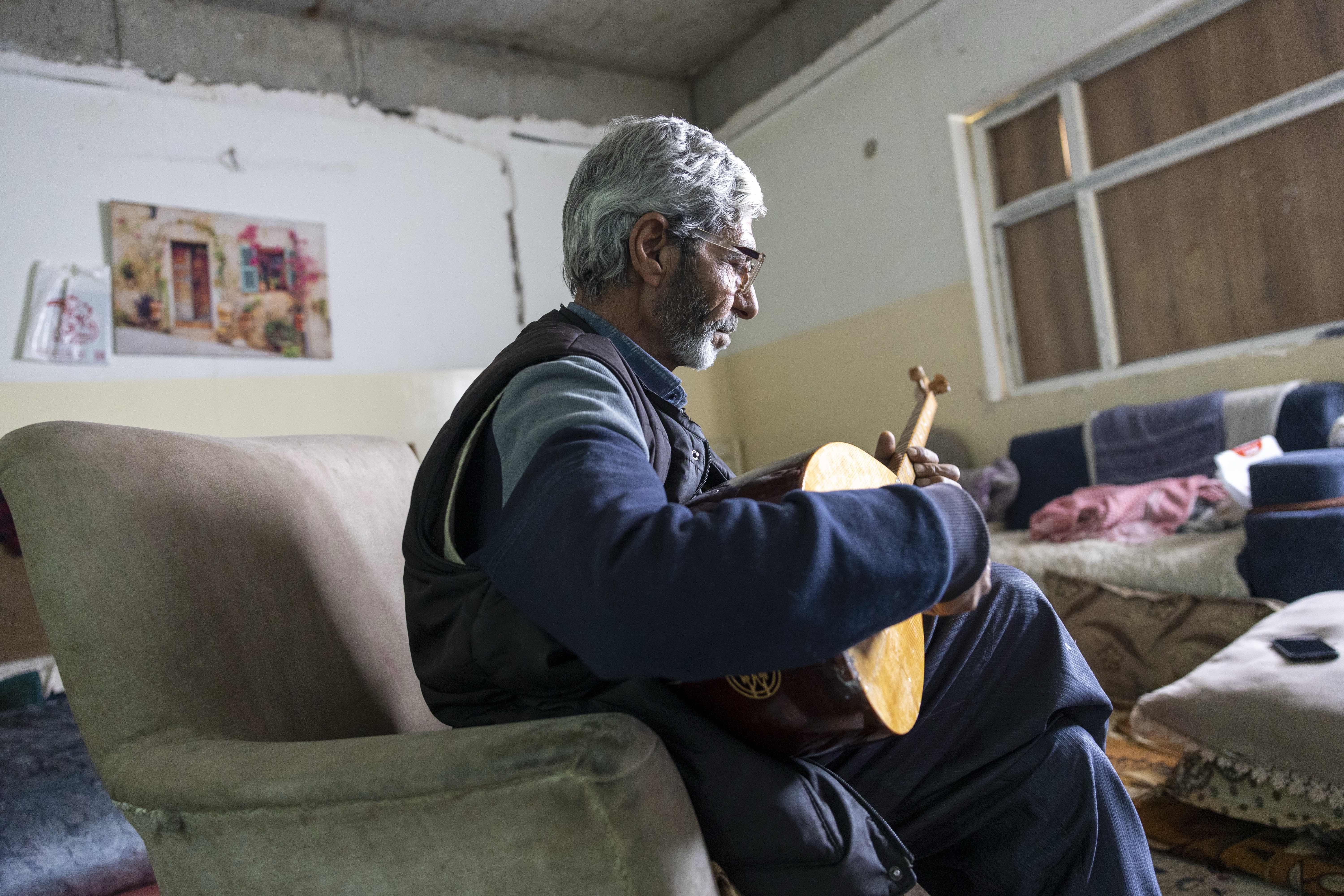
Jasim told us he plays the Bozok to escape the harsh realities around him and the feeling of poverty, finding brief moments of peace through music..
“We arrived in the Kurdistan Region in 2012. It was me, my wife, and our children,” he recalls. His wife passed away three months ago. A single photograph of her— sitting beside Jasim and one of their sons—is all that remains. Now, his children care for him while also supporting their own families. But the income they earn from the daily labour jobs they manage to find is far from enough to sustain both their father and their households.
Jasim and his wife were among the recipients of UNHCR’s cash assistance until their support was discontinued seven months ago due to UNHCR’s funding limitations. For this elderly couple, both facing health issues, cash assistance had been a lifeline. “We used the assistance wisely, mostly to cover our health and household bills,” he explains.
“I am 59 years old and ill; for me, finding work is difficult. I avoid heavy work that could further affect my already fragile health. Now that the assistance has completely stopped, our life has become very difficult” he says.
Now a widower with no cash assistance to rely on, Jasim finds this month of Ramadan harsher than ever. “I am grateful to witness another Ramadan, but this year feels different. I currently have no income, and I’m struggling to provide iftar and suhoor for my children.”
For refugees like Jasim, whose vulnerabilities prevent them from earning an income, UNHCR’s cash assistance was often the only protection against harmful coping mechanisms, such as taking on debt or reducing the amount of food they consume. Over 5,500 of the most vulnerable refugee families in Iraq were receiving cash assistance from UNHCR in 2025. In 2026, UNHCR has had to completely pause the programme due to a lack of funding, impacting many families like Jasim’s.
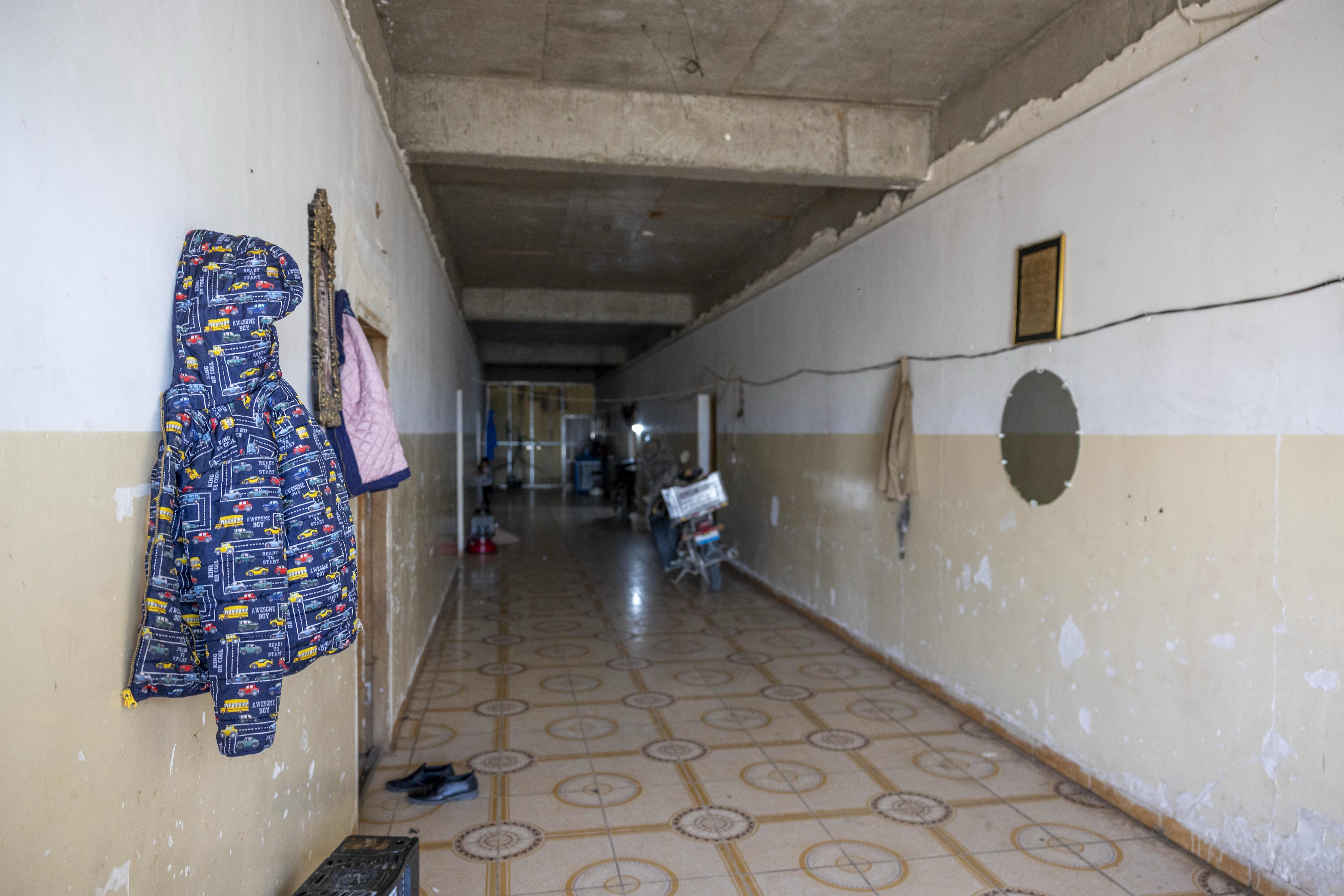
The corridors of an unfinished school building where Jasim's family and other vulnerable refugee families live.
During Ramadan, Jasmin’s situation has become even more challenging: a month traditionally centered on family gatherings after long days of fasting becomes a period of added emotional and financial strain, as they struggle to provide even the basics for themselves and their families.
“The suspension of cash assistance has deeply affected poor families like mine. We have nowhere to get money from” says Jasim “I hope the assistance will resume so that poor people like me can live a normal life again and live with dignity.
Lilly Carlisle contributed reporting to this story.


