



How digital learning is strengthening education in Dadaab refugee camps
How digital learning is strengthening education in Dadaab refugee camps

Digital learning in action as students in Dadaab refugee camps use tablets donated by Vodafone Foundation
In a classroom in the Dadaab refugee camps in Garissa County, a biology lesson unfolds on a projected screen rather than a chalkboard. Students use tablets to explore animated diagrams, respond to questions in real time and work in small groups before submitting their answers digitally. The approach encourages participation and collaboration, changing how lessons are delivered and received.
This shift reflects more than a decade of sustained investment in technology-enabled education. Since 2013, support from Vodafone Foundation has helped introduce digital learning across schools in Dadaab, creating shared classrooms for refugee and host community students and strengthening the quality of education.
For Maryan Bakar, a refugee secondary school student, access to technology has reshaped her learning experience.
"Before, learning depended on one textbook shared by many students," she says. "Now we research, revise and understand lessons better. Learning feels more engaging, and I am more confident about my future."
Timothy Mumo, a Kenyan student from the host community, says digital tools have helped him participate more actively and independently.
“Using a tablet makes me feel capable,” he explains. “I can search for information, prepare presentations and contribute more confidently in class. It has changed how I see myself as a learner.”
Studying side by side, Maryan and Timothy share the same digital tools and learning environment. This shared experience supports collaboration between refugee and host community students, while helping learners build digital skills that are increasingly relevant beyond school.
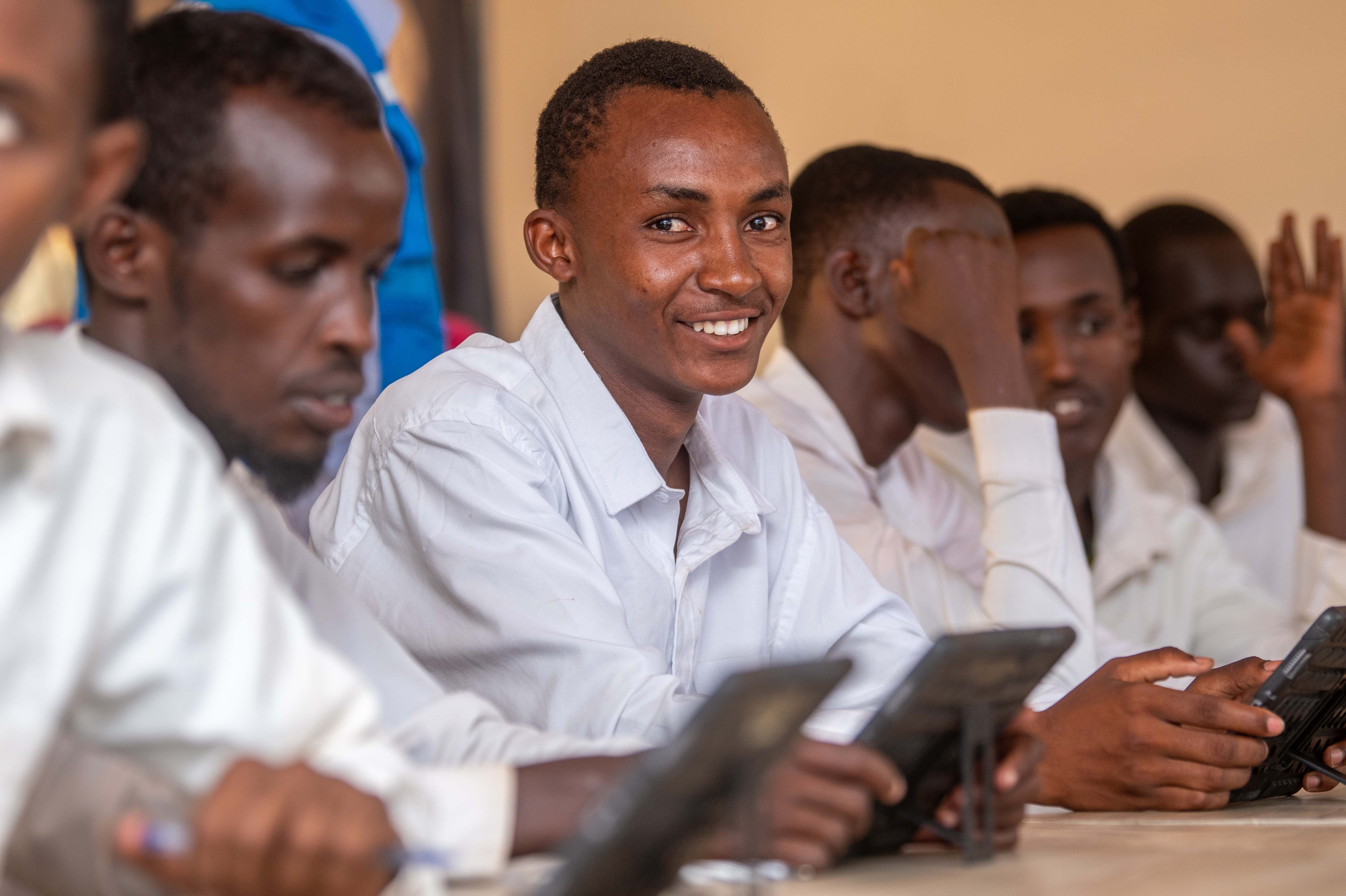
With access to digital tools, Timothy is building essential skills as he works toward his dream of becoming a lawyer.
Across primary and secondary schools in Dadaab, nine Instant Network Schools (INS) centres provide access to internet-enabled tablets, digital learning content, interactive tools and online reference materials. Lessons extend beyond the classroom wall, encouraging curiosity, independent learning and critical thinking.
Teachers and coaches supporting the programme say the difference is evident. An INS coach working in Dadaab notes that technology has strengthened both teaching and learning.
“Digital tools allow us to make lessons more interactive and adapt to different learning levels,” the coach says. “Students are more engaged, and we can better support those who need additional attention.”
According to Walter Barongo, INS Programme Manager at UNHCR Sub-Office Dadaab, the long-term nature of the initiative has been central to its impact.
“Since the start of the programme, we have seen improvements in enrolment and performance,” he says. “Support from Vodafone Foundation has helped strengthen learning outcomes while equipping students with digital skills that remain relevant beyond the classroom.”
He adds that digital learning is also opening pathways beyond education.
“Some refugee and host community youth are already using the skills they gained in school to access online freelance work,” he explains. “They are earning income, gaining independence and seeing opportunities beyond traditional employment.”
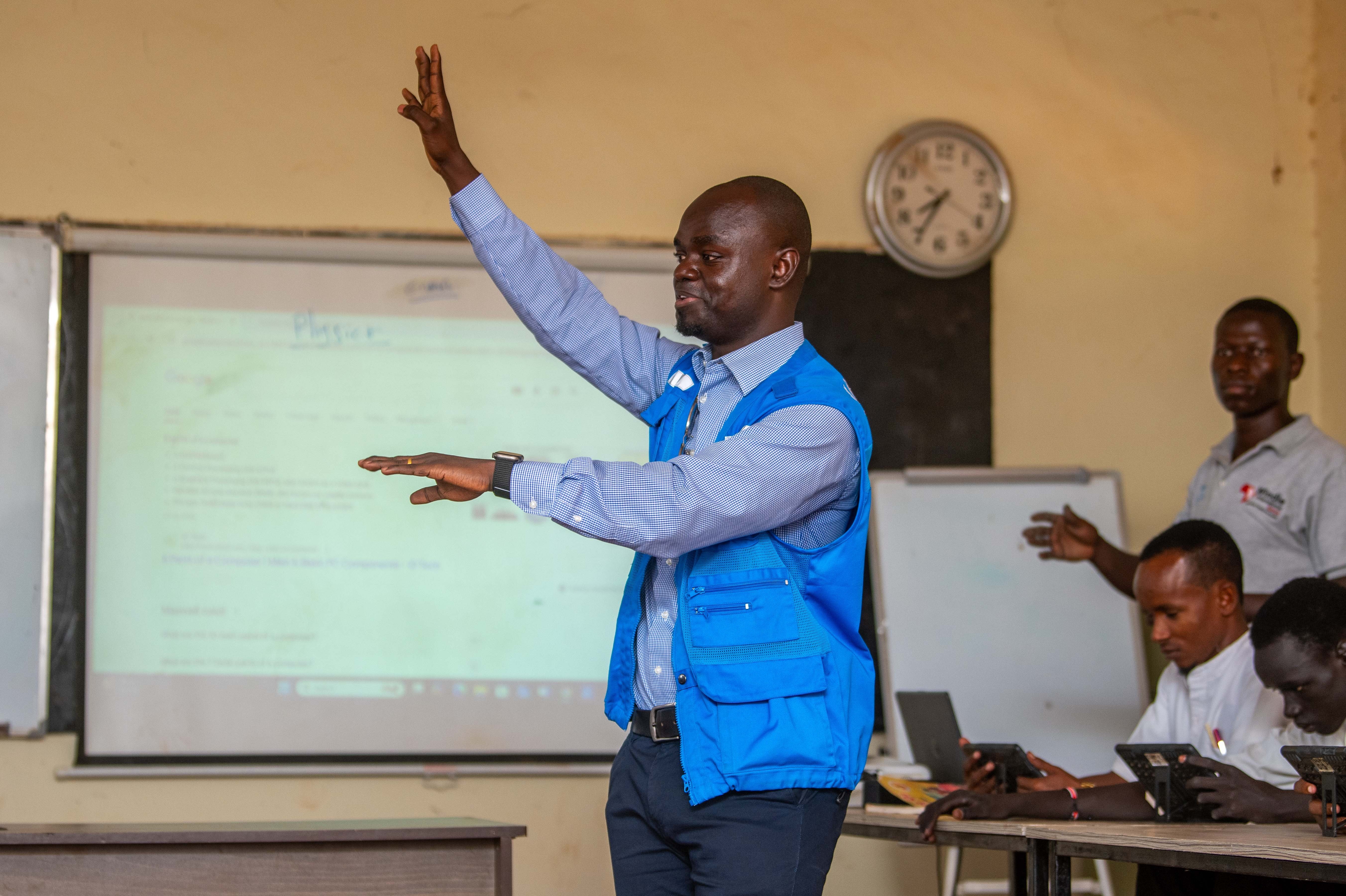
Walter, INS Program Manager at UNHCR Sub-Office Dadaab, engages with students during a computer class at Towfiq Secondary School in Dadaab.
For students in Dadaab, the impact goes beyond academic outcomes. Exposure to digital learning is helping them build confidence, independence and skills that support further education, employment and life beyond the camps.
Established in 1991, the Dadaab refugee camps have grown into one of the world’s largest and most protracted refugee settings, currently hosting more than 406,000 people across approximately 78,000 households. Education remains a critical priority, with more than 46,800 learners enrolled in 30 schools managed by UNHCR and its partners. These schools serve both refugee and host community children, providing structured learning opportunities that support protection, self-reliance and longer-term sustainability.


