



A journey of leadership: Caroline van Buren concludes her UNHCR service
A journey of leadership: Caroline van Buren concludes her UNHCR service

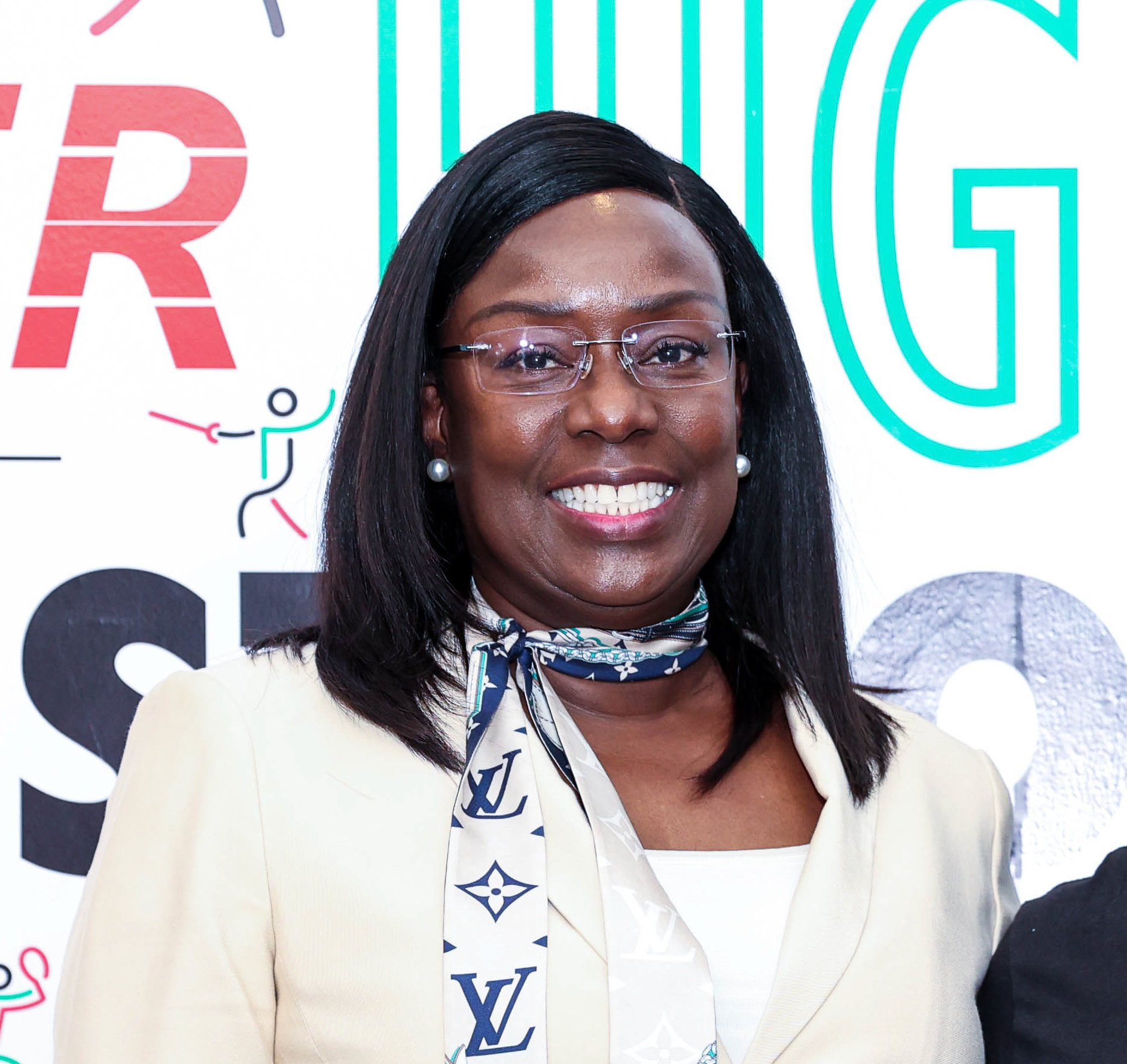
Caroline Van Buren
Caroline Van Buren’s journey with UNHCR, the UN Refugee Agency, is one of purpose, courage, and steadfast dedication. It began in Geneva, Switzerland where – as an intern – she was driven by conviction and a deep passion to serve. Over three decades later, that journey concludes at the helm of the Kenya operation; a career that has spanned four continents, several emergencies, and some of the most complex humanitarian contexts in the world.
From her early days in Geneva and Washington, D.C. in the United States of America, Caroline’s path soon led to the field. First, she worked in Liberia, then through the turmoil of the Former Yugoslavia, the complexities of the Democratic Republic of the Congo, and onward to operations in Malawi, Tanzania, Hungary, Slovenia, Somalia, Afghanistan, and Kenya.
At every stage, she stood at the frontlines of forced displacement, shaping responses in environments marked by fragility and risk. Her leadership combined operational realism with principled decision-making and a deep sense of care for people forced to flee and for the colleagues who worked with and for them.
Along the way, Caroline also broadened her perspective through a loan to United Nations Department of Peacekeeping Operations (UNDPKO), serving in Sierra Leone as a human rights officer and later Liberia with the rule of law section, an opportunity that enriched her understanding of the nexus between humanitarian action and peacebuilding.
Caroline’s approach to humanitarian leadership has always been grounded in presence. She believed that effective protection begins with proximity: being close to communities and colleagues, listening, and responding with empathy and clarity. This principle guided her through defining moments in her career. In 2015, as Europe faced an unprecedented influx of refugees from Syria, Caroline played a pivotal role in UNHCR’s response. As Deputy Regional Representative for Protection in Hungary and later Senior Emergency Coordinator in Slovenia, she anticipated emerging pressures and acted decisively deploying teams to critical border areas, strengthening reception systems, and coordinating assistance with authorities and partners. For these efforts, UNHCR in Slovenia received a bronze medal from the Slovenian Border Police, a testament to her impact.
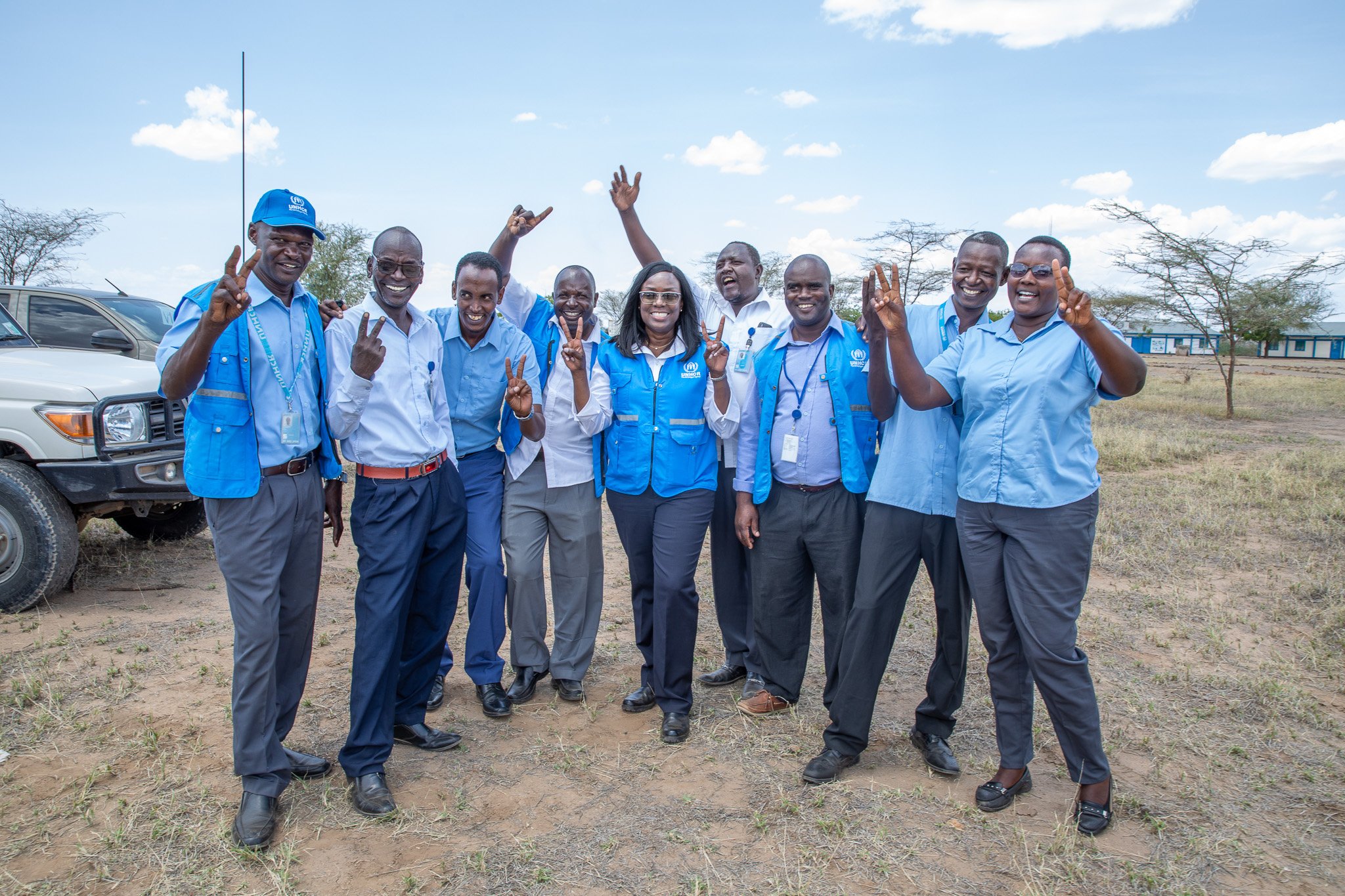
Caroline with the drivers in Kakuma refugee camp, Kenya while on mission
Her leadership in Somalia was equally transformative. Understanding that protection cannot be delivered from a distance, Caroline oversaw the relocation of UNHCR’s operations from Kenya back into Somalia. Under her guidance, UNHCR re-established its base in Mogadishu and expanded to multiple field locations, bringing teams closer to displacement-affected communities and supporting voluntary repatriation efforts from Kenya.
In Afghanistan, during the seismic shifts of 2021, Caroline decided to remain in-country. Her presence ensured continuity of protection activities and reassurance for colleagues at a time of profound uncertainty. She stood as a voice for the people we work with and for, when silence might have been easier.
Reflecting on one of the defining moments of her career, Caroline shares, “in Afghanistan, I decided to stay and deliver, not knowing what the consequences would be. It was extremely dangerous, but we survived. Staying mattered - for the colleagues and for the people we work with and for. When I arrived, people asked me ‘If anything happens, will you also leave?’ Everyone leaves when things become difficult, and that stayed with me when I was making the decision. Staying saved lives,” she says.
A decision that did not go unnoticed by colleagues. “Her decisions gave thousands a chance to live and tell their stories,” shares William Ejalu, Head of Sub-office Dadaab and a long-time colleague of Caroline’s. “That, to me, is the essence of humanitarian leadership. Because she stayed in Afghanistan, we felt our lives were saved.
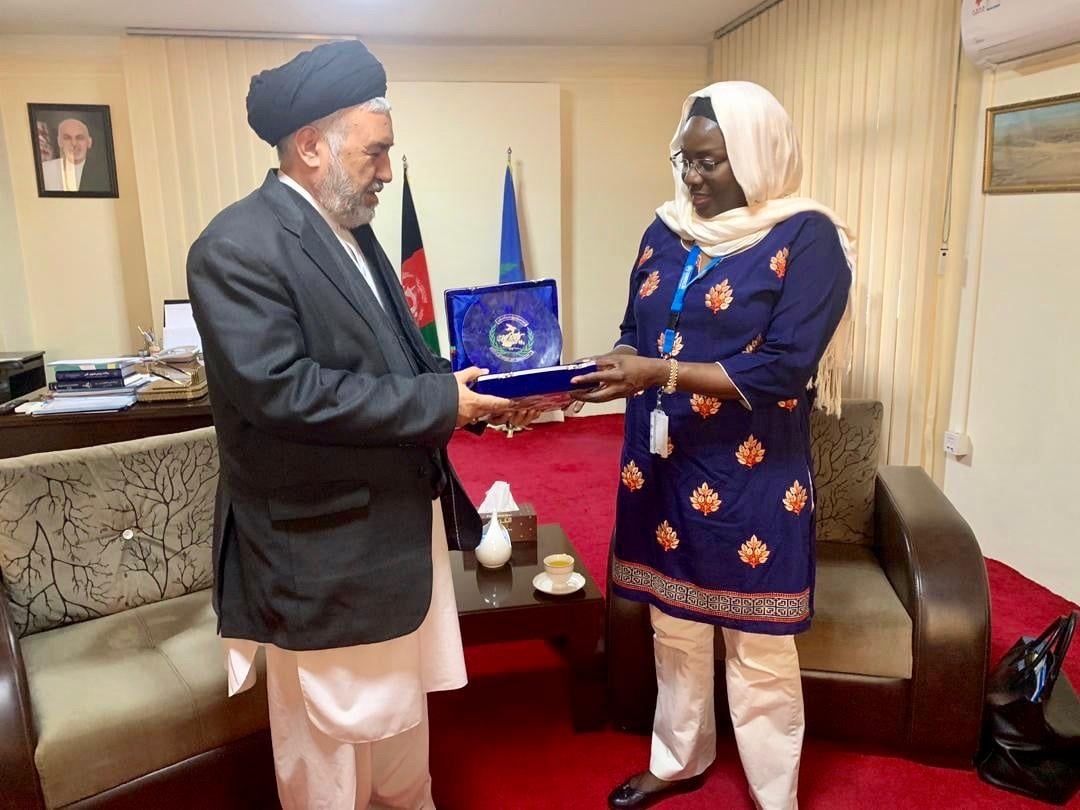
Caroline meeting with the Commissioner for Refugee Affairs in Afghanistan
In Kenya, Caroline championed partnerships that advanced protection and solutions for refugees and host communities. She guided the rollout of the Shirika Plan, fostering socio-economic inclusion and collaboration across government, development actors, and the private sector.
“Caroline’s leadership has been pivotal in ensuring UNHCR in Kenya is talked about for the right reasons. Most importantly, she pushed the needle on inclusion and integration of refugees,” notes Edward Henry Benson, Senior Risk Management Officer for UNHCR in Kenya. “And when you are managing risk in an operation as protracted and complex as Kenya, your back must be strong. Caroline is as strong as they come.”
Across decades and duty stations, colleagues speak of Caroline’s courage, professionalism, and humanity. They recall her ability to engage even the most sensitive actors. David Mulbah, a Senior Protection Officer who worked with Caroline at the height of the civil war in Liberia, recalls her bravery and passion while training the Liberian military and police on International Protection of Refugees. “Her courage and professionalism made her famous among the Liberian forces. She shaped entire operations and made the hardest spaces possible to work in. Through her efforts, protection became stronger long after she moved on,” says David.
Colleagues also praise her inclusiveness, and her mentorship of young professionals. She modeled integrity through action standing up for the people we work with and for, and creating opportunities for those around her.
“Caroline is more than what meets the eye – a visionary leader who sees potential long before others do. She values dedication, supports her staff, and leads with both principle and kindness,” adds Charity Nzomo, Senior Communications Associate for UNHCR in Kenya. “As a young woman at the start of my career, her support shaped how I work today, particularly her understanding of the importance of communications to an organization.”
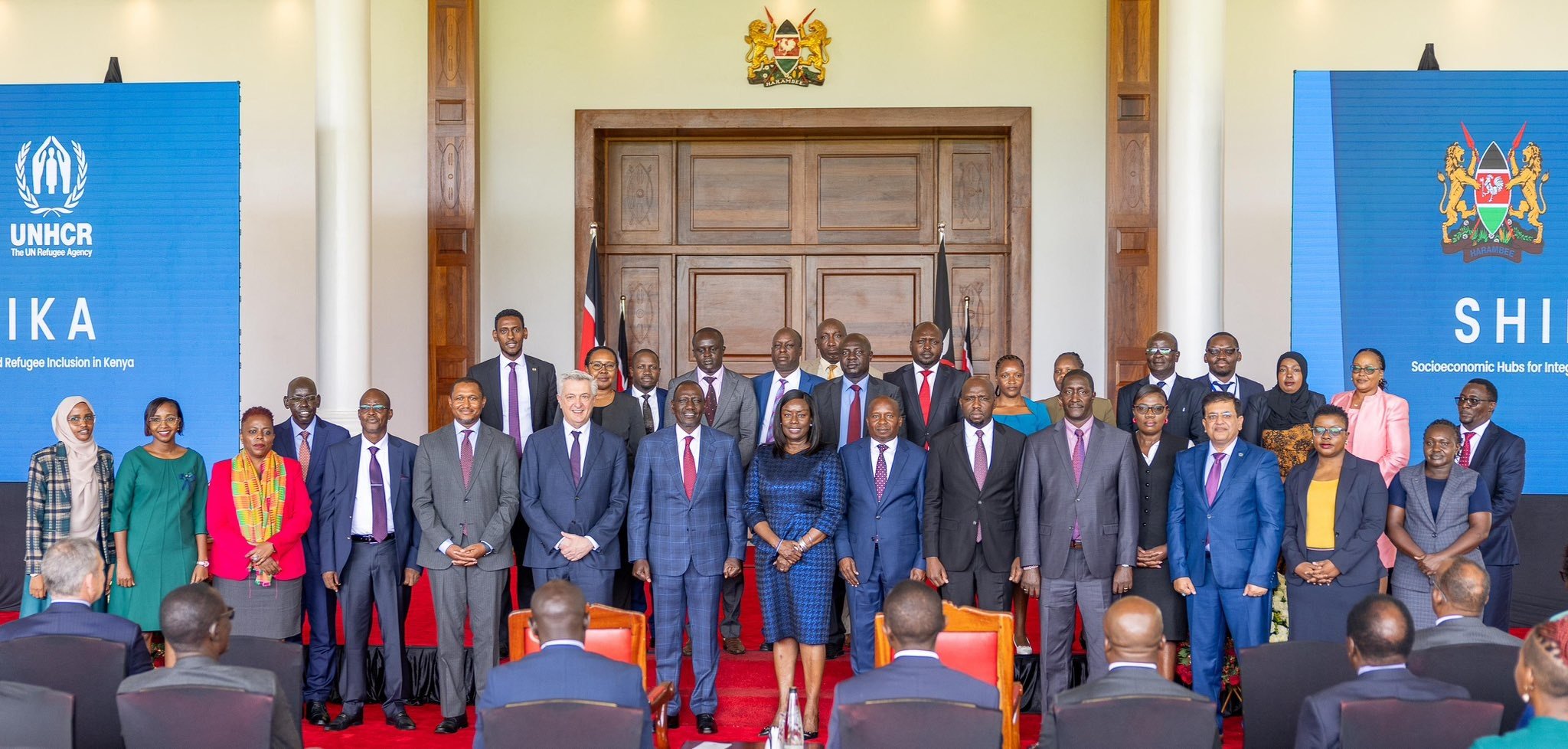
UNHCR Kenya Representative Caroline van Buren, Kenya’s President William Ruto, UN High Commissioner for Refugees Filippo Grandi, senior government officials and UNHCR colleagues during the launch of the Shirika Plan.
Looking ahead, Caroline acknowledges the difficult period facing the humanitarian sector, while underscoring the importance of partnership. “We are entering a very challenging time, but we will overcome it by working with partners to do what we cannot do alone,” she adds.
Whatever the next chapter holds, her legacy is clear: a career defined by conviction, compassion, and impact. Caroline departs with the gratitude of all those she has led and worked with and for. Her influence will continue to be felt across UNHCR’s work long after she leaves.


