



Telling the Untold - Aden Derow’s Mission to Give Dadaab a Voice
Telling the Untold - Aden Derow’s Mission to Give Dadaab a Voice

Aden Derow with his camera and tripod on his way to document about life in the camp.
Aden Darow walks through a dusty street in Dadaab, his trusty camera in hand. He has just wrapped up a photo session in the camp, which he has called home for the past 30 years.
Born to Somali refugee parents who fled conflict more than three decades ago, Aden has never seen Somalia, the land his family once called home. Nor has he stepped beyond the borders of Kenya, where his refugee status limits movement, opportunity, and dreams.
But through his lens, he has seen a world of endless opportunities.
“I have always wanted to tell the story of Dadaab myself. I want the world to see it the way I do,"

Aden Derow takes a photo with his camera in Dadaab refugee camp.
His journey into storytelling was not born of privilege but sacrifice. His mother, determined that her son would not fall behind, once bartered sugar for school fees. She would give a few spoonfuls each day to a refugee teacher in exchange for extra lessons for Aden after school. That humble exchange, Aden says, “was the seed of everything I am today.”
He later took a basic film training course with FilmAid Kenya and after countless hours of self training using a weathered smartphone, a second-hand rented camera and a tripod, Aden started a YouTube channel called Faliyaha Dadaab, which now boasts over 18,000 subscribers, mostly refugees like him.
“I started the channel to fill a gap. I wanted to share stories of hope,” he says, seated outside a corrugated iron shelter, children playing in the background. “We needed a voice. We needed to hear from each other.”
Through his lens, he believes the world sees more than need. It sees dancers, mothers, footballers, poets, and engineers in waiting.
But the stories have taken a darker turn. The current funding situation means lesser opportunities for refugees and reduced services from agencies operating in the camp.

Aden Derow poses for a photo with his family
“Funding cuts are biting deep. There is insufficient water in the camps. Health services are overstretched. Schools lack sufficient books, space, and teachers. A camp that once held cautious optimism now hangs in the balance,” says William Ejalu, Head of UNHCR Dadaab .
Aden agrees that the situation is precarious but he is undeterred.
“Hope is being replaced by uncertainty, but I am capturing it all, not to scare people but to remind them of our human spirit which refuses to dim even in exile,” he explains. “We are more than statistics. We were born here, we might die here but we deserve to be seen.”
His children often follow him as he records. Sometimes they help set up the tripod and sometimes they just watch. He often wonders what future he can offer them.
“If I don’t film, who will? I am doing this for my children. My future might not be certain but theirs shouldn’t be,”
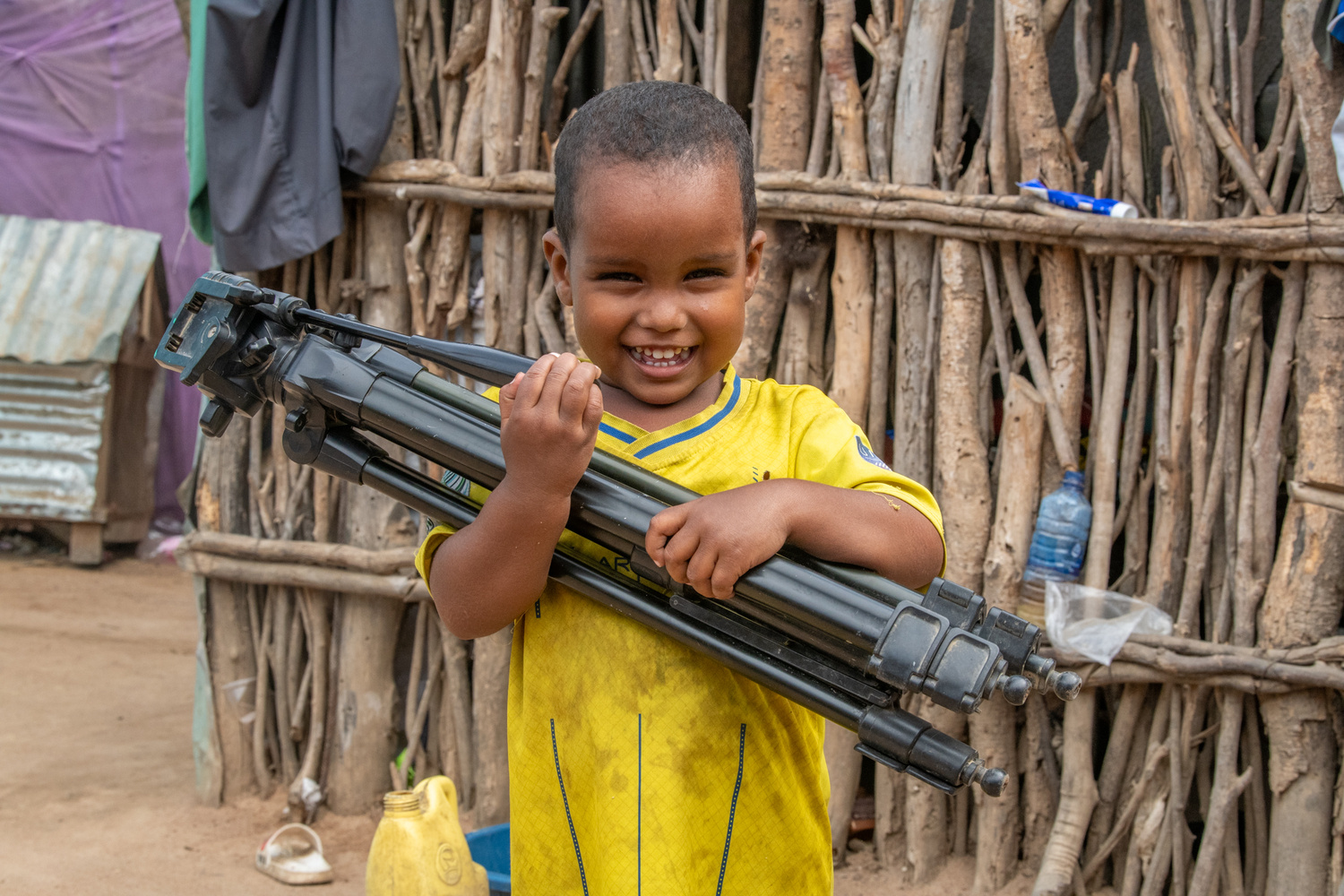
Aden Derow's son holds his father's tripod with pride
Aden documents everything from food shortages and broken water taps to cultural resilience, poetry, and children’s laughter.
“This is not just a camp. It is our home, our history, our identity. We need the world to remember us not with pity, but with purpose.”

