



“We thought there would be enough food.”
“We thought there would be enough food.”

When hundreds of refugees arrive each month in Kakuma, many hope that safety will also mean stability - a place where hunger no longer defines each day. Others flee precisely because of hunger, believing that in Kakuma, food will be one less worry.
But after escaping war, floods and loss, many families soon discover that food itself has become scarce.
A daily struggle
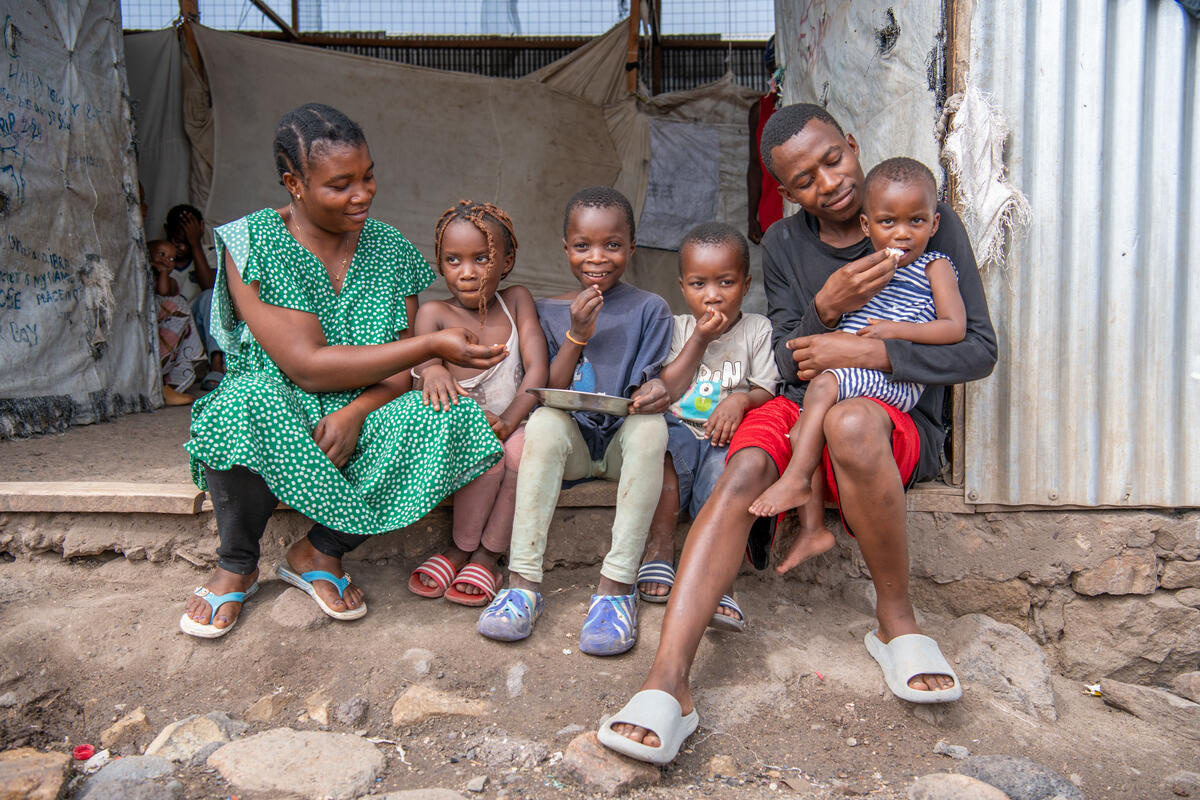
Twenty-seven-year-old Ramazani Delphin Mushombe fled the Democratic Republic of the Congo with his wife, Apoline and their five children after armed men attacked their home. They walked for days, hoping Kakuma would offer peace and enough to eat.
“I thought we would finally have enough food,” says Ramazani. “But we only get two meals a day - the same food - and sometimes not enough.”
Apoline tries to say optimistic.
“At least our children go to school,” she says. “That helps them forget the hunger for a while.”
In Kakuma and Kalobeyei, the School Meals Programme is implemented by the Ministry of Education through the National Council for Nomadic Education in Kenya (NACONEK), with support from the World Bank, in collaboration with UNHCR, WFP and education partners. The initiative ensures that children in all 27 primary schools receive daily hot meals - helping them stay focused in class and encouraging school attendance.
Finding ways to cope
Nearby, 45-year-old tailor Muhigirwa Balyahamwabo, also from eastern DRC, faces the same challenge. He fled violence twice - first to Uganda, then to Kenya - arriving in Kakuma with eight children and a single sewing machine.
“The little money I make from sewing helps us buy soap and a bit of food,” he says. “But the food we get doesn’t last long.”

“The water took everything”
From South Sudan, 85-year-old Piny Kuony and his wife Nyayok Lam fled to Kakuma after floods destroyed their home and crops.
“The water took everything,” says Nyayok. “We came here hoping for food, but we still struggle.”

Hope amid shortages
Across Kakuma, the story is the same: families have found safety, but not yet stability. Without sufficient support, food insecurity risks eroding that sense of safety, forcing families into difficult choices.
Despite declining global funding, UNHCR and partners continue to provide protection, food assistance, healthcare, education and water to families who have lost everything.
Kakuma’s refugees have escaped conflict - but they still need food to rebuild their lives. With more support, families like Ramazani’s, Muhigirwa’s and Piny’s can find not only safety, but the dignity of a full meal.


