



Stitching a new future: How a refugee mother is turning creativity into opportunity in Lebanon
Stitching a new future: How a refugee mother is turning creativity into opportunity in Lebanon

Nayrouz holds a handmade crochet bunny, one of the many designs she creates for her small home-based business.
With the support from KOICA, Nayrouz Shukri Sharmo is turning her handmade creations into a small home-based crochet business, reaching new customers online while rebuilding her confidence and independence.
“Each item has a story,” says Nayrouz, a 44 year-old Syrian refugee living in Burj Hammoud, Lebanon, as she proudly shows the crochet creations she has made by hand.
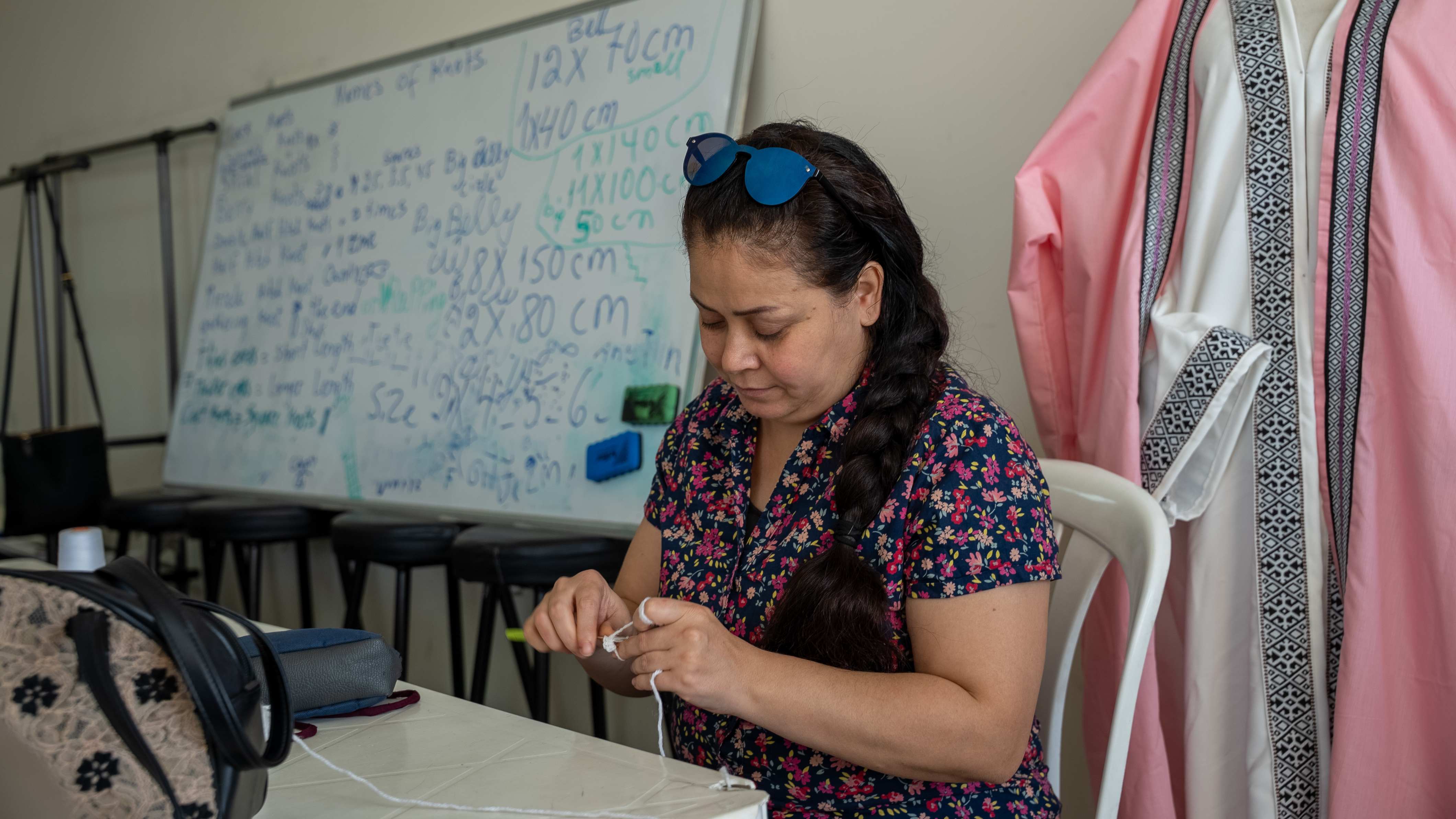
Nayrouz works on a crochet creation, putting into practice skills she developed through activities at a UNHCR-supported Community Development Centre in Burj Hammoud.
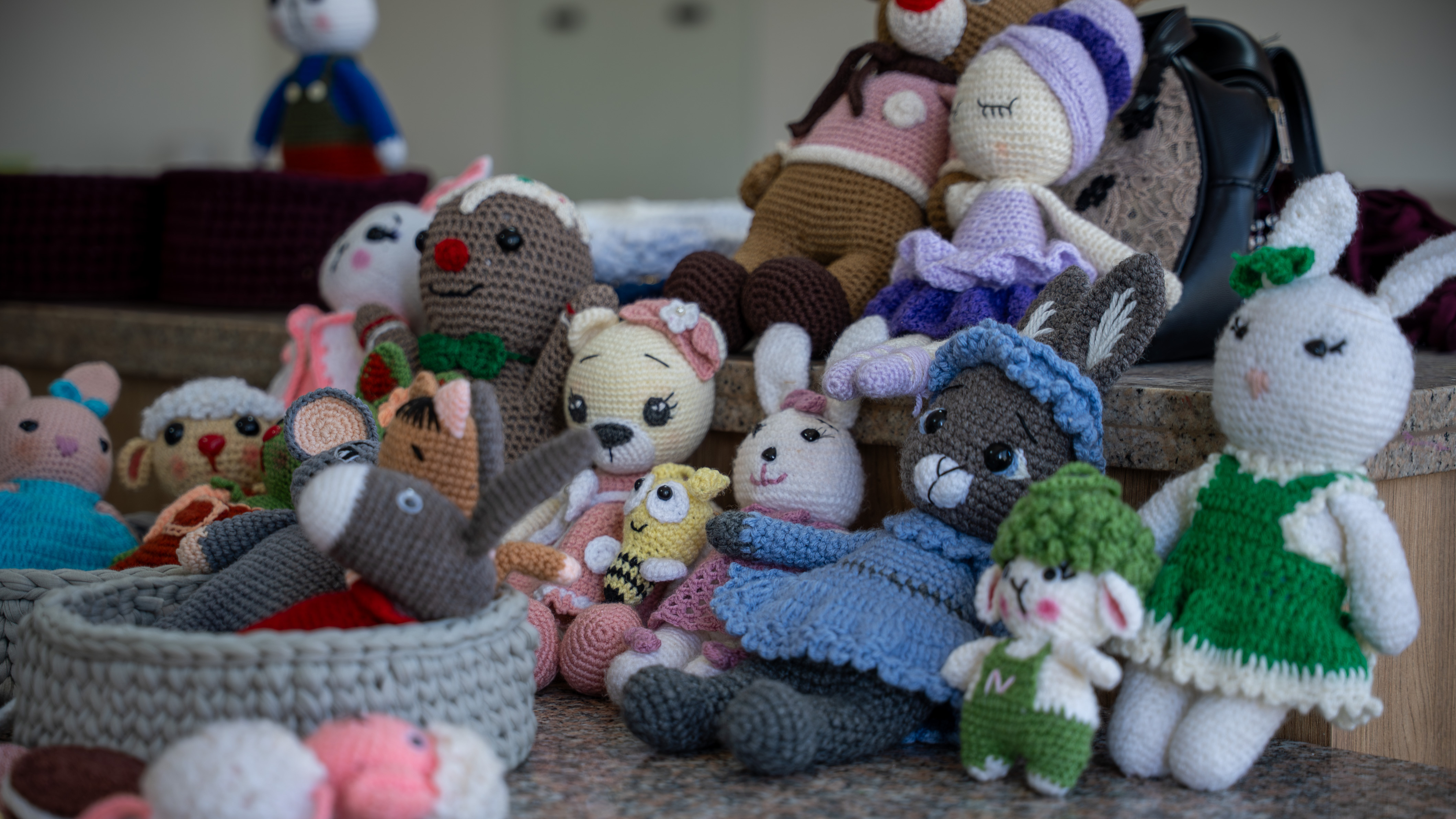
A collection of Nayrouz's handmade crochet toys, reflecting the creativity and skills she is turning into a source of income.
From small accessories and toys to baby clothes, each piece represents hours of patience and creativity. But for Nayrouz, crocheting has become more than a craft. It is a way to express her emotions, earn an income and build a better future for herself and her son.
Nayrouz's unexpected business journey began at a Community Development Centre (CDC) in Burj Hammoud, supported by UNHCR, the UN Refugee Agency, and run by its partner Caritas. Through the community-based protection programme, UNHCR provides a range of activities and services, including skills development, learning opportunities, awareness sessions and psychosocial support to refugees and members of host communities.
These efforts are supported by the Korea International Cooperation Agency (KOICA) through its multi-year partnership with UNHCR. KOICA supports community-based protection activities through community centers across Lebanon, helping promote community engagement, social cohesion and empowerment among Lebanese communities and refugees.
Discovering a new opportunity
An opportunity emerged when Nayrouz learned that her sister was attending activities at a UNHCR-supported community center. Encouraged by her sister's experience, she decided to give it a try.
She first joined English language sessions, hoping to better support her son's education. She then participated in accessories-making activities, where she developed an interest in crochet and began experimenting with patterns and designs. She started making decorative items, toys and clothing, continually looking for ways to improve her techniques.
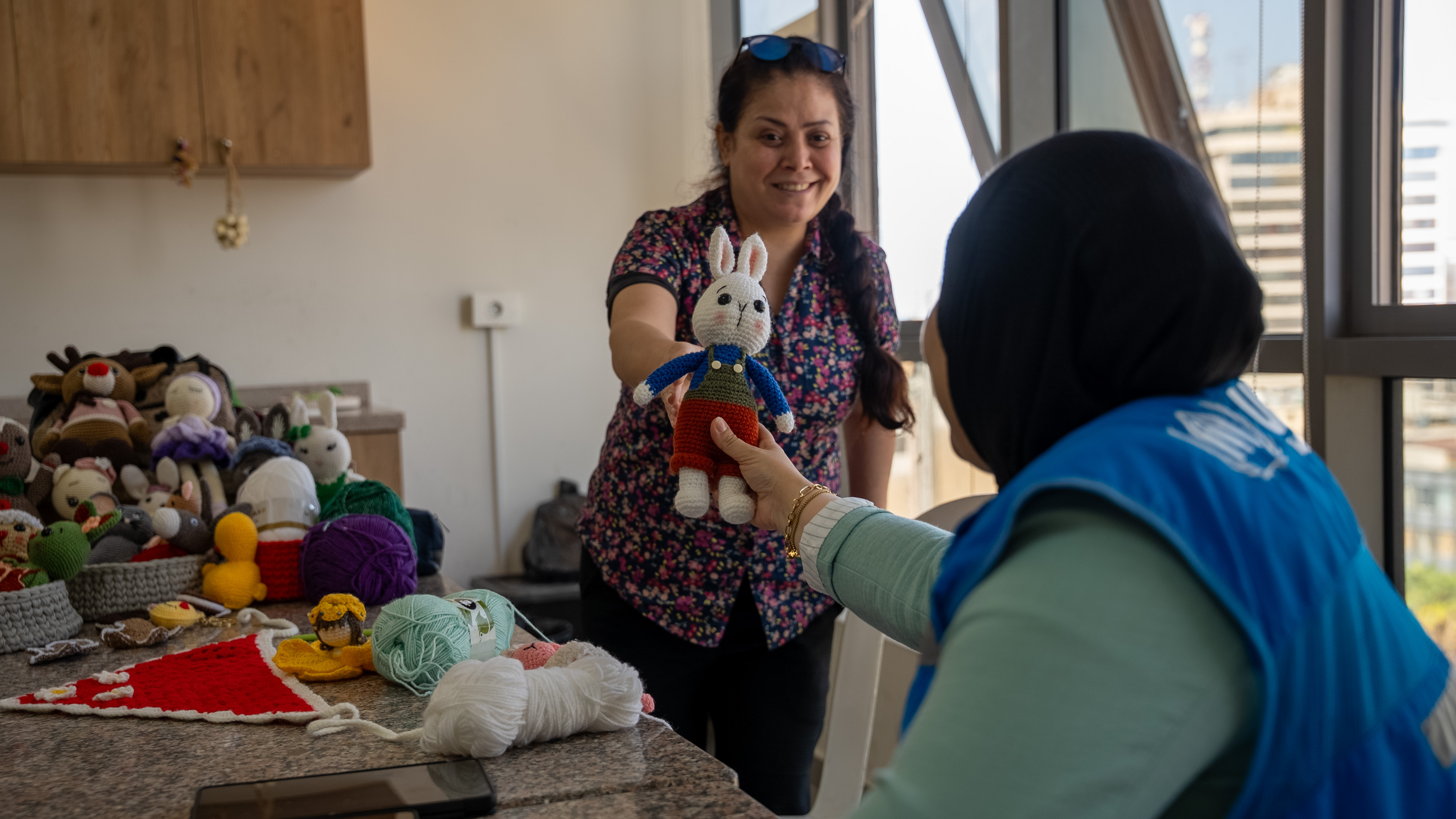
Nayrouz presents one of her handmade crochet toys, part of her growing small home-based business.
With encouragement from social workers and trainers at the community centre, Nayrouz continued honing her crochet skills, learning new techniques through online tutorials, experimenting with designs and seeking guidance at the centre. One of her creations, a handmade crochet bunny, took approximately a day and a half to complete as she carefully refined every detail. Although her family wondered why she devoted so much time to a single piece, she felt joy and empowerment in creating something entirely by hand.
From handmade creations to online customers
Nayrouz initially sold her crochet items through WhatsApp, sharing photographs with friends and producing items on request. This brought some income, but her products mainly reached people within her immediate circle.
That began to change when she participated in digital marketing training at the same community centre. Through digital marketing, her small business has begun attracting interest, including a request for approximately 50 handmade items. What started as a new skill has gradually become a way to contribute to her family's everyday expenses.
After years of struggling to find suitable employment, Nayrouz can now earn an income from her own creations, helping support herself and her son while moving towards greater independence. Her son remains her greatest motivation, giving her the strength and determination to pursue this new opportunity.
More than a source of income
Beyond its financial benefits, crochet has brought another important change to Nayrouz's life. She describes her creations as a way of expressing feelings that can be difficult to put into words.
“All the anger, stress and sadness inside me, I let it go through my work,” she explains.

Surrounded by her handmade products, Nayrouz continues to develop her crochet skills at the Community Development Centre.
“This is the place where I feel comfortable,” she says, reflecting on the support she has received. “I'm not the same person I was before.”
Nayrouz's experience illustrates how KOICA's support to UNHCR's community-based protection programme can create practical opportunities for refugees. By supporting community center activities across Lebanon, KOICA helps Lebanese and refugees develop skills, strengthen social connections and build resilience.


