



Burundi
Burundi
UNHCR's response focuses on providing assistance and protection for the forcibly displaced in the country as well as promoting refugee inclusion in the national system, enhancing their self-sufficiency, and supporting their integration.


Are you a refugee, asylum-seeker or stateless person looking for help? Visit the HELP site to find support and services from UNHCR.
Burundi hosts over 100,000 forcibly displaced people, including approximately 91,000 refugees and asylum seekers – mainly from the Democratic Republic of the Congo. Since 2017, more than 185,000 Burundian refugee returnees have been received from Tanzania, Rwanda, the DRC, Uganda, and Kenya.
Despite economic and operational challenges, the country upheld its open-door policy in 2024, welcoming nearly 4,000 new asylum seekers and facilitating the voluntary return of over 20,000 Burundian refugees. Insecurity in eastern DRC has prompted new arrivals in early 2025, while returns from Rwanda remain limited due to diplomatic tensions.
Around 40% of refugees live in urban areas, with the rest hosted in five camps in the eastern and northeastern regions. Nearly 110,000 returnees have settled in provinces such as Makamba, Ruyigi, Kirundo, and Muyinga. UNHCR’s response focuses on delivering protection and assistance while promoting inclusion in national health, education, and livelihood systems. Despite ongoing funding gaps and high needs, efforts continue to enhance self-reliance and support sustainable reintegration.
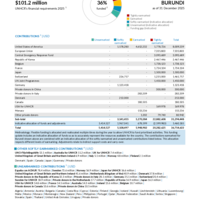
Population and financial overview
Burundi
Use the year selector to access strategy information from previous years.
Latest updates




Office contact details
For information about our operation in Burundi, please contact us through our Headquarters in Geneva, Switzerland.


