



Armed violence, Ebola spreading, and refugees returning home: Norway’s unearmarked funding to UNHCR is making a difference for people in the Democratic Republic of the Congo
Armed violence, Ebola spreading, and refugees returning home: Norway’s unearmarked funding to UNHCR is making a difference for people in the Democratic Republic of the Congo

Just outside the city of Bunia in the Ituri province, is the Kigonze displacement site located, where around 20,000 internally displaced people are currently seeking protection from the life-threatening violence in the region. People here are living in overcrowded spaces with limited access to water, health care, and sanitation. These critical conditions may contribute to an increased risk of Ebola spreading.© UNHCR
The conflict in the Democratic Republic of the Congo continues to escalate at an alarming rate, whilst Ebola spreads. The combination of these crises is endangering the lives and safety of thousands of people, making Norway’s unearmarked funding to UNHCR fundamental to the delivery of humanitarian aid.
The conflict in the eastern part of the Democratic Republic of the Congo (DRC) continues to escalate, especially in North and South Kivu. Violence, misery and insecurity are placing people in a particularly vulnerable situation, with approximately 1.3 million refugees and asylum-seekers who remain displaced in the neighboring countries of Tanzania, Zambia and Burundi in search of safety. UNHCR, together with its partners, is supporting the host countries by providing humanitarian assistance, including food, water, shelters, health care, and temporary schools for children.
Despite the unchanged security situation in the DRC, since the beginning of 2026, more than 70,000 refugees had voluntarily returned to DRC from Burundi. Together with its partners, UNHCR has supported returnees by providing them with assistance, such as information, protection, cash assistance and support for reintegration, as well as ensuring that their return is based on a voluntary and informed decision. As if the armed violence taking place isn’t enough, the spread of Ebola and the number of cases continue to rise in the DRC. The latest reports confirm 7,200 cases. Ituri, which hosts 20,000 Internally displaced people, is the most affected province.
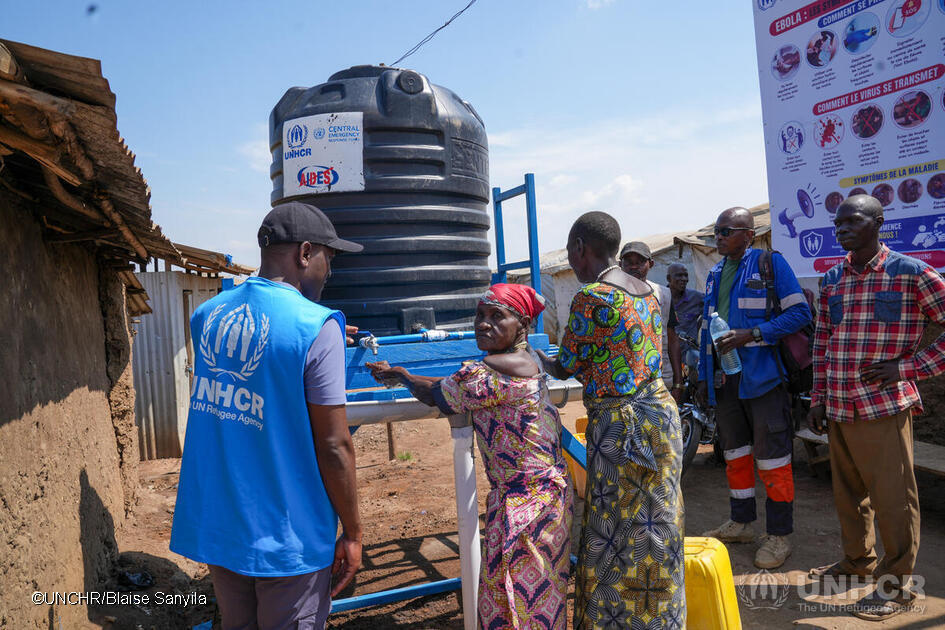
UNHCR has installed handwashing stations in Kigonze to help ensure access to safe hygiene and sanitation, raise awareness of essential hygiene practices, and reduce the risk of Ebola transmission among vulnerable communities living in challenging conditions.
Internally displaced people are the most affected and at-risk groups for Ebola, as their living conditions are characterized by overcrowded emergency shelters, limited access to water, hygiene supplies and health care, as well as high levels of mobility. Responding to Ebola has been, and continues to be, anything but a challenge-free process.
With thanks to donors like Norway, UNHCR can continue responding to needs on the ground, by supporting Government-led efforts to monitor and prevent the spread of the disease and to provide people with essential health services, water, sanitation and hygiene supplies. In addition, UNHCR, together with its partner organizations, has provided 24,784 refugees with information and awareness on how the disease can be prevented. However, the available resources to contain the spread of Ebola remain under severe pressure, making it difficult to assist with humanitarian aid, treatments, contact tracing and preventing further infections.

Congolese refugees in Burundi are voluntarily returning to the DRC under safe, ethical and informed conditions. Upon arrival, UNHCR supports them with cash assistance, reintegration in their communities of origin, documentation and protection monitoring.
With Norway’s unearmarked funding to UNHCR, it is possible, to help prevent further cases and deaths from Ebola, and to continue with assisting people in vulnerable situations with essential humanitarian supplies.


