



More than money: How UNHCR’s cash-based intervention helps preserve dignity for Huda and her children
More than money: How UNHCR’s cash-based intervention helps preserve dignity for Huda and her children

Huda, 31 years old, from rural Damascus, arrived in Jordan in 2015, at the age of 20, after fleeing Syria alone with her children, as her husband had gone missing a year earlier. She later remarried in Jordan to a survivor of war injury from Syria.
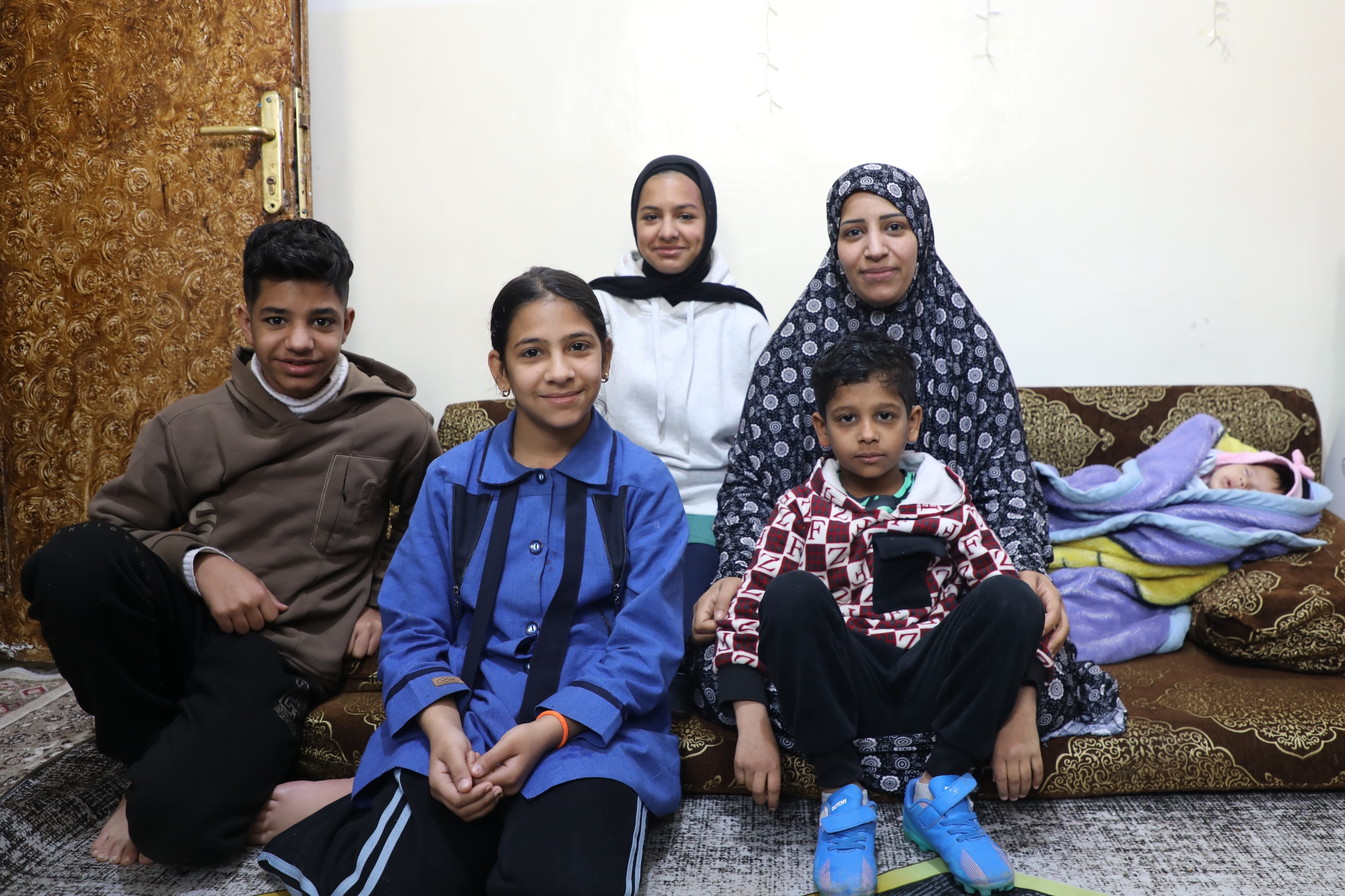
She now lives in a modest house in Amman with her five children: Rayan, 15; Ayman, 14; Mervat, 11; Ahmad, 9; and Leen, just three months old.
From uncertainty to choice
For years, Huda survived through the kindness of others. She experienced periods of unstable housing, at times staying in short-term accommodation. The help kept her alive, but it did not give her stability or dignity.
“I don’t like to receive money from people,” she says quietly. “I want to stand on my own.”
That changed at the end of 2018, when Huda began receiving monthly cash assistance through UNHCR’s cash-based intervention programme. She now receives 140 JOD (197 USD) monthly, which allows her to plan, however modestly, instead of waiting and hoping. Despite the generous support, the money is not enough for everything. She once relied on other forms of assistance to make ends meet, but since they stopped, she is left unsure how she will continue to fill the gaps.
Each month brings delicate choices, food or gas, electricity or school needs. For instance, 100 JOD (140 USD) pays her small house every month, 10 JOD (14 USD) for Ahmad’s school bus, so he can continue his education. For Leen, her baby, Huda spends around 10 JOD a week on diapers and baby formula. Her expenses do not end there, but utilities are another calculation: 5 JOD for water (7 USD), around 20 JOD for electricity (28 USD), and an average 10 JOD for gas, used both for cooking and heating.

Ensuring assistance reaches those who need it most
Behind the assistance Huda receives is a system designed to prioritize those most in need. To make sure it reaches them, UNHCR follows a careful process. After requesting assistance from UNHCR, she received an assessment visit, during which she was asked detailed questions about her living conditions, such as how she paid rent, how she bought food, and her access to services, among other questions. Staff documented her living conditions, including mold that crept along the walls of her home.
Her case was then assessed against pre‑determined vulnerability criteria. She met several: her husband being unable to work due to a war-related injury, she is the head of a female‑led household, caring for a family of five children, one of whom is under the age of five, and facing heightened risks as a Syrian woman.
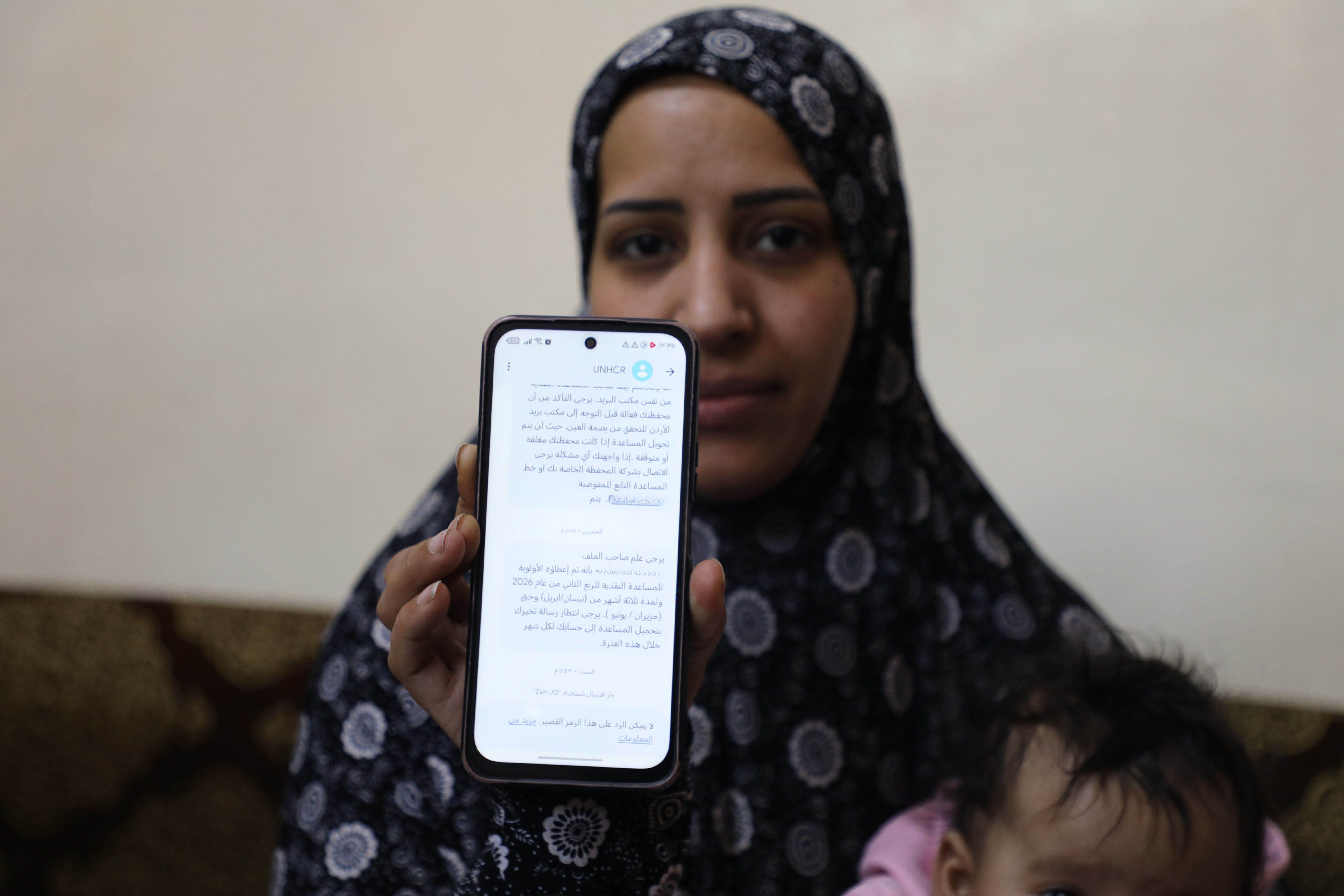
Once assistance begins, it does not simply continue unchecked. Eligibility is reviewed every 3 months. Huda receives an SMS informing her whether she will continue receiving assistance for the upcoming quarter.
Access to the cash-based intervention is also carefully controlled. Huda first verifies her identity at the post office through an iris scan. Only once this biometric verification is completed, the money is deposited into her e‑wallet ensuring that assistance is received securely and by the eligible beneficiary.

A future that depends on stability
For Huda, this assistance is more than short‑term relief, it is the fragile foundation holding everyday life together. When asked what would happen if the assistance stopped, Huda pauses. The idea seems unbearable. She cannot picture how she would manage. One thing is certain: she does not intend to return to Syria. She says instead, she would take her children out of school, and send her eldest son to work. She would also pay her utility bills every two months instead of monthly, just enough to avoid disconnection.
“My life would be miserable,” she says simply.
Huda’s dreams are small, but they are heavy with meaning.
“I want to have a roof over our heads,” she says, “and to be able to buy my children what they need, and sometimes what they want.”
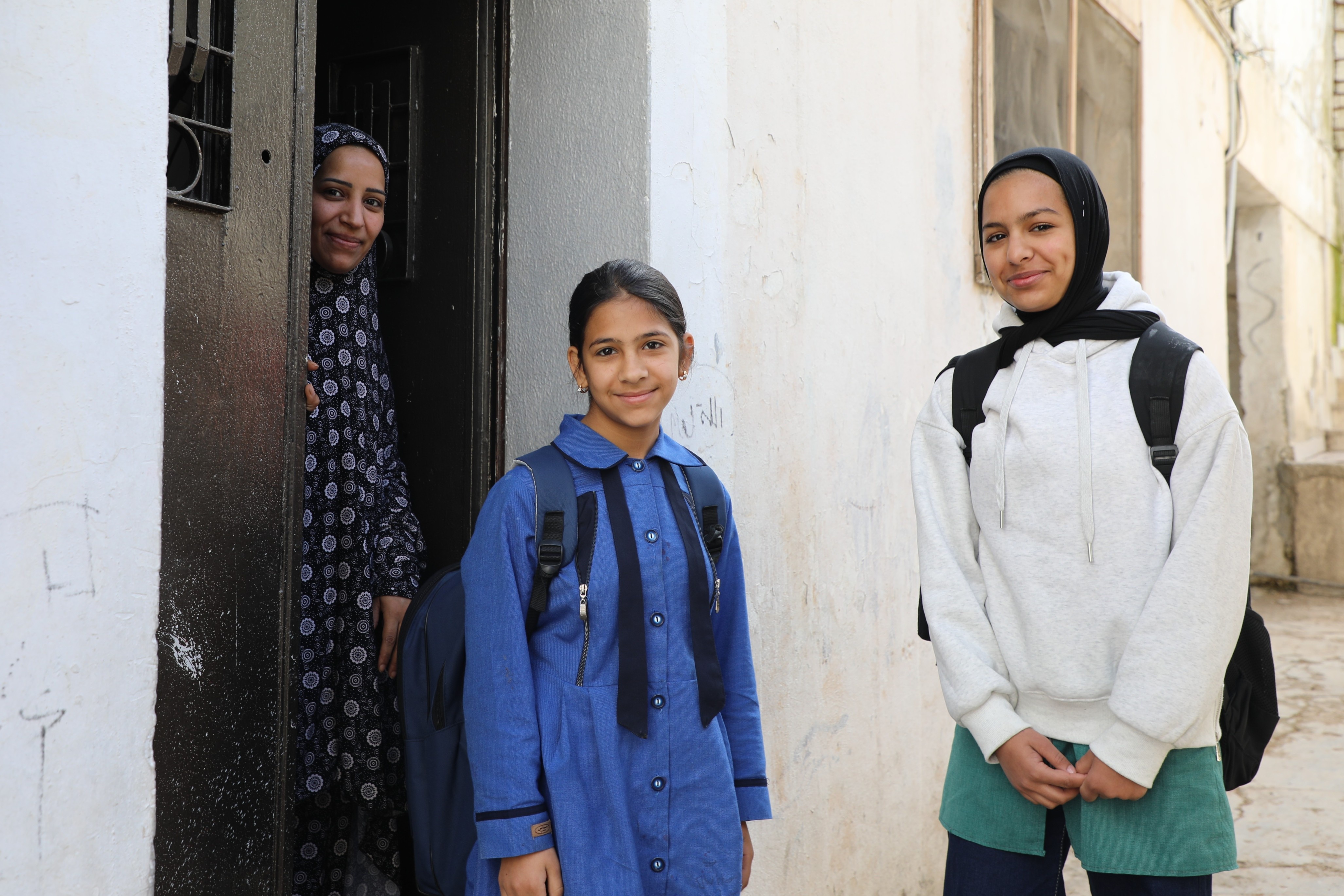
For Huda, cash assistance she receives through UNHCR’s cash-based intervention programme is not just money. It is autonomy. It is stability. It is the dignity of not having to knock on a neighbor’s door and ask to survive.
With the support of donors like the Government of Japan, cash-based intervention helps families like Huda’s keep a safe home and protect their children’s future