



Mid-Year Trends
Mid-Year Trends

Over 117 million people are forcibly displaced globally
At the end of June 2025, 117.3 million individuals worldwide remained forcibly displaced as a result of persecution, conflict, violence, human rights violations or events seriously disturbing public order.
This represents 5.9 million fewer people remaining displaced than at the end of 2024, a decline of almost 5 per cent.
This change reflects a sharp increase in the returns of refugees and internally displaced people in some of the world’s largest displacement situations, including Afghanistan, the Democratic Republic of the Congo, Sudan and Syria. However, many of the returns have occurred under adverse conditions and to areas where insecurity persists and access to basic services is lacking or severely limited, raising concerns about the sustainability of these returns.
Returns to and within 7 countries accounted for 95 per cent of all returns of forcibly displaced people during the first half of 2025:
- the Democratic Republic of the Congo (1.9 million)
- Syria (1.5 million)
- Sudan (1.2 million)
- Afghanistan (874,900)
- Ethiopia (438,100)
- Myanmar (261,500)
- Ukraine (306,300).
People forced to flee | 2015 – mid-2025
people are forcibly displaced from their homes.
This equates to 1 in every 70 people on Earth.
Sudan remains the largest displacement situation with 13.4 million refugees, asylum-seekers and IDPs.
SPOTLIGHT
Syria
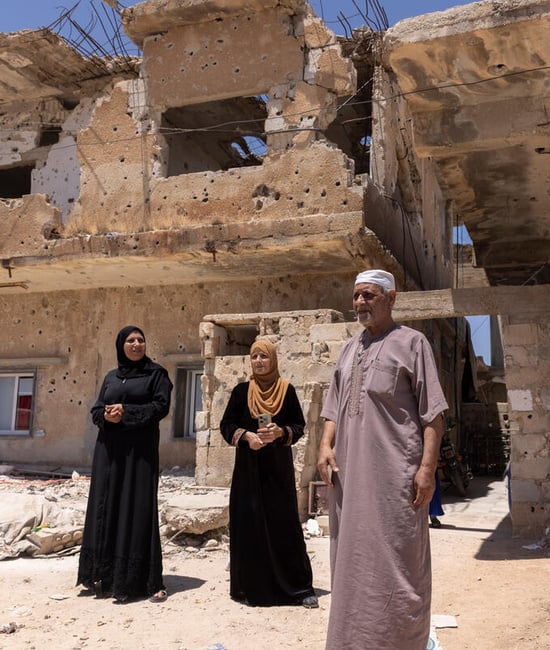
As the situation in Syria continues to transform after more than a decade of war, increasing numbers of displaced people have been returning. Between January and June 2025, nearly one million internally displaced people returned, reducing the number of IDPs remaining displaced at mid-2025 by 13 per cent to 6.5 million.
In addition, at least 526,100 Syrians also returned from abroad during the first half of this year, with the number of Syrian refugees and asylum-seekers globally at mid-2025 declining to 5.6 million.
Returns have continued to accelerate in the subsequent months, with operational data showing that by mid-September, around one million Syrians had returned home from abroad.
Refugees
The number of refugees globally fell slightly, reaching 42.5 million people by mid-2025, which is one per cent fewer than at the end of 2024, and two per cent fewer than at the end of 2023.
The global total includes 27.2 million refugees under UNHCR’s mandate, 3.3 million people in a refugee-like situation and 6.1 million other people in need of international protection, as well as 5.9 million Palestine refugees under UNRWA’s mandate.
The fall in the number of refugees was primarily because of the large number of returnees. In the first six months of this year, around 2 million refugees were estimated to have returned to their home country, a five-fold increase compared to the same period in the previous year. Over four in five of the returnees were:
- Afghans (874,800, 25-fold more than the same period in 2024)
- Syrians (526,200, 26-fold more)
- Sudanese (291,200, 77 times more).
However, similar to recent years, two-thirds of refugees and other people in need of international protection are from just five countries: Afghanistan, Syria, Sudan, Ukraine and Venezuela. The largest host countries continued to be:
- Colombia (2.8 million)
- The Islamic Republic of Iran (2.5 million)
- Germany (2.7 million)
- Türkiye (2.7 million)
- Uganda (1.9 million).
By the end of June 2025, there were 42.5 million refugees globally.
The majority of refugees – 71 per cent – reside in low- and middle-income countries.
Internally displaced people (IDPs)
Most people who are forced to flee never cross an international border, remaining displaced within their own countries. As of June 2025, 67.8 million people were estimated to remain internally displaced due to conflict or violence, 8 per cent fewer than at the end of 2024.
Sudan remained the largest internal displacement crisis, while the number of people displaced within the country decreased by 1.5 million and stood at 10 million at mid-2025.
In the first 6 months of this year, almost 5 million internally displaced people returned to their place of origin, more than 2.5 times the returns reported in the same period in 2024. Most returnees were reported in Ethiopia, Sudan, Syria and the Democratic Republic of the Congo.
In the same period, 2.9 million new internal displacements were reported worldwide due to conflict or violence. Nearly eight in ten of these displacements occurred in the Democratic Republic of the Congo, Haiti, Myanmar and South Sudan.
By mid-2025, 67.8 million people remained internally displaced within their own country.
Internally displaced people accounted for 58 per cent of all those forced to flee.
Stateless people
At mid-2025, an estimated 4.4 million people were reported to be stateless or of undetermined nationality, a slight increase from recent years. The increase of 71,400 people since the end of 2024 is mainly due to a rise in the number of Rohingya reported in Bangladesh.
However, the true number of stateless people is considered to be much higher than the reported global total. This is because under half of all countries do not report any data on statelessness to UNHCR, including several with significant known stateless populations, and some countries provide data for only a portion of the stateless population within their borders.
More than 70 per cent of the reported global total lived in only ten countries. The largest stateless population at mid-2025 remained the Rohingya from Myanmar (1.8 million).
Stateless people by country and displacement status | mid-2025

Text and media 19
Insights from UNHCR's protection monitoring exercise
In South-Eastern Europe, refugees, asylum-seekers and migrants travel along numerous, interlinked routes. The region serves as both a transit corridor for those aiming to reach other countries and as a destination in itself for those seeking international protection or better economic opportunities.
To better understand the dynamics of mixed movements and the protection risks faced by people on the move, UNHCR, together with its partners, administers protection monitoring by conducting interviews across nine countries in South-Eastern Europe.
Most respondents cited threats to their lives and insecurity as the primary reasons for leaving their countries of origin, while others identified limited access to livelihoods and basic services as driving factors. Respondents also highlighted their long journeys through multiple countries, followed by challenges upon arrival in host countries, including denial of entry and inadequate reception conditions.
Overall, findings indicate that access to legal recognition, economic opportunities and social support often outweigh the choice of a particular destination. Enhancing such support in what are currently considered as primarily transit countries could reduce the need for individuals to undertake dangerous journeys in search of better conditions elsewhere.
Image: Matin, a 20-year-old refugee from Afghanistan, at his workplace in Sarajevo, Bosnia and Herzegovina. © UNHCR/Vanja Cerimagic
Solutions
There are 5.9 million fewer people forcibly displaced at mid-2025 – the first meaningful decrease in a decade – and there are indications that this trend could continue. Yet, it is important to emphasize that once forcibly displaced people return, reintegration in their country or place of origin takes time. Lasting return requires peacebuilding, social cohesion and integration so that areas of return are genuinely stable and people do not face renewed displacement due to dire conditions at home.
Returns, resettlement and reintegration
Nearly 2 million refugees and almost 5 million internally displaced people returned to their place of origin, three times as many as during the same period in the previous year. However, many of the returns have been as a result of adverse conditions and it remains unclear how sustainable these returns will be.
In Syria, for example, active conflict has abated, yet insecurity persists in parts of the country and basic services remain absent or inadequate. In Sudan, returns have often occurred under adverse conditions, to small areas of relative stability, while fighting and new displacement continued elsewhere in the country. Afghan refugees had no other option but to return under adverse circumstances from their hosting countries after the enactment of restrictive policies in the Islamic Republic of Iran and Pakistan.
In the first half of 2025, 18 countries reported 28,700 arrivals through resettlement and sponsorship pathways. This is almost 3 times fewer than during the same period of 2024 and one-third lower than the average for the same period during the last five years.
Comprehensive data on local integration remains scarce. As a proxy, statistics on naturalization and the granting of permanent residence permits are used to assess local integration outcomes. Positively, the number of refugees who acquired citizenship in their host countries or were granted permanent residency increased by 51 per cent, with 40,000 recorded during the first six months of 2025.
Looking ahead
UNHCR assesses that the funding cuts in 2025 have led to around 11.6 million people forced to flee being at risk of losing urgently-needed assistance this year. The impact of these cuts is already being felt: displaced families whose reduced financial aid is no longer sufficient to afford food, healthcare and shelter; refugee and host community students whose schools have been forced to close; and newly displaced people arriving in fragile border areas where reduced operational capacity prevents rapid relocation to safer locations.
The lack of funding also threatens the data, registration and survey systems that underpin humanitarian responses. Accurate and timely data on people forced to flee, including in hard-to-reach locations, is essential to measure displacement, identify protection risks, understand needs and vulnerabilities, and guide lasting solutions. The quality of these systems also underpins the trust and confidence placed in the very figures that describe to the world how many people have been forced to flee.
Download the report and annexes
Text and media 53
Mid-Year Trends 2025
UNHCR's Mid-Year Trends report presents the latest numbers of refugees, asylum-seekers, internally displaced and stateless persons worldwide.
Annexes and raw data
About the UNHCR Global Trends and Mid-Year Trends reports
UNHCR releases two flagship statistical reports on global forced displacement each year, the Global Trends report and the Mid-Year Trends report. The Global Trends report, released annually in June, analyses changes and trends in forcibly displaced populations in the previous calendar year (from 1 January to 31 December). It provides key statistics on the global numbers of refugees, asylum-seekers, internally displaced people and stateless people, as well as their main host countries and countries of origin.
In October/November each year, the Mid-Year Trends report is released to provide updated figures and analysis for the initial six months of the current year (from 1 January to 30 June). These figures are preliminary, and the final data is included in the subsequent Global Trends report.
Data and official statistics on forcibly displaced and stateless populations are critical to inform and guide policy-making and programming at the global, regional and national levels. Through this, UNHCR and partners can more effectively safeguard the rights and well-being of displaced people.


