Sahel emergency
Sahel emergency
The Sahel region is undergoing a deep transformation which calls for an adjustment in humanitarian engagement to address the worsening crisis characterized by escalating forced displacement and increased protection needs.
Countries affected: Burkina Faso | Mali | Mauritania | Niger

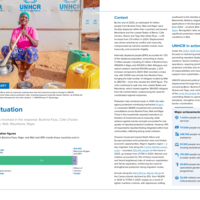
Kadidja Chaibou a Malian refugee stands in the ruins of her home in Harobanda, Niamey swept away by Niger’s worst floods in 20 years. The disaster affected over 1.4 million people, including thousands of refugees and displaced families.
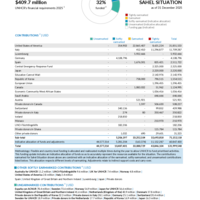
refugees and asylum-seekers forced to flee their countries
are internally displaced in the Sahel region
of forcibly displaced people in the Central Sahel are displaced within their own countries

Are you a refugee, asylum-seeker or stateless person looking for help? Visit the HELP site to find support and services from UNHCR.
Escalating violence and climate shocks drive displacement across the Sahel region
The Central Sahel – Burkina Faso, Mali, and Niger – faces worsening conflict, insecurity, and climate shocks, compounded by food insecurity and economic fragility.
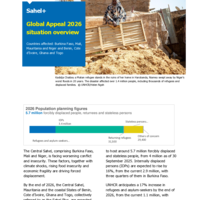
By the end of 2026, the Sahel Plus region (including Mauritania and coastal States) is expected to host 5.6 million forcibly displaced and stateless people, up from 4 million in September 2025. IDPs will rise by 16%, with three-quarters in Burkina Faso, while refugees and asylum-seekers will increase by 17%.
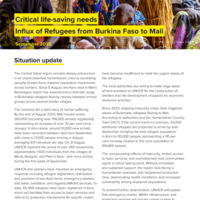
Mali’s refugee population has nearly doubled since 2024, driven by arrivals from Burkina Faso. Protection risks remain severe, with attacks on civilians, arbitrary detention, and widespread violence against women and girls. School closures linked to insecurity have exceeded 14,800, and mixed movements through Niger’s transit corridors continue to grow despite reinforced maritime controls.
Emergency level 1: The situation in the Sahel region is currently classified as an emergency level 1, indicating that UNHCR is urgently stepping up preparedness efforts. Learn more about UNHCR emergency classifications.
I was so frightened. The whole family – including my grandmother, aunt, and my husband’s brothers and sisters – met up and left the village. We set off on foot without any belongings. There were about 40 of us, and it took us 20 hours to reach Ouahigouya.
What is UNHCR doing to help?
UNHCR’s 2026–2027 Sahel Plus strategy focuses on life-saving emergency assistance, protection, and socio-economic inclusion. It will maintain emergency response capacity through essential item distribution and cash assistance, while supporting registration and access to critical services.
UNHCR will strengthen national asylum systems, promote accession to refugee and statelessness conventions, and enhance community-based protection to foster inclusion and social cohesion.
Regional cooperation will be advanced through frameworks like the Lomé Declaration and ECOWAS asylum initiatives.
Routes-based approaches with IOM will address mixed movements, ensuring protection-sensitive entry, inclusion, and reintegration.
UNHCR will support resilience and self-reliance through initiatives such as Ghana’s GRASP agribusiness programme, opportunity villages in Niger, and climate-smart projects like solarized water systems and eco-friendly shelters. Partnerships with development actors will expand livelihoods, including greenhouse farming and fish processing in Burkina Faso.