



Finding stability through legal assistance after displacement
Finding stability through legal assistance after displacement

Valentyna and Valerii in their rented apartment in Zaporizhzhia.
For more than 35 years, Valentyna and Valerii, both in their sixties, lived in Orikhiv, a town in Zaporizhzhia region that today lies on the frontline of the war. Together, they built their family home from the ground up and opened three grocery shops. Their lives were rooted in the community they helped shape.
In February 2022, the couple were on their annual family vacation in western Ukraine when the full-scale Russian invasion began. “We didn't know the war would start. We just packed our belongings in an hour and got on a train home,” Valentyna recalls.
Within days after they arrived, Russian armed forces were only a few kilometres away. Villages in the Orikhiv community had already been occupied, and Orikhiv was coming under constant shelling. Families fleeing occupied areas were arriving with nothing but the clothes they were wearing. Valentyna and Valerii opened their shops to everyone in need, providing essential items, like food, blankets, clothes, free of charge.
After the electricity was cut off, the family spent weeks sheltering together with relatives in a basement. In March 2022, after their own house was hit and caught fire, the family fled Orikhiv and settled in rented accommodation in the city of Zaporizhzhia. “We had been living in that house for 25 years. We built it ourselves. We built our businesses ourselves. In one day, everything changed,” says Valentyna.
Despite the risks, Valerii continued returning to Orikhiv for nearly three years to care for the dogs they had been forced to leave behind. During one of those visits, in late 2025, he was injured in another attack. After his treatment, the couple learned from the local social protection office that Valerii could apply for disability status linked to his war-related injury. They were referred to UNHCR’s NGO partner Right to Protection (R2P), whose lawyers guided them through the entire process: from preparing the documentation to submitting the application and following up with the authorities.
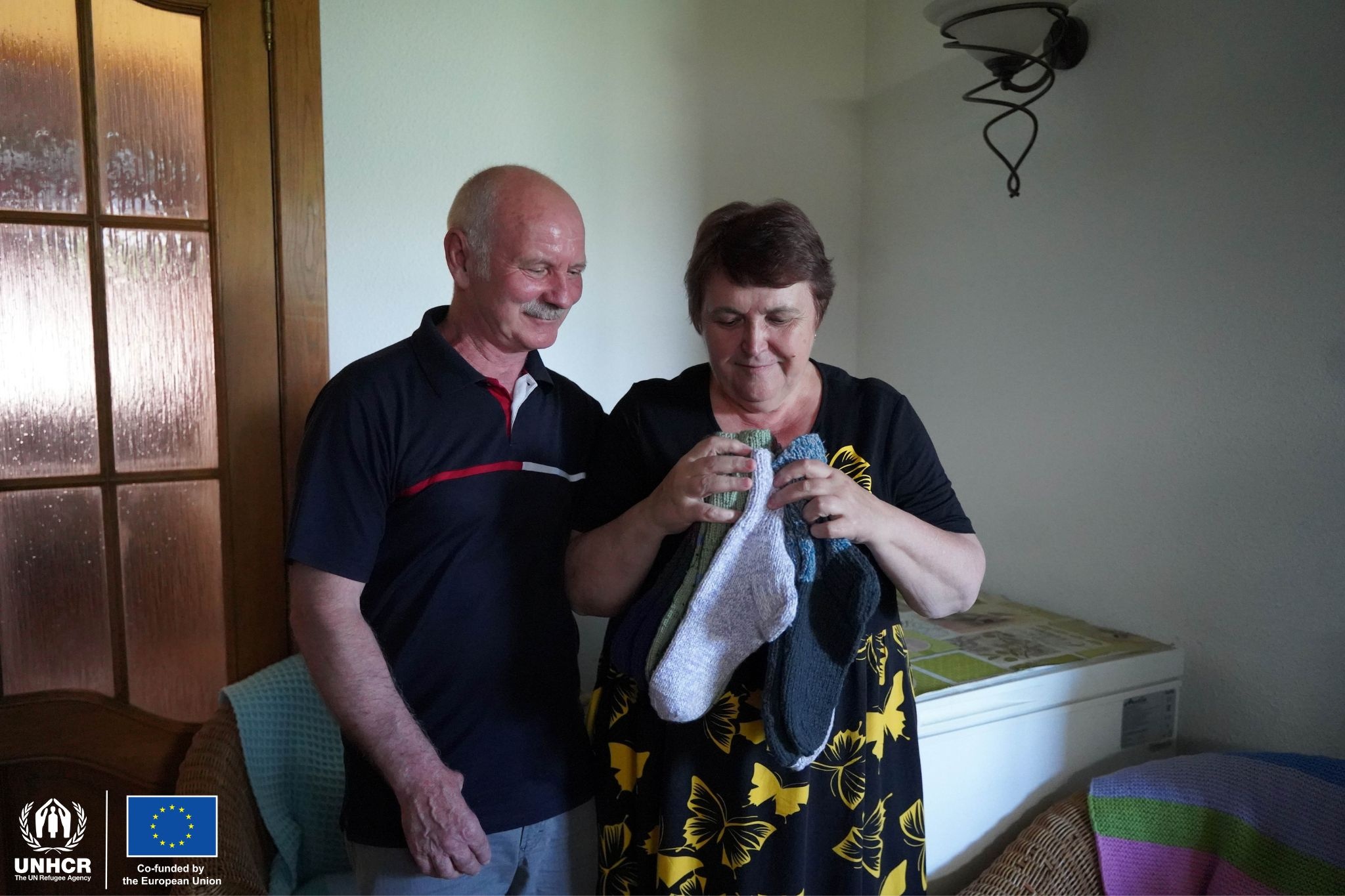
“R2P supported us at every step. The only thing we had to do was put the documents in a mailbox. They tracked everything, followed up on every stage, and stayed in contact throughout the process,” comments Valentyna. The recognition of Valerii's disability status brought practical support at a critical moment. Like many displaced older people, the family relies primarily on pensions to cover rent, medicines, food and utility bills. Receiving an increased pension and additional benefits has helped the family regain a sense of stability.
“We are no longer afraid that we won't be able to pay for the apartment. Additional support gives us confidence and stability,” says Valentyna.
Although they are rebuilding their lives in Zaporizhzhia, the couple still dream of returning home one day. Until then, Valentyna is finding another way to preserve what the war could not take away - the story of her family.
“My grandson lives abroad now, like many young Ukrainians. They no longer know the stories of their families. We no longer have the big family gatherings we used to,” she says. “That's why I decided to write a book. It will help me tell the story of our family to my grandson starting from 1914.”
Since the start of the full-scale Russian invasion, UNHCR together with its NGO partners have provided over 826,000 free legal counseling sessions to internally displaced people, returnees and other war-affected families. This is made possible thanks to support from donors, including the European Union. This assistance helps people restore lost and damaged documents, as well as ensure they have access to services and social support.


