



DAFI Tertiary Scholarship Programme
DAFI Tertiary Scholarship Programme
- Galina, DAFI graduate of transportation engineering, Rwanda

Rwanda. Galina Delicia Ishimwe, a refugee from Burundi and 2025 graduate, completed her degree in Transportation Engineering with the support of a DAFI scholarship.
Higher education is a priority for UNHCR, as outlined in Education 2030: A Strategy for Refugee Education, forming an integral part of UNHCR’s protection and solutions mandate.
Higher education makes it possible for thousands of refugee youth to develop skills and earn qualifications to allow them to become change-makers who can take the lead in identifying solutions to the challenges that affect them and their communities.
The DAFI scholarship programme constitutes one of the five core pillars of the strategy to achieve 15 per cent enrolment of young refugee women and men in higher education by the year 2030 – the 15by30 Roadmap.
Since its founding in 1992, DAFI has supported over 27,500 students in over 50 countries. Highlights from the programme in 2025 include:
- DAFI scholarships offered in 58 countries
- 6,049 refugee students from 57 countries of origin
- Women made up 46% of DAFI scholars, the highest female enrolment rate in the history of the programme.
- 2025 saw the lowest number of total DAFI scholars supported in a single year since 2016, and only 316 new scholarships were awarded. This was largely due to an exceptionally challenging international humanitarian and development funding context, and demand remains high.
To learn more:
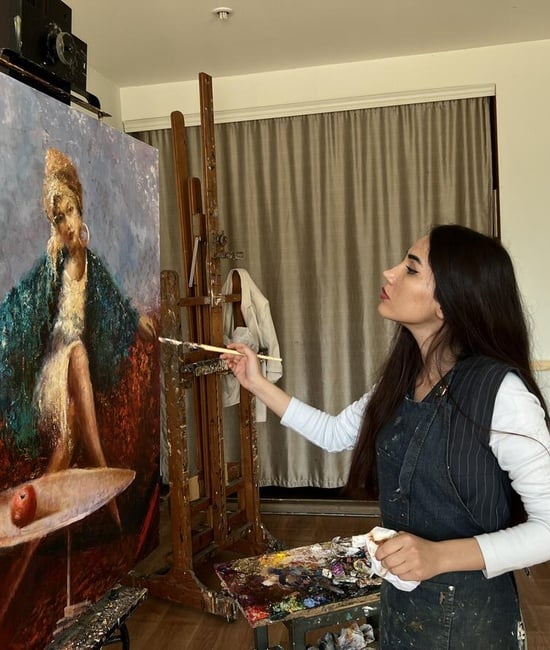
Hadiye, a refugee from Afghanistan, completed her bachelor’s degree as a DAFI scholar at the Azerbaijan State Academy of Fine Arts, where she is now pursuing her master’s degree.
Hadiye
When Hadiye and her family arrived in Azerbaijan in 2013, she was amazed by how independent and strong Azerbaijani women were. She reflected, “Their independence and hard-working nature, especially among older women who worked to support their families, truly inspired me.”
At first, she could not attend school because she did not speak Azerbaijani, so she spent her first year learning the language. When she learned about the DAFI scholarship, she was determined to apply, studying seriously to achieve the highest results possible. Her perseverance paid off and she earned a bachelor's degree in fine arts with the support of a DAFI scholarship before going on to pursue her master’s.
Beyond the canvas, Hadiye teaches English to refugee children in Baku. “My main goal is not only to provide education but also to help the kids discover their inner potential. Through education and art, I aim to bring out their strength and ensure they grow into valuable members of society.”
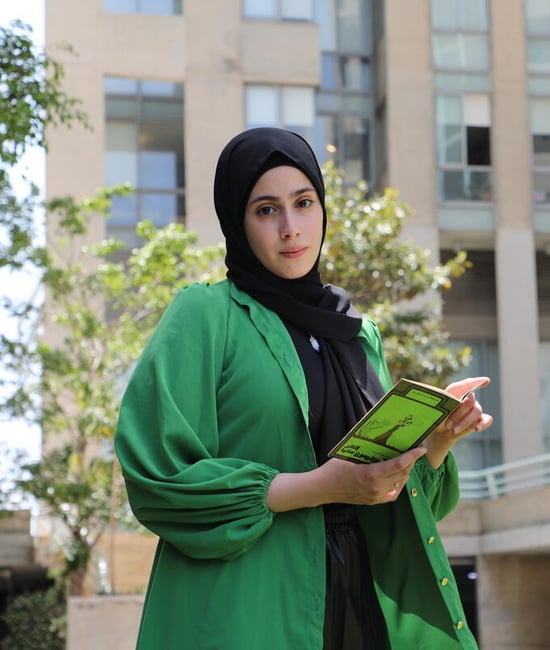
Bayan, a refugee from Syria, is studying education sciences as a DAFI scholar at the Lebanese International University.
Bayan
When Bayan was in the middle of upper secondary school, she fled Syria and arrived in Lebanon. During the ensuing two-year interruption in her schooling, she experienced first-hand how education could shift from a right to a privilege. This motivated her to pursue a degree in education sciences, refusing to believe that a girl’s education should depend on someone else’s approval. "For me, education represents security, independence and hope," she explains.
Bayan entered the Lebanese International University as a DAFI scholar determined to study English and become an educator. She engaged proactively in curriculum development and independently developed an English language workshop, piloting it with her peers and then adapting it for secondary school students. More than 30 students have attended, and she hopes to continue and expand the workshops.
Bayan reflects: "DAFI helped me see myself as someone who could contribute to society and make a meaningful difference. Before, I never imagined that I could have that kind of impact. Working with students showed me that even small actions can change someone's life and DAFI helped me believe in my own potential."
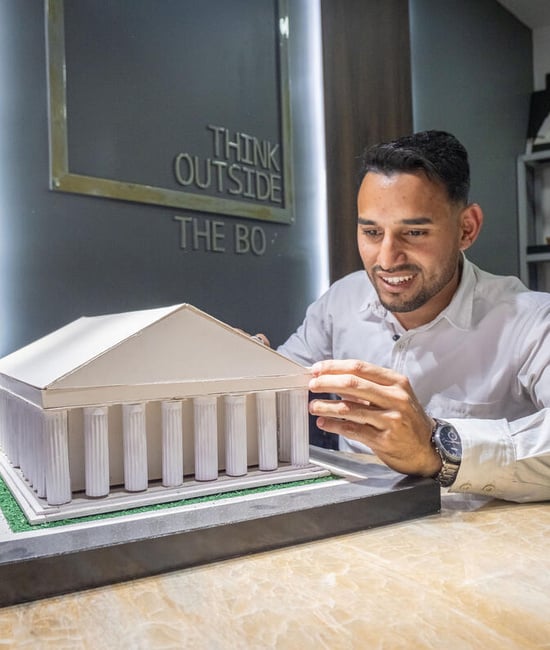
Miguel, a displaced Venezuelan and a DAFI scholar, is studying architecture at the University San Gregorio de Portoviejo in Ecuador.
Miguel
Miguel arrived in Ecuador from Venezuela in 2016. From the beginning, he set his sights on higher education, but unstable economic circumstances put this out of reach for his first few years. Instead, he developed practical skills in construction and joined a men's community group. For Miguel, technical training alongside his peers gave him a strong sense of autonomy and sparked his desire to contribute positively to his community.
He explains: "I believe that technical education and higher education play a very important role in the inclusion of refugees. It's not just about learning a profession and having better job opportunities." In 2022, Miguel was awarded a DAFI scholarship that made his dream of higher education possible, and he now studies architecture at the University San Gregorio de Portoviejo, specialising in renewable energy and sustainable architecture. He hopes to develop entrepreneurship initiatives that generate employment for others.
Beyond the classroom, Miguel took on a leadership role in the "Agents of Change" refugee youth-led training programme, delivering sessions for his peers throughout 2025 and presenting the initiative to university and Ministry of Education representatives.
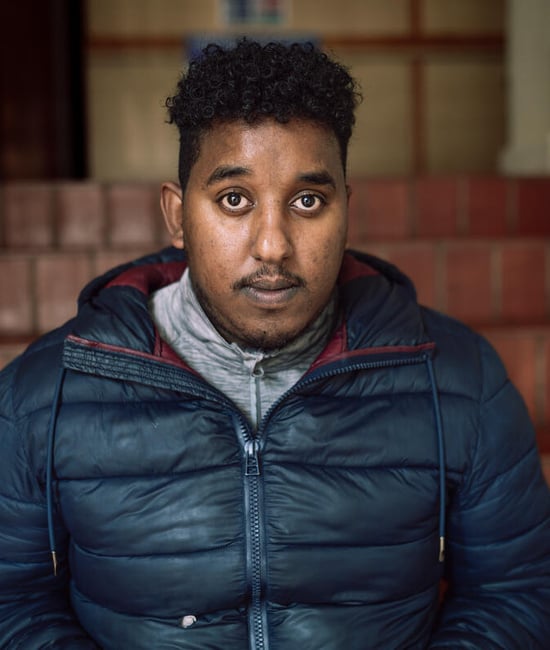
DAFI alumnus Abdikhaliq graduated with a degree in politics and international relations from the University of Johannesburg in South Africa. He is now a Bursary Support Officer at StudyTrust, and holds a master's degree in international relations.
Abdikhaliq
As a DAFI scholar, Abdikhaliq secured an internship that allowed him to develop practical skills in programme administration, student support and financial management. He learned to prepare financial reports and coordinate payments, and developed his communication and public-speaking skills through outreach activities and workshops. This led him to permanent employment with StudyTrust, where he now works as a Bursary Support Officer, managing nearly 170 students across 14 private donors. In the future, he aspires to found an organisation supporting Somalis through education and skills development.
Abdikhaliq credits DAFI for the internship that led to his current employment: "I am where I am now because of DAFI. What triggered my employment was the internship I experienced under DAFI, because I learned how to speak to different organisations and communicate." Without opportunities to apply what they have learned in a real-world setting, refugee graduates face additional barriers when trying to demonstrate their capabilities to employers. Internships provide the practical experience that helps to bridge this gap.
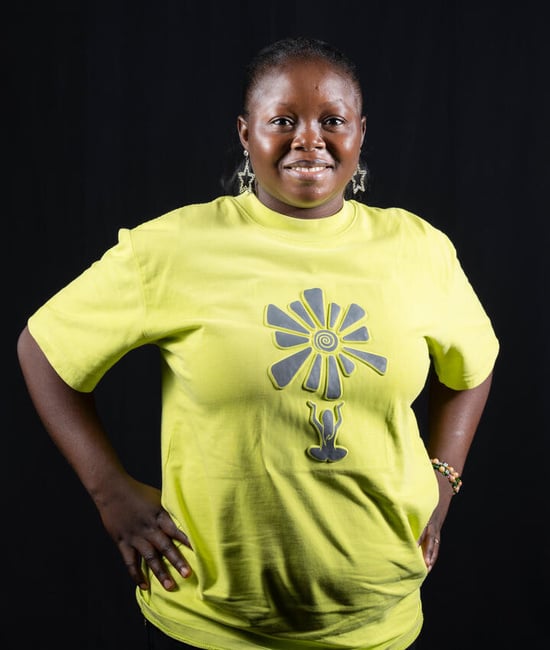
Jennifer, a refugee from Cameroon and DAFI alumna, graduated from Favour School of Health Technology in Nigeria as a pharmacy technician.
Jennifer
Determination to do her part to stop drug abuse in her community motivated Jennifer, originally from Cameroon, to pursue her degree in pharmacy technology. She had seen how medication misuse and substance abuse harmed families, friends and their futures, explaining, "I wanted the knowledge to make a difference."
Jennifer's resolve was tested during her first practical training exercise, when she found she could not recognise basic drugs. She reflects on this as the turning point in her education. "Instead of giving up, I committed myself to mastering the material. I studied relentlessly until I could confidently identify medications, understand their mechanisms and recognise their risks."
The DAFI scholarship removed the financial barriers she faced, allowing her to focus fully on her studies and clinical practice. She graduated as a certified pharmacy technician. Jennifer hopes to become a pharmacist, and one day counsel patients and lead community education on substance misuse. She asserts, "graduation is not the end of my journey, it is the foundation for the next step."
- Total new scholarships: 316
- Total graduates: 1,953
The strategic priorities of the DAFI programme are to:

Promote refugee self-reliance
through increased access to opportunities for employment and entrepreneurship

Empower students to contribute knowledge, skills and leadership
and to facilitate peaceful coexistence with host communities during displacement and upon return

Strengthen the protective impact of education
by encouraging lifelong learning

Provide role models for refugee children and youth
to demonstrate the impact of education on individuals, communities and societies
The scholarship covers a range of costs, including tuition, fees, study materials, food, transportation, accommodation and other expenses.
To amplify academic achievement and skills development, DAFI scholars receive additional support through close monitoring, academic preparatory and language classes based on students’ needs, as well as mentoring and networking opportunities. DAFI student clubs and alumni groups are active in many countries and make valuable contributions in the communities that host them.
Additional information
If you are a refugee looking for a scholarship, please select a country in the dropdown below to find contact details for your nearest UNHCR office.
If you submitted feedback or an enquiry through our contact form from January-April 2026, unfortunately we did not receive it due to a technical issue with our form. Please check back soon for an updated contact form.


