



A conversation that becomes protection in Armenia
A conversation that becomes protection in Armenia

Sardarapat Social Work Hub, Armavir Province, Armenia, July 2025
A conversation that becomes protection in Armenia
In a family kitchen in Gyumri, a conversation over homemade pakhlava becomes much more than a social visit. It is an opportunity to listen, understand changing needs and help a family navigate life after displacement
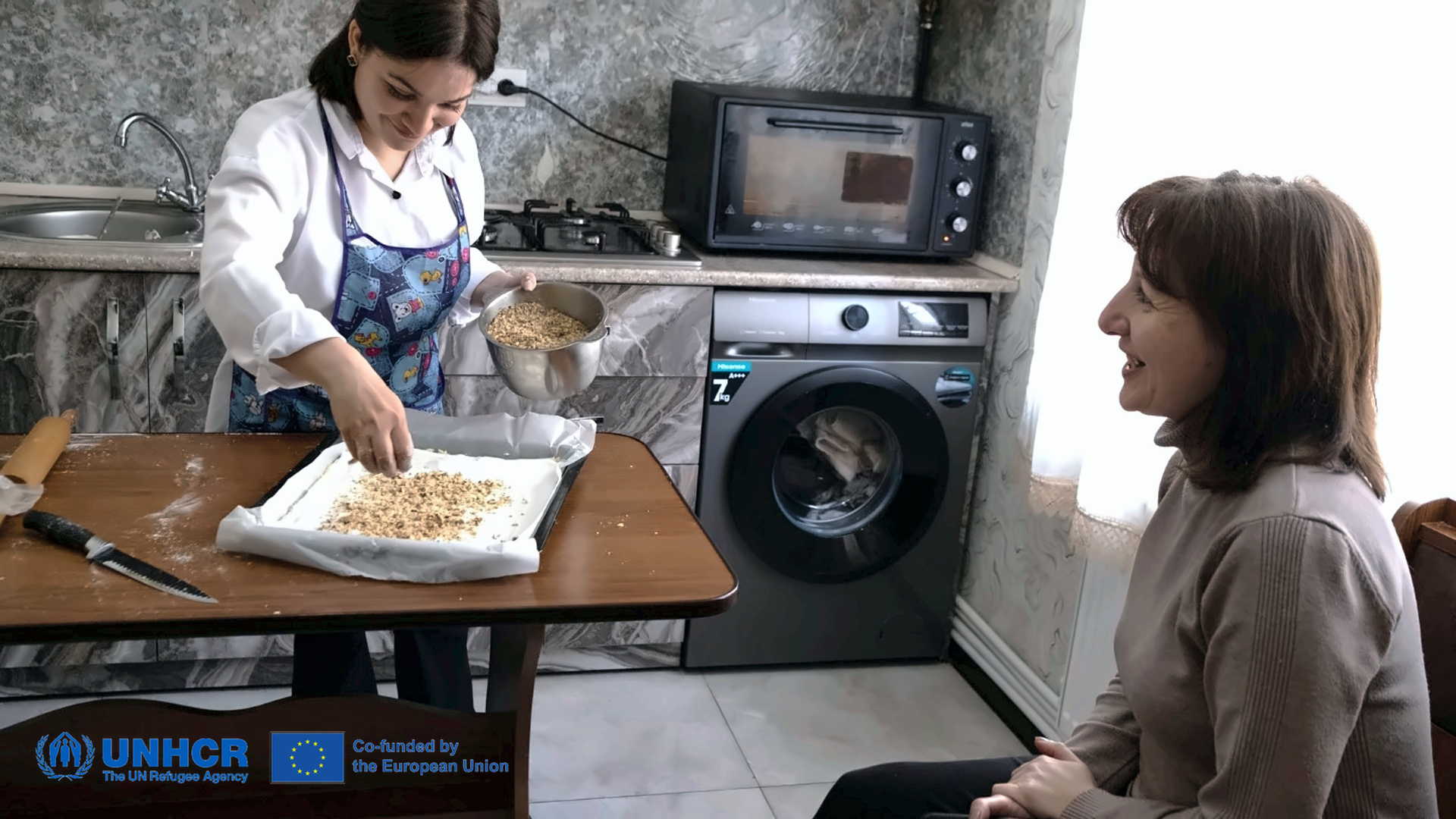
Mission Armenia social worker Aida visits Mariam, who was displaced from Karabakh, at her home in Gyumri. July 2024. Shirak Province, Armenia
In a rented apartment in Gyumri, Mariam prepares traditional pakhlava while Aida, a social worker from Mission Armenia, sits nearby. Their conversation moves naturally from the children’s experience at school to healthcare, work and the family’s everyday concerns.
“Aida has become like a member of our family. Without her support, we would have felt lost navigating healthcare and other essential services. She was there when we needed guidance most,” says Mariam.
Regular contact allows social workers to understand changing circumstances and identify practical solutions together with families.
Across Armenia, social workers, protection teams, psychologists and Hotline operators worked together so that identified concerns could lead to practical guidance, referrals and follow-up. Between June 2024 and March 2026, more than 7,000 refugees and asylum-seekers received a documented response to an identified protection need through support from the Government of Armenia, UNHCR and partners, with funding from the European Union.
Listening across the country
Protection decisions are strongest when they are based on evidence rather than assumptions. In 2025, two nationwide monitoring exercises reached 1,000 households representing 4,175 people across all ten provinces and Yerevan.
The conversations explored how families were managing documentation, housing, employment, healthcare and other issues they came across with.
The findings showed that some families faced housing insecurity, healthcare expenses, unstable employment and difficulties reaching specialised services. People living in rural, remote and border areas often encountered additional barriers because of limited local services and transport costs. Older people, persons with disabilities and female-headed households could face even greater difficulties reaching support.

Refugee women and members of the local community take part in an art-therapy activity organized by Mission Armenia. Nor Nork Social House, Yerevan.
Listening was only the first step. Where concerns were identified, households were referred to legal, health, psychosocial, accommodation, livelihood or social-protection services. The proportion of interviewed households receiving a regular or urgent referral increased from 63 per cent in the first monitoring round to 84 per cent in the second.
For many people, the UNHCR Hotline became the first place to ask a question, raise a concern or request support. It registered 4,456 calls and initiated 2,782 referrals in 2024. In 2025, it received 2,295 calls from 906 unique users. Questions raised through the Hotline helped UNHCR and partners adapt information, geographic outreach and referral priorities and identify cases requiring urgent follow-up.
Social Workers connecting people with services
Across Armenia, social workers in nine social work hubs helped refugees receive guidance, get practical solutions to their issues and connect with local services. Approximately 1,741 households, comprising more than 7,362 people, were reached through needs assessments, psychosocial support and case management. Social workers helped connect people with municipalities, healthcare and rehabilitation providers, social-protection services and other specialised support.
Persons with disabilities and identified specific needs received tailored social-work, psychosocial and referral support. Among 347 people identified through the Hubs, 207 received assistance addressing those needs.

Sardarapat Social Work Hub, Armavir Province, Armenia, July 2025
“This social work hub is my second home”, says Mrs. Varduhi, a refugee from Karabakh, “ Here, I found hope, Here I found hope, guidance and friendships with people who understand what I have experienced”.
Finding a language for difficult experiences
In Ijevan, psychologist and art therapist Zhanna uses puppets, stories and fairy tales in her work with refugee children, women and older people.
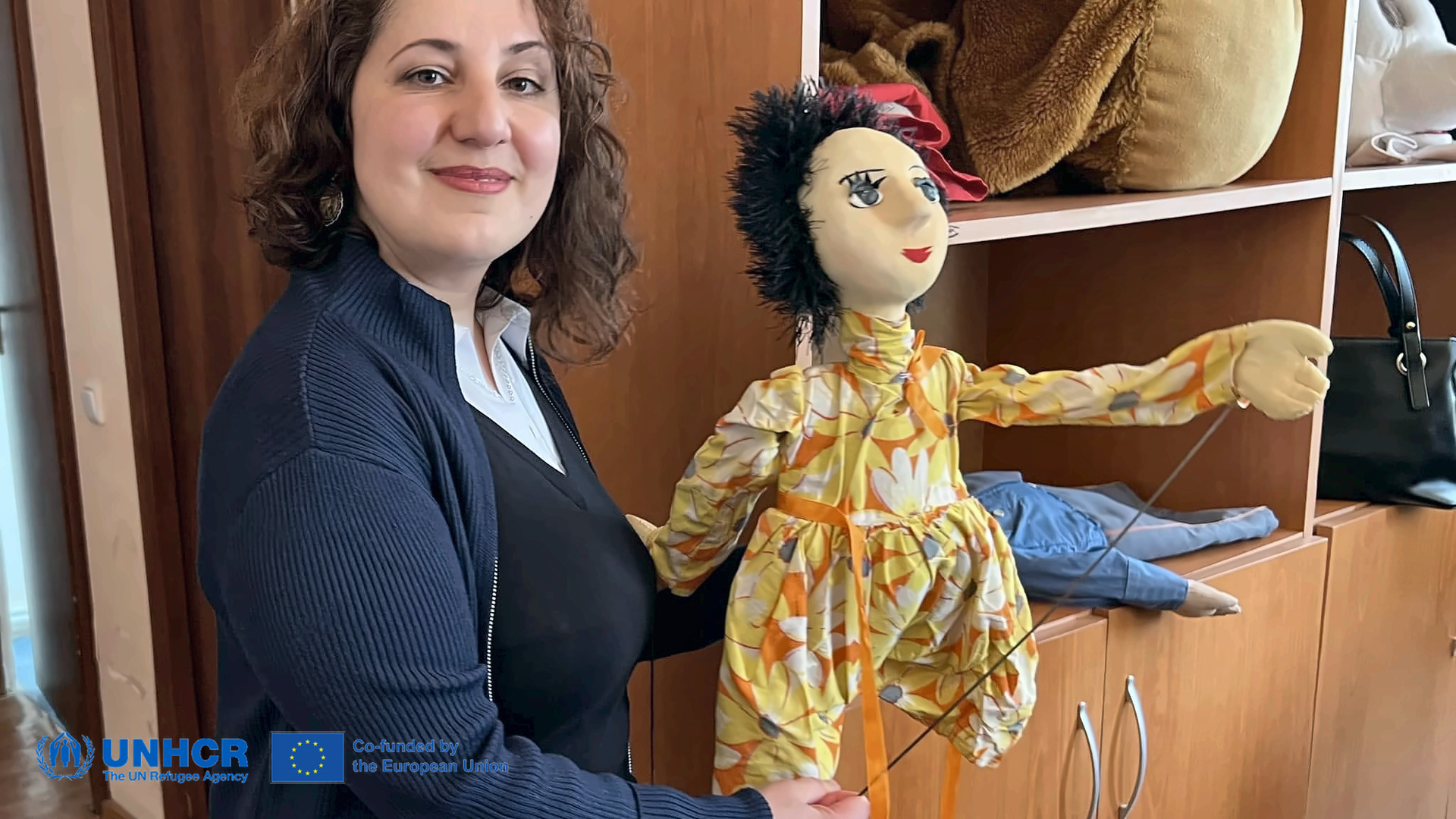
A creative psychosocial-support activity at the Women’s Support Centre in Ijevan, Tavush Province
“Puppets can help people relax and express difficult experiences in ways that words sometimes cannot,” says Zhanna.
Through stories, art and play, children and adults can find safer ways to express emotions, rebuild confidence and reconnect with others.
Psychosocial support was linked with social work, legal counselling, case management, referrals and community activities so that people could receive practical guidance and emotional support according to their needs. People requiring specialized care were referred to appropriate health or other services, while community activities helped reduce isolation and strengthen social connections.
More than a referral
Transport costs, mobility constraints, financial hardship and language barriers can prevent families from reaching services even after a referral has been made.
Protection monitoring, Hotline services, social work, legal aid and case management were therefore connected so that identified concerns could lead to practical guidance, follow-up and appropriate support.
For Mariam and many other families, protection begins with a conversation. Its purpose is to ensure that conversation leads to practical support, renewed confidence and opportunities to rebuild a life with dignity.
About the project
From June 2024 to March 2026, UNHCR and its partners, working in support of the Government of Armenia and co-funded by the European Union through its humanitarian aid operations, implemented a nationwide Protection Action linking documentation and legal assistance with social work, protection monitoring, referrals and rights-based information. The project aimed to help refugees and asylum-seekers exercise their rights while strengthening the national systems and services that support them.
Across Armenia, the Action reached an estimated 144,706 people. 119,706 people obtained documentation or legal status, 1,649 received legal counselling, assistance or representation, and 65,760 received information on their rights and entitlements.

