
Digital Tukul
UNHCR Blog on Digital Inclusion
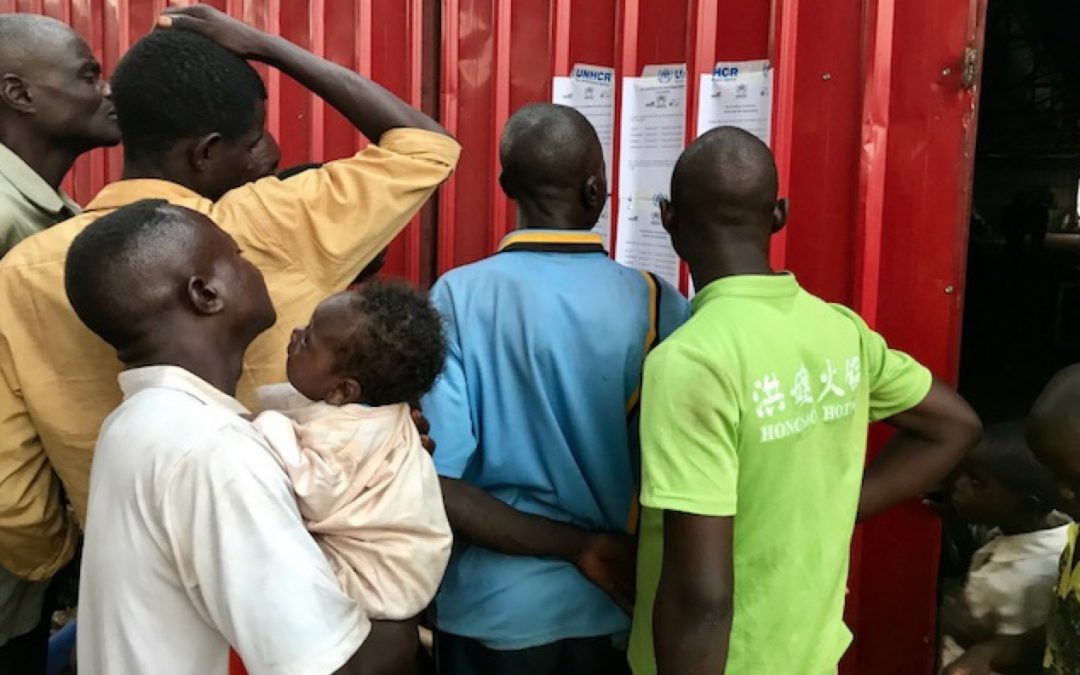
Data protection is part and parcel of refugee protection
At a time when new data protection rules come into force in Europe, Alexander Beck, UNHCR Senior Data Protection Officer, answers question on privacy rights and data protection for refugees.

Self-reliance and financial inclusion: Bridging policy and private sector solutions – highlights from UNHCR ExCom Side Event
What does it take to turn financial inclusion from a policy promise into a lived reality for refugees? At a Side Event during UNHCR’s 76th Executive Committee session, governments, financial institutions, and refugee entrepreneurs explored how to make financial services truly accessible to those forced to flee.
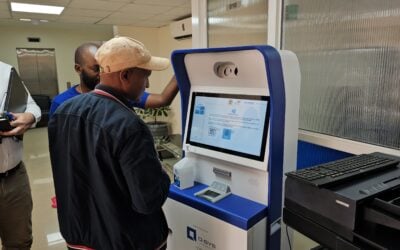
LISA: transforming refugee verification through self-service
By Simon Pierre Diouf and Kelvin Miami A refugee reads the privacy notice before proceeding with verification. © UNHCR/Arnold Snell UNHCR’s Regional Bureau for the East and Horn of Africa and the Great Lakes (EHAGL) is piloting a new self-service kiosk application...
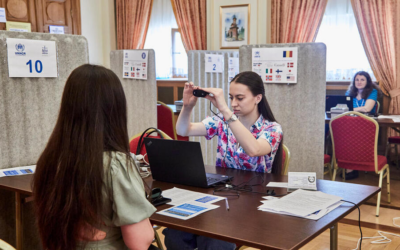
UNHCR’s photo quality initiative: enhancing photo standards in refugee registration
Ukrainian refugees at a UNHCR Registration Center for financial assistance in Bucharest. Once registered they will receive a pin to their phone which allows them to withdraw the cash at a local store. ; Each individual receives 568 Romanian Leu ($123). The center so...
The future is data (and it’s here already)
At the end of September 2024, world leaders are coming together in New York City to convene a variety of high-level events. Between 22-23 September, the Summit of the Future will take place, which has been described as a once-in-a-generation opportunity to mend eroded trust and demonstrate that international cooperation can effectively tackle emerging threats as well as opportunities.
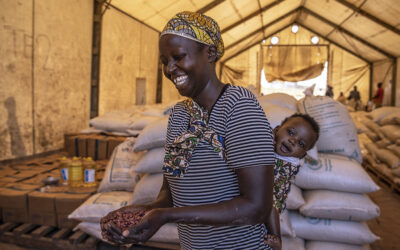
Collaboration gone right – UNHCR and WFP take data sharing to the next level in Tanzania refugee camps
It is common practice for UNHCR, the UN Refugee Agency, and WFP, World Food Programme, to collaborate in some of the world’s most difficult humanitarian responses. While UNHCR is mandated to protect those forced to flee, WFP is responsible for delivering food and life-saving assistance in emergencies and protracted refugee situations. The two organizations work together to serve the most vulnerable populations. As part of this collaboration, UNHCR and WFP may need to exchange some information on the forcibly displaced populations to ensure they receive targeted food assistance in a dignified manner.

Ensuring everyone counts: working together to include stateless and displaced persons in civil registration systems
In today’s interconnected world, the ability to prove one’s identity isn’t just a legal formality—it’s a fundamental human right that unlocks access to a wide range of services and opportunities. For many, having a birth certificate or an ID card is something easily taken for granted. But for migrants, refugees, and stateless people, legal recognition is crucial for securing rights and accessing essential services. This is where Civil Registration and Vital Statistics (CRVS) systems play a pivotal role, ensuring that every person is recognized under the law, regardless of their circumstances.

Inclusion of Forcibly Displaced and Stateless Persons in National Statistics
Forcibly displaced persons, including refugees and internally displaced people (IDPs), as well as stateless persons are frequently underrepresented or invisible in national data. However, realiable and nationally owned data is vital to guide effective national policies and decisions that foster the inclusion of forcibly displaced and stateless persons around the world. Statistical inclusion of forcibly displaced and stateless persons refers to the process of systematically including these groups in national data production systems such as population and housing censuses, administrative registers or nationwide household surveys.
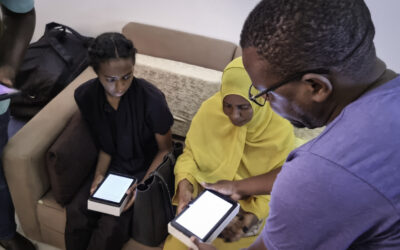
The Microdata Library in 2023: furthering the commitment to the responsible sharing of microdata
Razan and other volunteers train for data collection ahead of aid distributions. ; The conflict that erupted in April in Sudan has displaced millions of Sudanese. Many of them are sheltering in Wadi Halfa, hoping to be allowed to enter Egypt. © UNHCR/Mohamed Rached...
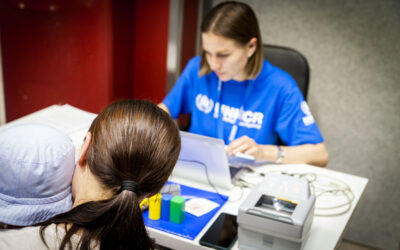
A renewed approach towards personal data protection in the UN Refugee Agency
UNHCR enters 2023 with the General Policy on Personal Data and Privacy (GDPP) issued by the High Commissioner. The new policy establishes an updated and unified data protection and privacy framework applicable to the collection, use and sharing of personal data of all individuals by UNHCR, fostering trust among people we serve, staff, partners, and donors.

Moving towards better education data for greater inclusion and visibility of refugees
By UNESCO Institute for Statistics (UIS) and UNHCR Kindergarten-age Aden was born on the move. She arrived in Medenine, Tunisia, in 2019 with her parents who fled Darfur in 2003. UNHCR is partnering with the Tunisian Refugee Council (CTR) and the Tunisian Association...
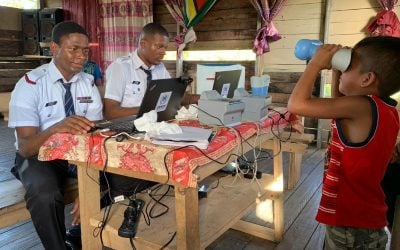
Guyana pioneers use of advanced technology to help Venezuelans
The use of UNHCR’s “PRIMES” system facilitates collection of data to assist Venezuelans and others in need of basic services in Guyana.
The importance of digital identity in humanitarian contexts
Listen to UNHCR’s Nicholas Oakeshott, in conversation with the GSMA’s Yiannis Theodorou on how digital identity for refugees can unlock opportunities and help to deliver vital humanitarian assistance.
About
In an increasingly interconnected world we want to reflect, argue, inform, innovate, and take action: Nobody should be left behind
This blog explores the opportunities the digital age brings to improve the protection and welfare of the people we care for: asylum seekers, refugees, IDPs, stateless and all other forcibly displaced men, women and children
Whilst much of the world’s population benefits from access to digital services and content – many of the most vulnerable do not. They have limited access to the devices and connectivity that many of us take for granted. Digital transformation of the humanitarian system will generate data for effective planning and enable better, identity management. Inclusion into the digital world can provide enhanced access to education, training and livelihoods.