



More than a roof: Muna's story of resilience and dignity
More than a roof: Muna's story of resilience and dignity

It only took a few weeks in Jordan for me to realize that the end of a conflict does not mean the end of a crisis.
My name is Haelin, I am a Korean national, working as an Associate External Relations Officer with UNHCR Jordan. Much of my work involves helping partners understand the realities refugees face. Through it, I have seen firsthand how that understanding can turn into life-changing support for vulnerable families.
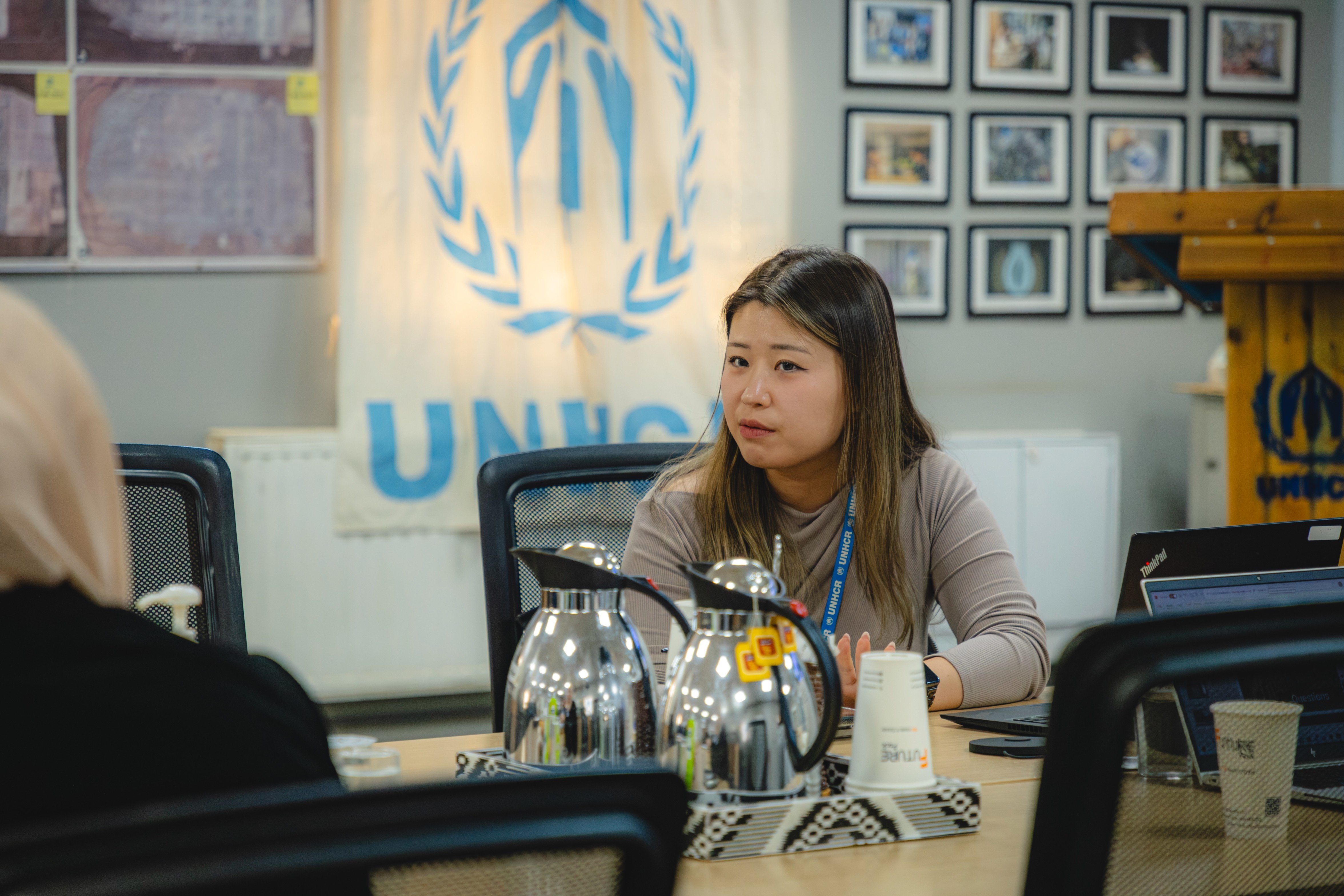
When I arrived in Jordan in late 2024, I came prepared for one of the world's longest-running displacement crises, Syria. My role, as I understood it, was to help ensure that Syrian refugees were not forgotten and that partners continued to understand the scale of their needs. Then, just two weeks after my arrival, the Assad government fell in Syria. Many families celebrated the possibility of returning home after more than a decade in exile. But it soon became clear that for many, the path home remained uncertain. That moment reshaped my understanding of this work. I realized that support was still essential, not only to help them rebuild their futures, but also to live with dignity while they decided what came next.
In my role with UNHCR Jordan, I often describe myself as a bridge. On one side are refugees, whose lives and experiences are shaped by loss and uncertainty, but also by resilience. On the other side are governments and partners, including the Korea International Cooperation Agency (KOICA), who want to help and have the resources to do so. That means connecting refugee needs with donor priorities, through proposal writing, reporting to donors and donor engagement. The aim? Ensuring that refugees’ realities reach the people who can act on it. And that it reaches them in a way that is honest, clear, and impossible to ignore. Ultimately, the goal is to turn those realities into meaningful impact on the ground.
Muna, a 66-year-old refugee, from Dara’a (Syria) is one of many refugees who generously share their stories so that donors can better understand the realities of displacement. I first met her a year ago during a visit by the Korean Ambassador to Azraq camp. At the time, she had just moved into a new shelter provided through KOICA's support. After 11 years of living in difficult conditions and having developed health complications, with both of her legs being amputated, she spoke about finally feeling at peace. A year later, I returned to visit her again. I wanted to understand what difference that shelter was still making in her daily life.
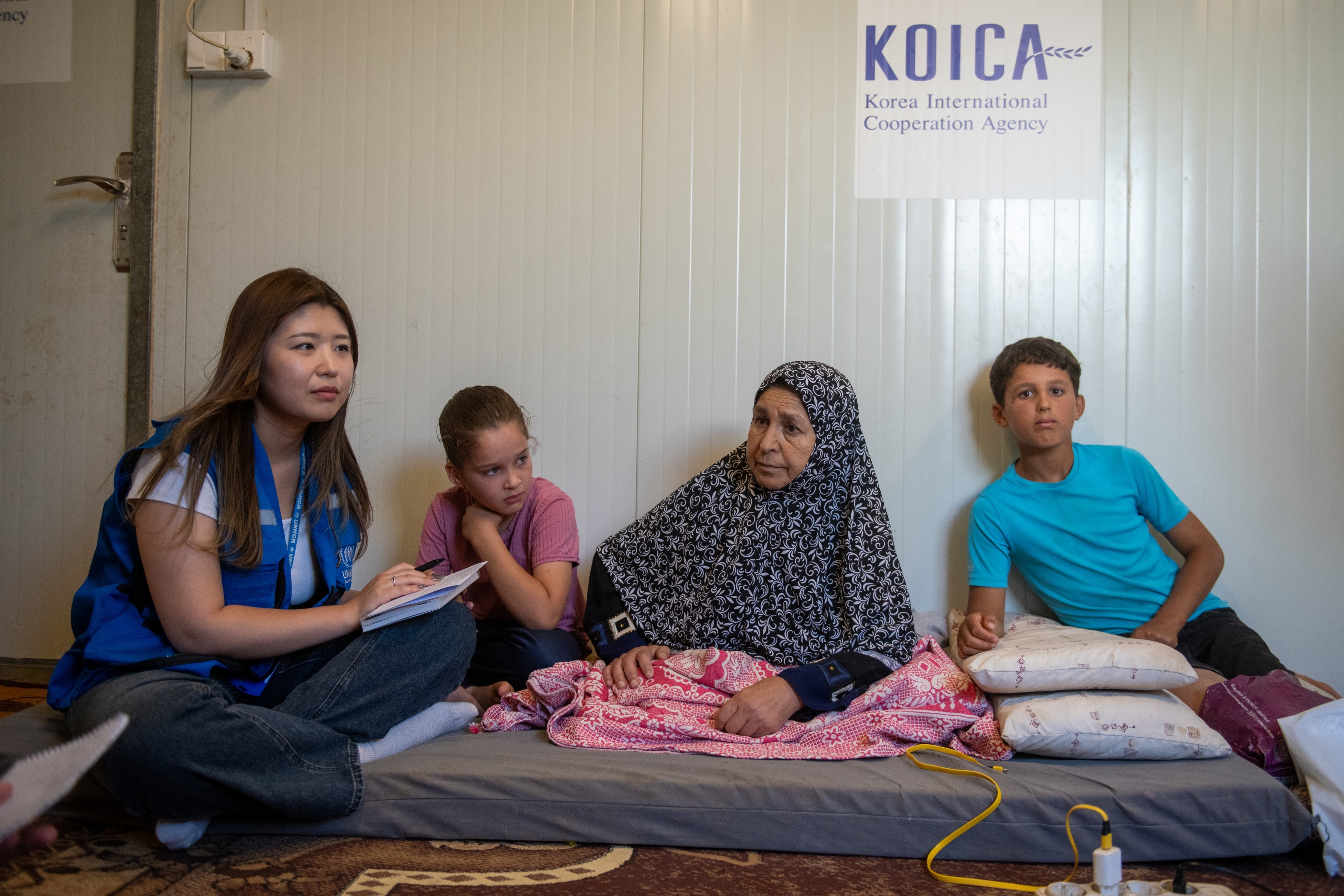
When I asked her what made the new shelter so special, I was expecting something large. What she described were things most of us have never had to think about. That the walls and ceiling are now closed, so the wind does not come in at night. That the rain no longer finds its way inside. And that she can reach the bathroom without going outside, because with her legs, every unnecessary step is a barrier. These are not extraordinary things. They are the most basic conditions of a dignified life. And for Muna, they had not been guaranteed until a year ago. That is what KOICA's support made possible. Not a luxury. Not a gesture. A woman who survived a war, and lost her legs, finally living in a shelter designed to meet her needs.
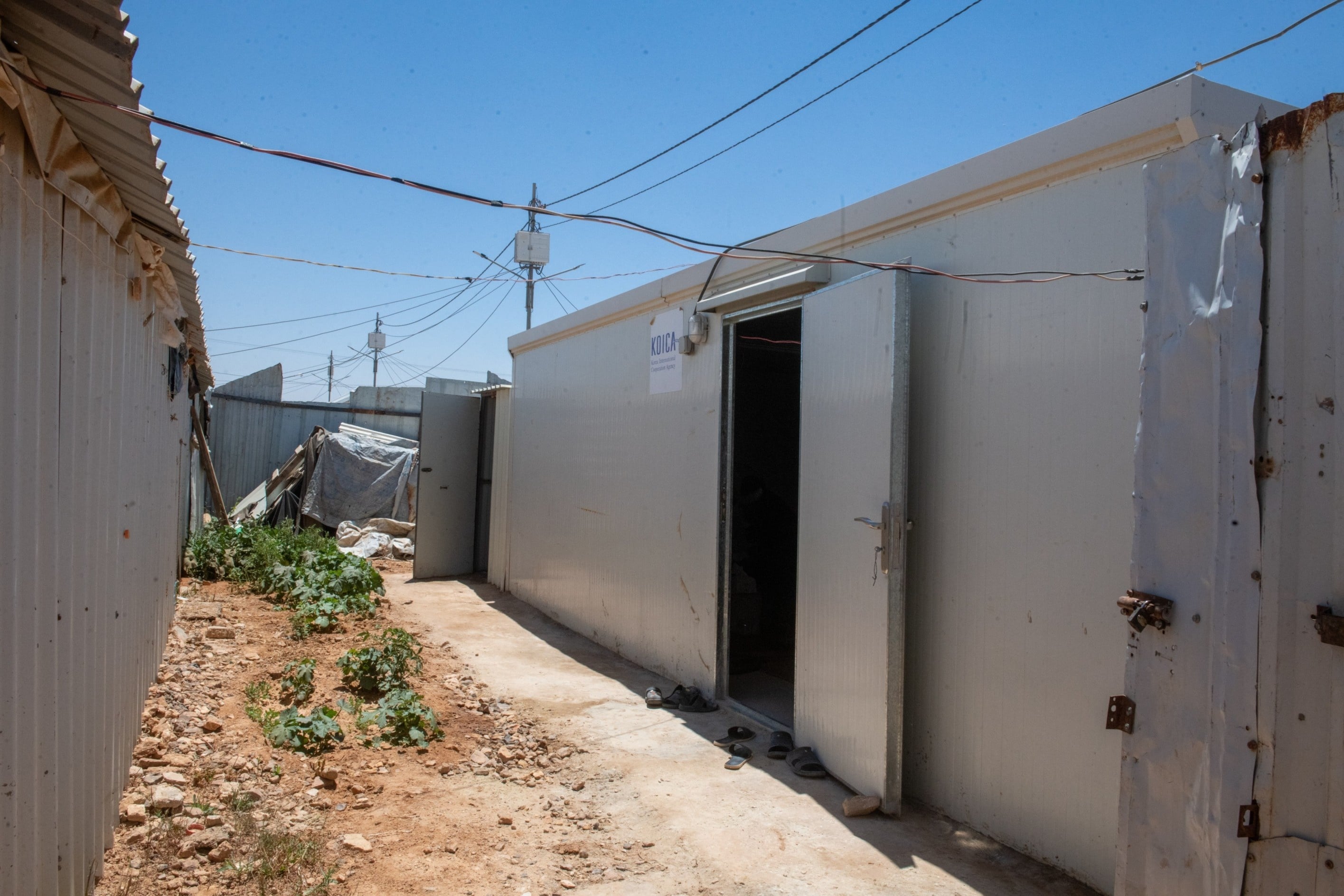
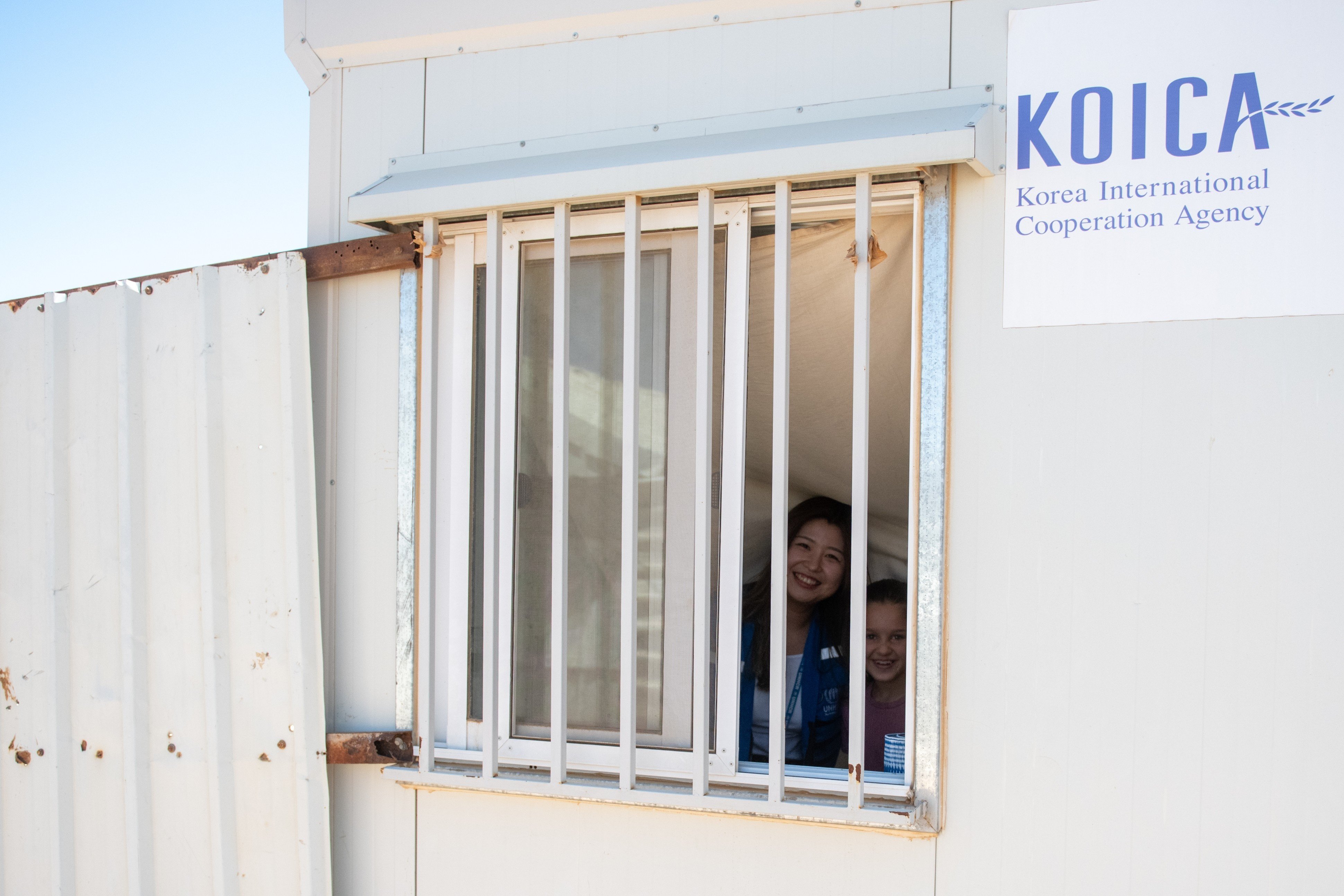
What stayed with me most was not a technical detail about the shelter. It was Muna's answer when we asked what she liked about her new home.
"Everything. Everything. I love everything about it."
People often think of shelter as walls and a roof. But in a refugee camp, shelter is much more than that. It affects health, safety, accessibility, privacy, and dignity. A well-designed shelter means a person with a disability like Muna can move independently. It means families are protected from harsh weather. It means children have a safer and healthier place to grow up.
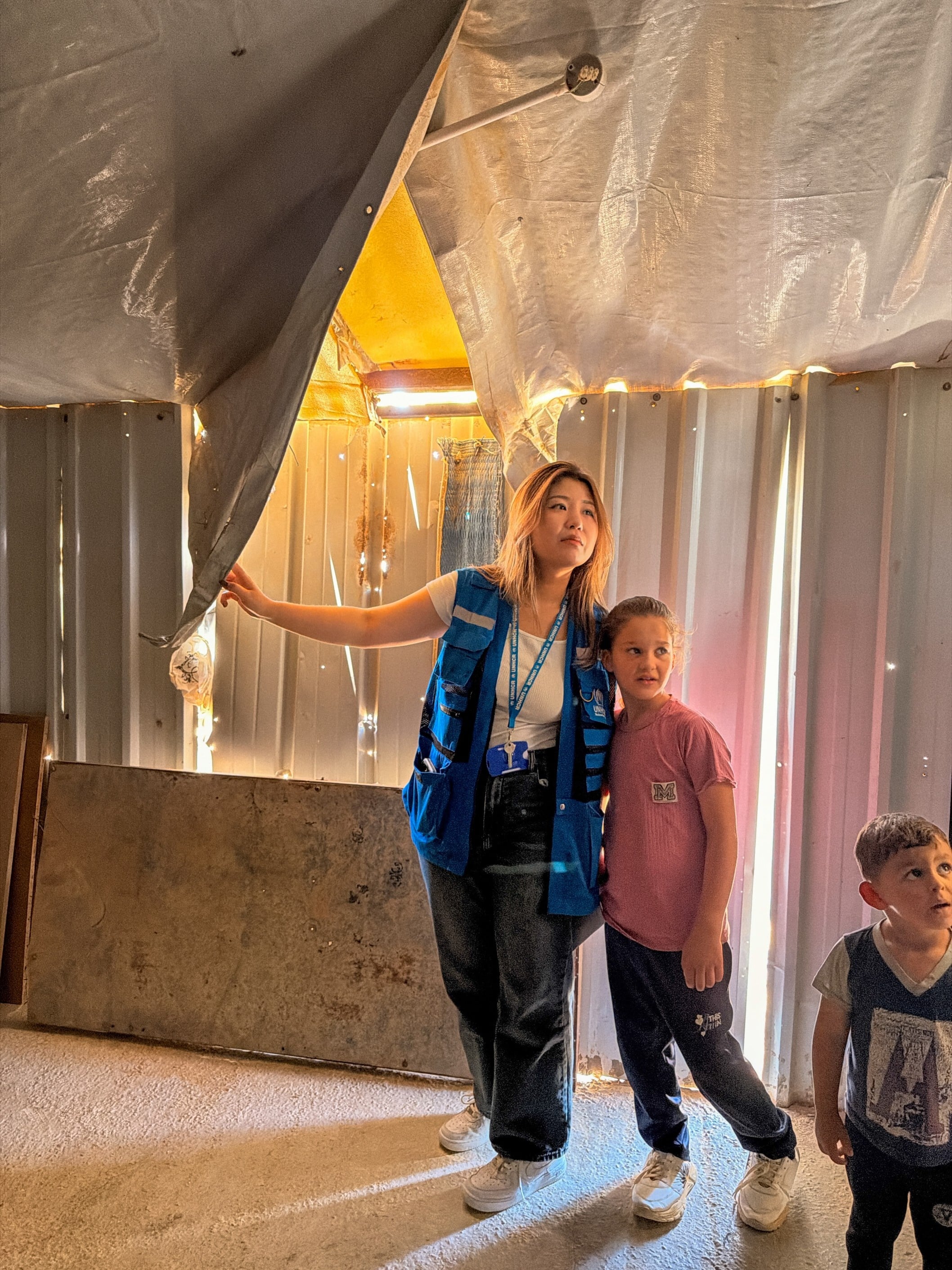
As a Korean national, it is especially meaningful for me to witness the impact of Korea's support firsthand. I have had the opportunity to accompany Korean partners on visits to the camps, and I have seen how perspectives change when people step inside a shelter and meet the individuals behind project reports. Statistics become stories.
Meeting refugees like Muna reminds me why this work matters. What has shifted in me since arriving in Jordan is not my motivation, but the weight of it. I understand now, in a way I could not have before, what it costs a person to have their hope deferred for more than a decade. And I understand what it means when a single intervention, a shelter, a visit, a conversation, reminds someone that they have not been forgotten. That is what keeps me going, the knowledge that behind every document I write, and every partnership I help build, there is a real person waiting for something to change.
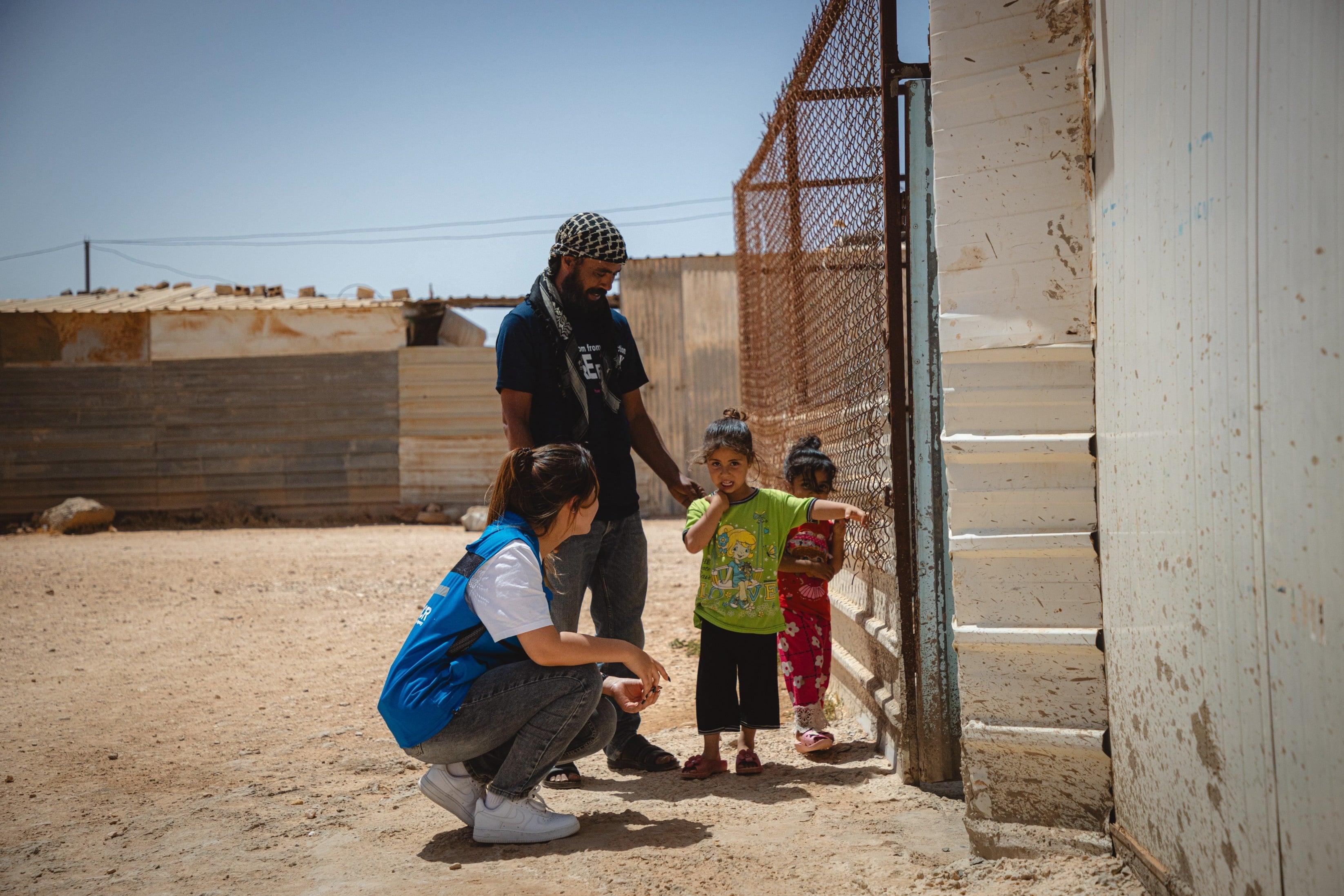
For Muna, KOICA's support provided a safer and more accessible home. For me, it reinforced something I have come to believe deeply during my time in Jordan: when we connect the right resources to the right needs, we do more than improve shelters. We help restore comfort, independence, and hope, one family at a time.