



“I speak today for the child I once was — and for all the children who have lived through war”
“I speak today for the child I once was — and for all the children who have lived through war”

During crises around the world, education is often the first area to be disrupted. More than 120 million people worldwide have been forced to flee their homes, nearly half of them children. Yet, at a time when instability and conflict are increasing, humanitarian aid funding has been significantly cut globally. Programmes critical to education and protection are being scaled back, leaving a generation at risk of missing out on schooling entirely. Against this backdrop, the event explored why education is central to child protection, long-term stability, and sustainable development, and why Finland has a strategic role in supporting children on the move.
In her welcome speech, Inka Hopsu, Vice-Chair of the Finnish Parliament’s Global Group and Member of Parliament, pointed out that of the Agenda 2030 goals, Goal 4, which aims to ensure inclusive, equitable and lifelong learning opportunities for all, is seen as a prerequisite for achieving all the others.
It was a point echoed throughout the event. Experts from UNICEF, IOM, UNHCR, Finn Church Aid and the Ministry for Foreign Affairs emphasized that education remains fundamental to both protection and long-term stability for children on the move — and for building a safer and more sustainable future.
“Education offers children hope and stability, but for displaced children, also a return to normality. And when refugee and local children learn side by side, it strengthens social cohesion and helps communities grow stronger,” noted Maiju Leino from UNHCR.
Panelists also highlighted the many obstacles refugee children confront: language barriers, lack of documentation, overcrowded classrooms and prolonged interruptions to schooling, all while host country systems struggle to keep pace with rising needs.
“I Came Here Today to Speak on Behalf of My Younger Self”
Medical student Rand Mohamad Deeb, who arrived in Finland as a quota refugee eight years ago, delivered a powerful personal testimony.
“I came here today to speak on behalf of my younger self and all the children who have lived through war,” she said, recalling how her schooling in Syria was interrupted during the conflict. She was 11 when the war began, and her family was forced to leave their home in Aleppo. “What worried my parents most was our schooling. They had always made it the highest priority. For my mother in particular, the end of schooling was one of the greatest losses we had to experience.”
She described how her mother was determined that learning must not stop. “We had no electricity, no running water. My mother taught us by candlelight under the bombings and we did math exercises every day. As a child, it felt absurd. But my parents saw it more clearly than I did. They wanted to prepare us for life.”
In 2013, Deeb's family fled Syria in search of safety, first to Mauritania and later to Finland through resettlement. Each move meant starting school over again and learning a new language — first in French, then in Finnish. After years on the move, Deeb feared her childhood dream of becoming a doctor was no longer possible. But after studying Finnish intensively, she entered high school within five months, graduated in two years, and later earned top marks in all her exams. Today, Deeb is in her fifth year of medical school.
“Last summer, I visited Syria for the first time in 14 years. It was deeply emotional. I hope Syria will one day offer children the same safe, high-quality education I found here in Finland.”
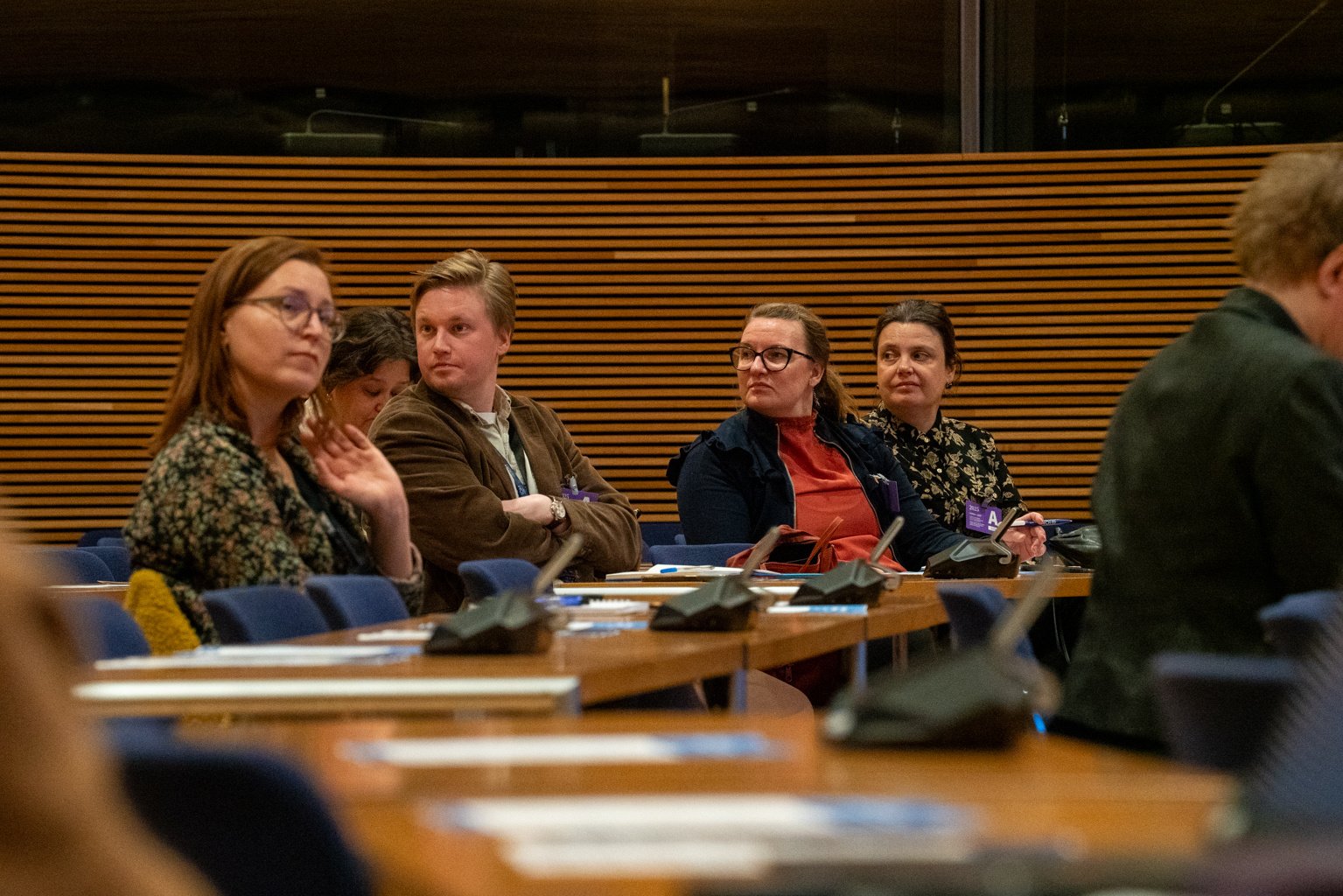
The session“Children on the Move: Building Futures through Education” highlighted the urgent need to protect refugee and migrant children’s access to education amid record global displacement and deep funding cuts.
Millions of children at risk of losing education
Data presented during the session showed the scale of today’s global education crisis. Of the 12.4 million refugee children of school age, nearly half — around 5.7 million — are already out of school.
Deepening funding cuts now threaten to push even more children out of the classroom. UNHCR has been forced to cut a third of its education programmes, while IOM has scaled back operations after a 30% drop in support. In Ethiopia and South Sudan alone, 65 schools are set to close, leaving tens of thousands of children without a safe place to learn.
"Children are always children first, and migrants or refugees second. Migration is often non-linear, so it’s crucial that children can access schooling at every step. The effects of disrupted education can follow them into new communities, making integration much harder”, reminded Tobias van Treeck from IOM Finland.
Finland’s role remains crucial
MFA representative Hanna Alasuutari warned of a growing global education crisis but emphasized Finland’s ongoing impact.
“We must not fall into despair. Finland’s support has had a huge influence,” she said. Finland has special expertise in inclusion — for minorities, women and children, and persons with disabilities. That’s why it is important, according to Alasuutari, that Finland maintains a positive reputation among global actors.
Joining live from Ethiopia, UNHCR’s Markku Aikomus delivered a stark update on the effects of budget cuts, describing how already fragile education systems in the field are struggling to keep pace with rising needs.
Rand Mohamad Deeb’s final words captured the message of the day: “Education is not a given in the life of a refugee; in fact, having access to it is an exception.” Her words set the tone for the event’s conclusion, as Member of Parliament and Chair of the Finnish Parliament’s Foreign Affairs Committee, Johannes Koskinen, stressed that protecting children’s education is essential for peace and stability, and also for fostering democratic citizenship - both in Syria and in Finland, and across the world.
Related news and stories


