



Four years on, Svitlana’s future is more uncertain than ever
Four years on, Svitlana’s future is more uncertain than ever

Cultural event with facilitated dialogue from the series “Home Among Roads - Life and Growth Under Forced Migration”, Open Nations space, Vilnius. 2025
By Renata Kuleš
18, March 2026, Vilnius, Lithuania
Arrival to Lithuania
Svitlana Zaluzhna, 43, originally from Odesa, left Kyiv in March 2022, shortly after Russia launched its full‑scale invasion of Ukraine. In the first months of the war, she and her family—along with many other refugees—found safety in Lithuania. Since her arrival, Lithuania has registered more than 100,000 refugees from Ukraine, and more than 50,000 continue to build their lives here, with increasing numbers planning to stay. As the war enters its fifth year, hopes for a quick return are fading, and uncertainty about the future is growing.
Svitlana shares that from the very beginning, Lithuania welcomed Ukrainians with warmth and respect. “It felt like being received by an older sister — attentive, protective, and deeply understanding”, she says and adds “For years, the streets were filled with Ukrainian flags, and even today you can still see messages in public transport saying, “Lithuania loves Ukraine.” These are not just symbols; they shape how you feel as a person living here.”
After arriving in Lithuania, Svitlana connected with the Open Lithuania Foundation and began bringing together Ukrainian activists to support others in need. Although she is usually full of energy, she remembers a moment in her life when she couldn’t get out of bed for four days—completely drained and overwhelmed. She says it was her family’s love and support that helped her rise from that dark period. She adds that Lithuanian forests, birds, and the art of Čiurlionis have also contributed to her healing.
Integrating in Lithuania
Svitlana describes the journey many Ukrainians take—from a “frozen life” to becoming active and thriving again. "I do feel that I’m thriving in Lithuania. My time is spent in the most meaningful way. We have helped thousands of people heal and change their lives. It is a very unique experience,” she says.
Svitlana has met many people and formed strong relationships. Yet she admits that her high intensity life is shaped by the current situation in her country and by her personal commitment to service. “If you stop running, you lose your right to exist in this war situation — if you are not serving others. And it’s never enough,” she says. “But on the other hand, you understand that people in Ukraine sacrifice much more.”
After a year of working with refugee families, Svitlana founded the NGO Open Nations, a refugee‑led social enterprise seeing its mission in building trust, belonging, and resilience among immigrants, displaced individuals, refugees, and host communities. The organization has already supported 3,500 Ukrainians in Lithuania and extended its work to other countries with projects implemented in Ukraine and Norway. Open Nations became a partner in the UNHCR led Regional Refugee Response Plan for the Ukraine Situation 2025–2026 in Lithuania.
Svitlana recalls being confronted once with the question from a local: “How long will you continue not speaking Lithuanian?” She admits the Lithuanian language remains her biggest integration challenge, as for many other refugees from Ukraine. With three children, a family member with special needs, and many professional engagements, finding time to learn the language is difficult—but she is committed to doing so.
Today, four years on, she feels as if she is suspended between Ukraine and Lithuania. With no clear plans and no decisions made, she says it is the most uncertain period she has faced since 2022.
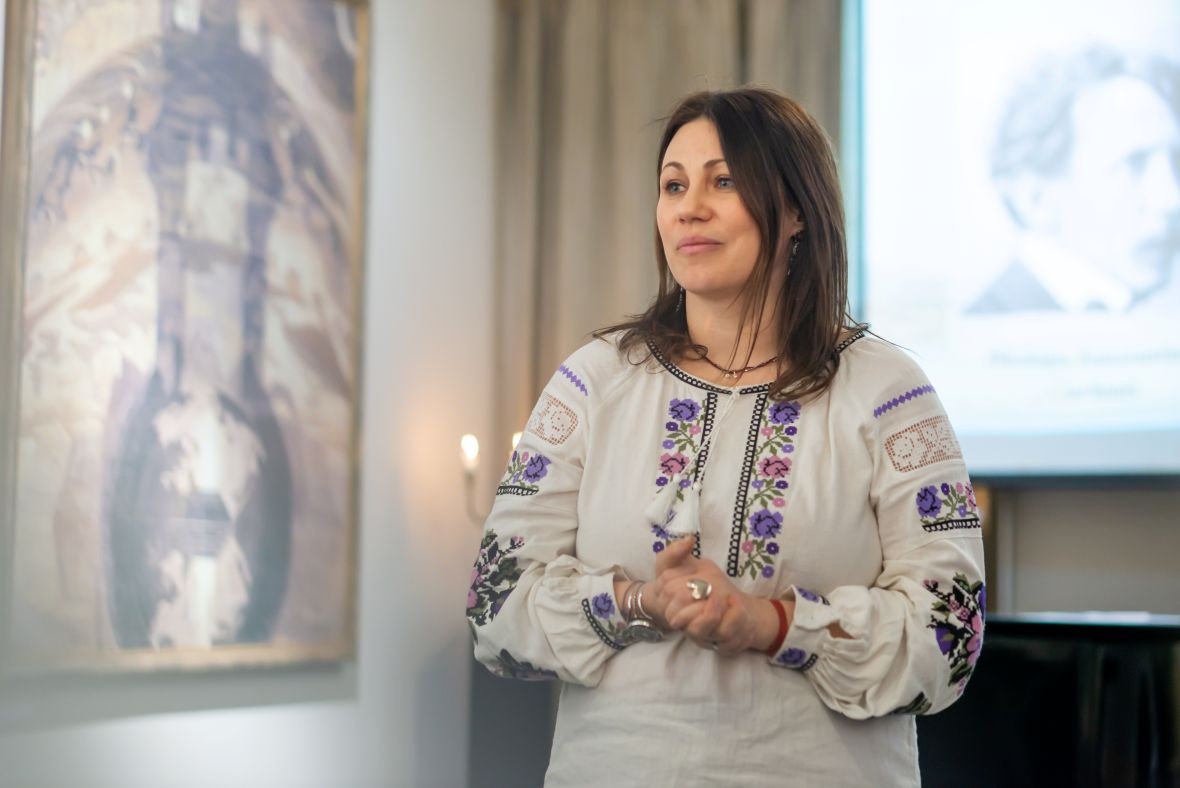
Integration performance with facilitated dialogue as part of the Baltic-Norwegian cooperation program, Čiurlionis House, Vilnius. 2025
“All people are similar”
Svitlana believes that on a human level, people are far more similar than different, regardless of nationality or other perceived distinctions. Speaking from her refugee experience, she says "I would never wish anyone to experience forced migration, but you never know if war will not come your way, as it was in my case,” she says.
For people who remain skeptical about refugees, she has a simple suggestion: "Transform your skepticism into interest. If you want to understand another person, just ask your questions.”
She adds that it is not easy for people to connect with refugees: "People prefer to stay disconnected because it’s emotionally easier.” She understands this feeling—she experiences something similar when speaking with people in Ukraine who face the war every day. That is why she makes every effort to maintain personal and professional ties with people in Ukraine and not to distance herself.
Carrying the weight of survivor’s guilt and standing at a crossroads, she reflects: "My experience here in Lithuania is one of ‘emigration,’ not ‘war.’ Staying connected with people in Ukraine, I increasingly feel how the gap between these experiences grows with each passing day. Ukraine is still my home, but here in Lithuania I also feel at home." Four years on, a sense of her dual identity is becoming more present.


