



Olesja’s journey from stateless to citizen
Olesja’s journey from stateless to citizen

In 1991, Olesja and her family became stateless when the Soviet Union collapsed.
Today, Olesja Lagashina sees herself as both Estonian and European, enjoying the freedom to easily travel and explore new places. However, this wasn’t always the case. In 1991, she and her family became stateless when the Soviet Union (USSR) disintegrated.
For Olesja and her family, losing their citizenship meant losing their passports, and many of the rights that they took for granted. Olesja found herself feeling like a stranger in her own country.
“Imagine: your country collapses, and you find yourself a forced migrant. You realize that no one here was expecting you; there’s historical resentment between your peoples, your native language is called the language of occupants, and you have fewer rights than others. And you’re constantly reminded of this. It’s not a very pleasant feeling,” she explains.

The struggles of statelessness
Being stateless means you have no nationality and are not recognized as a citizen by any country. As a result, stateless people often face difficulties accessing basic rights and services, such as education, legal employment, healthcare, and marriage. In 1992, an estimated 500,000 people in Estonia — primarily Russian-speaking residents — had undetermined citizenship because they were not automatically granted Estonian citizenship after the collapse of the USSR. Instead, they had to go through a naturalization process, which included demonstrating knowledge of the Estonian language and the Estonian Constitution.
When I wanted to travel abroad or apply to university, my status as stateless affected me
Olesja’s stateless status affected her life in different ways, making everyday things much more complicated.
“When I wanted to travel abroad or apply to university, my status as stateless affected me. I remember standing in a huge queue in the rain to submit my residency permit documents, and I got sick afterward. When I applied to university, I had to present a stack of documents instead of just one passport — it was inconvenient. Abroad, people also found it strange that my family members had different documents. Once, I won a prize at a competition and was supposed to go to Paris, but I couldn’t because an Estonian passport was required,” she recalls.
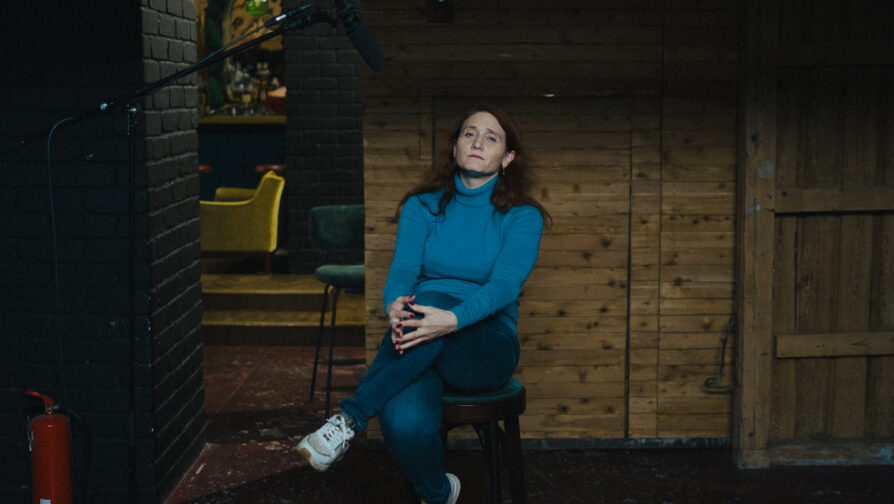
In 1998, following seven years without citizenship, Olesja obtained Estonian nationality after successfully completing the citizenship test.
From stateless to citizen
In 1998, after being stateless for seven years, Olesja was officially granted Estonian citizenship after passing the citizenship test.
Preparing for the exam took extra effort, and she enrolled in private language courses to succeed. While she managed to pass, many stateless people continue to struggle with complex language exams. Even within Olesja’s own family, some members have yet to acquire citizenship.
“My mom doesn’t speak Estonian. In the 1990s, she took language courses, but the teacher told her she didn’t need Estonian because she would leave anyway. She felt hurt, and since she quickly became a housewife, Estonian wasn’t needed in her daily life. My dad and brother learned the language because they needed it for work.”
Misconceptions and missed rights
For over 25 years, Olesja has held the title of Estonian citizen and, subsequently, EU citizen. However, nearly 63,000 people in Estonia remain stateless, lacking political rights and facing misconceptions.
“In Estonia today, people believe stateless individuals don’t take Estonian citizenship for principled political reasons. In reality, there are often practical reasons: some can’t pass the exam, while others find it more convenient to travel with a gray (alien’s) passport within the EU and Russia without needing a visa,” Olesja explains.
An Estonian passport represents freedom to make decisions for me
UNHCR, along with its partners in Estonia and globally, works to prevent and end statelessness worldwide.
“Ending statelessness is a priority for UNHCR. We are committed to helping stateless individuals acquire nationality and preventing new cases of statelessness. Globally since 2014, our efforts have enabled over 500,000 stateless people to gain nationality, with tens of thousands more on the pathway to citizenship due to legislative changes,” Olga Sõtnik, UNHCR’s Government Liaison in Estonia, explains.

Olesja hopes that more efforts will be made to ensure that stateless people can obtain citizenship and enjoy the same rights and freedoms as her.
A sense of freedom
Acquiring Estonian citizenship has been a significant milestone for Olesja.
“An Estonian passport represents freedom to make decisions for me. Even if I sometimes still feel like a stranger at home, I want to believe that I can change that.”
She hopes that more efforts will be made to ensure that stateless people can obtain citizenship and enjoy the same rights and freedoms as her.
“For me, a positive solution would be for Estonia to simplify the process of obtaining citizenship, including for those who have not yet managed to renounce their Russian citizenship. This would demonstrate that the Estonian state truly considers these individuals as its own.”


