



Back to the classroom: How underground schools ensure safe and uninterrupted learning for children in Ukraine
Back to the classroom: How underground schools ensure safe and uninterrupted learning for children in Ukraine

In Kharkiv region in northeast Ukraine, where half of all schools have been damaged or destroyed by Russian airstrikes, education is not only about classroom lessons – it is about providing children with safety and a sense of normalcy.
For students who have spent years waiting to return to in-person school, the classrooms represent more than just a place to learn. They symbolize resilience and the promise of a brighter future, even in the midst of war. And in a situation with continuous Russian attacks on the frontline region, they provide much needed safety.
“I will be able to see my friends!”
When ten-year-old Hlib finally stepped inside his new classroom underground, he couldn’t hide his excitement. It had been more than three years since he last attended school in person. For much of his childhood, air raid alerts, bombings, and the war have kept him confined to online learning, isolated from his friends and teachers.

“I managed to go to school for less than a year, and afterwards I couldn’t even see my classmates. That’s why I’m happy now, because I will be able to see my friends. And now, I will be able to raise my hand, when answering a teacher and be seen by her,” said Hlib, who was accompanied by his mother, when his school in Kharkiv city opened their new shelter classrooms.
His is one of a total of six schools in the Kharkiv region that have established underground classrooms as part of a project by UNHCR, the UN Refugee Agency, and LWF, the Lutheran World Federation, working together with local authorities. The project complements the initiative of the Government and the President of Ukraine in setting up shelters in schools, restoring safe access to offline education for thousands of children.
UNHCR and LWF have successfully rehabilitated and reconstructed five underground schools, while a sixth school has been equipped with furniture and essential supplies. These schools ensure that nearly 2,500 students and over 400 teachers can now stay safe while attending school in-person – and without having their education disrupted by running down to protective shelters during the continuous attacks and frequent air raid alerts.
Learning beyond the screen
In the course of her decade-long career, elementary school teacher Anastasia Makovetska has guided many young learners through their first years of education. She highlights the unique challenges that younger students face, especially during online learning.
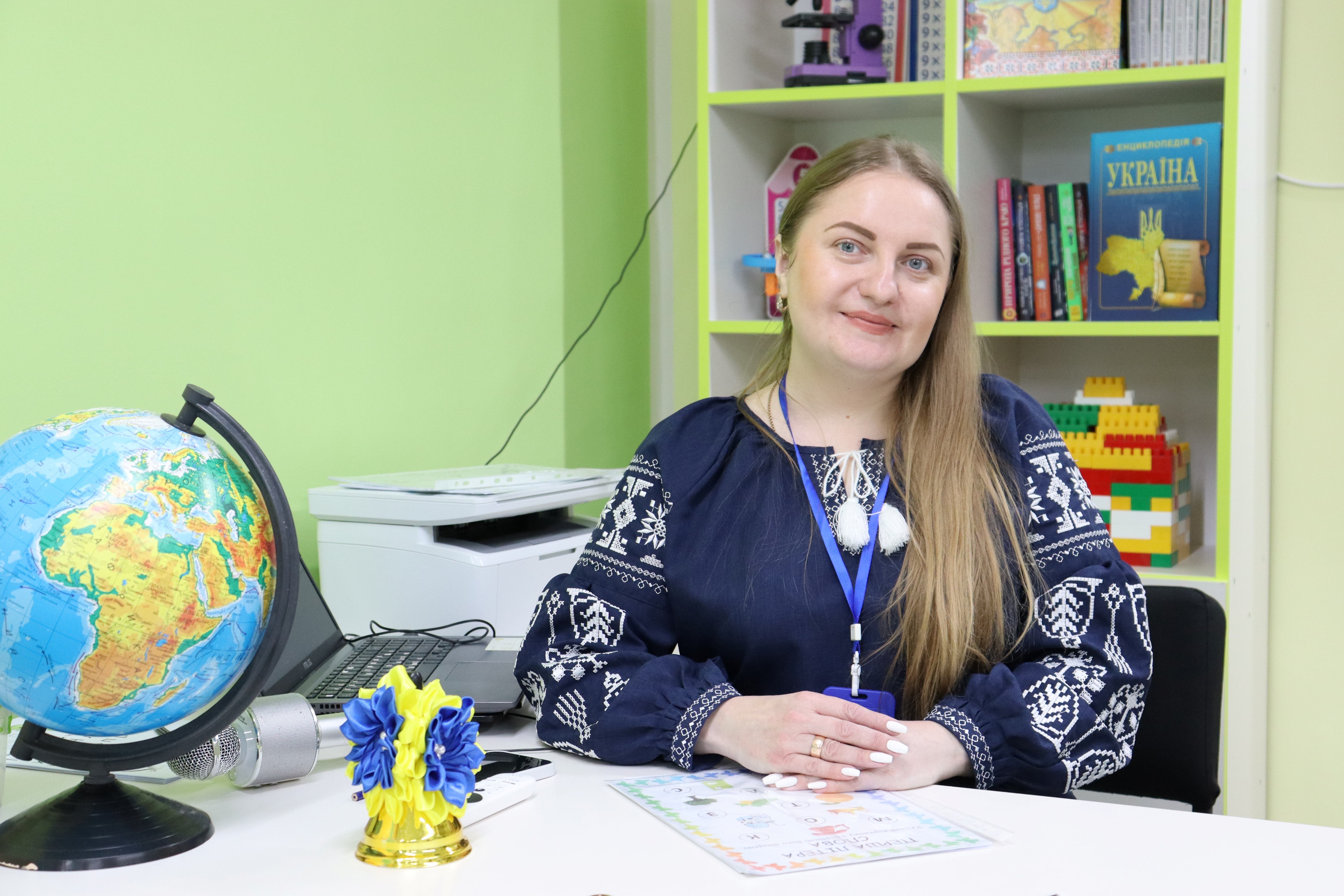
"Young children learn not just from books, but from each other," she explains. "They need live, in-person learning, because it’s a crucial part of their personal development. Children are learning how to communicate, make friends, and solve problems together. They are tactile, they love hugging, sharing toys, and simply being around one another. These are essential skills they cannot develop through a screen."
Anastasia also emphasizes the excitement her students felt about returning to school. "They had been waiting for this day for so long. They spent the entire weekend preparing their backpacks and counting down. It was as if something had been missing from their lives, and now they finally have it back. This is what they needed. A chance to be children again."
The full-scale invasion has severely impacted Ukraine’s education system with over 3,600 schools and universities damaged and close to 400 fully destroyed. Around four million children continue to have their education disrupted, with approximately 600,000 schoolchildren across the country unable to access in-person schooling, according to UN figures. This affects children’s well-being that is already severely impacted by the ongoing war, with 44% of children reporting mental health and socialization problems.
A critical year for graduates
For older students, like 16-year-old Kateryna who is in her final year before university, the ability to return to school in person is similarly critical.
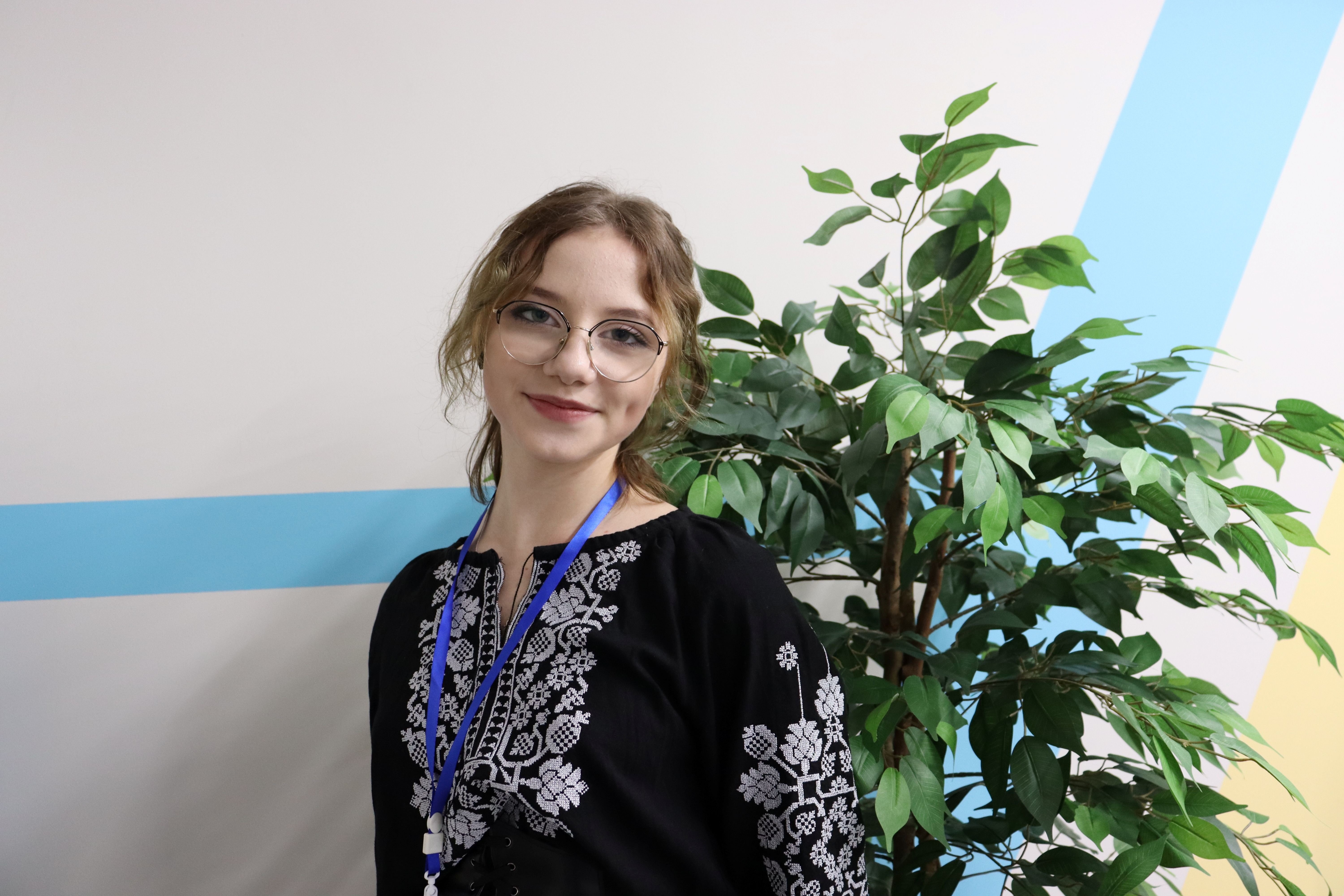
"Online learning was certainly convenient in some ways, but it was much harder to understand the topics, especially in a graduating class where good marks matter a lot," Kateryna says. "Without the direct interaction with teachers, it felt like something was always missing, and I struggled to grasp a lot of topics. It was stressful, knowing that these are the grades that will shape my future.”
Now, back in the classroom, she feels a renewed sense of motivation. “Being here, surrounded by classmates, makes a huge difference. It’s easier to concentrate, to ask questions, and to really absorb what we are learning.”
As she looks ahead to university, Kateryna is considering a career in psychology. “I want to help people, especially children who have experienced trauma from the war, just like me,” she says. “And I know that being in school now is preparing me for that future.”
UNHCR’s support for constructing classrooms in underground shelters to ensure safe in-person learning was agreed upon during a meeting between the UN High Commissioner for Refugees, Filippo Grandi, and Ukraine’s President Zelenskyy during the High Commissioner’s visit to Ukraine in July 2024.


