
Community Houses help displaced people find support and connection across Ukraine
Community Houses help displaced people find support and connection across Ukraine

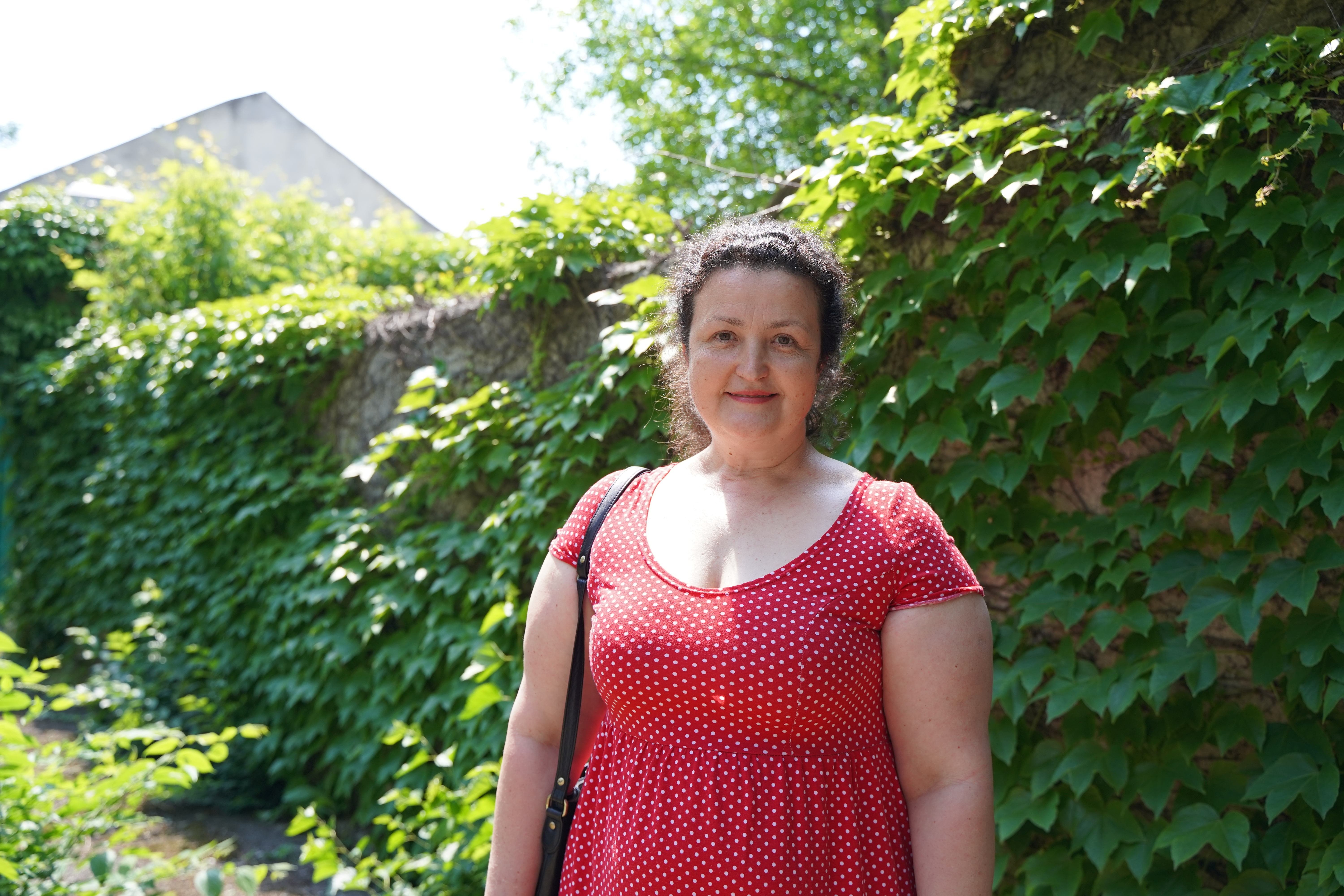
Every evening, Alyona waits for a call from her husband, who has stayed behind in Kherson, one of Ukraine’s frontline cities, where civilians continue to live under the threat of near-constant aerial attacks. Russian strikes with the increased use of drones regularly damage homes and critical infrastructure, while people who remain face an increasingly difficult daily reality, including disrupted access to essential services. “I’m so nervous, I wait for his call every evening. I read the news about what’s happening in Kherson, and I’m so scared,” she says.
Alyona left Kherson with her daughter after needing to continue her medical treatment. They first travelled to Kyiv and later stayed with relatives in western Ukraine. But the distance made it difficult for her husband to visit. In February 2025, Alyona and her daughter moved to Mykolaiv, closer to Kherson, so the family could see each other more often. Her husband continues to work in Kherson to earn enough to cover the family’s rent and daily expenses. When circumstances allow, he visits them on weekends.
The separation has been particularly painful for the couple, who have been married for 20 years. In 2021, they had just finished paying for their apartment and looked forward to enjoying life in their own home. But the Russian full-scale invasion changed everything. “We had just paid off our apartment. We were so happy, and then the war started, and we could not stay,” Alyona says. “I have always lived in Kherson. It is my home, and I just want to return.”
For Alyona, as for many people displaced from frontline areas, leaving home meant more than finding somewhere safer to live. It also meant adapting to an unfamiliar place, navigating new procedures and services, and living without the support network of family, friends and neighbours that were left behind. This is where community spaces can make a difference. UNHCR and its NGO partner The Tenth of April support a network of Community Houses in Ukraine. These spaces bring together community organizations, service providers, internally displaced people and local residents – a place where people can receive assistance, participate in activities and build new social connections.
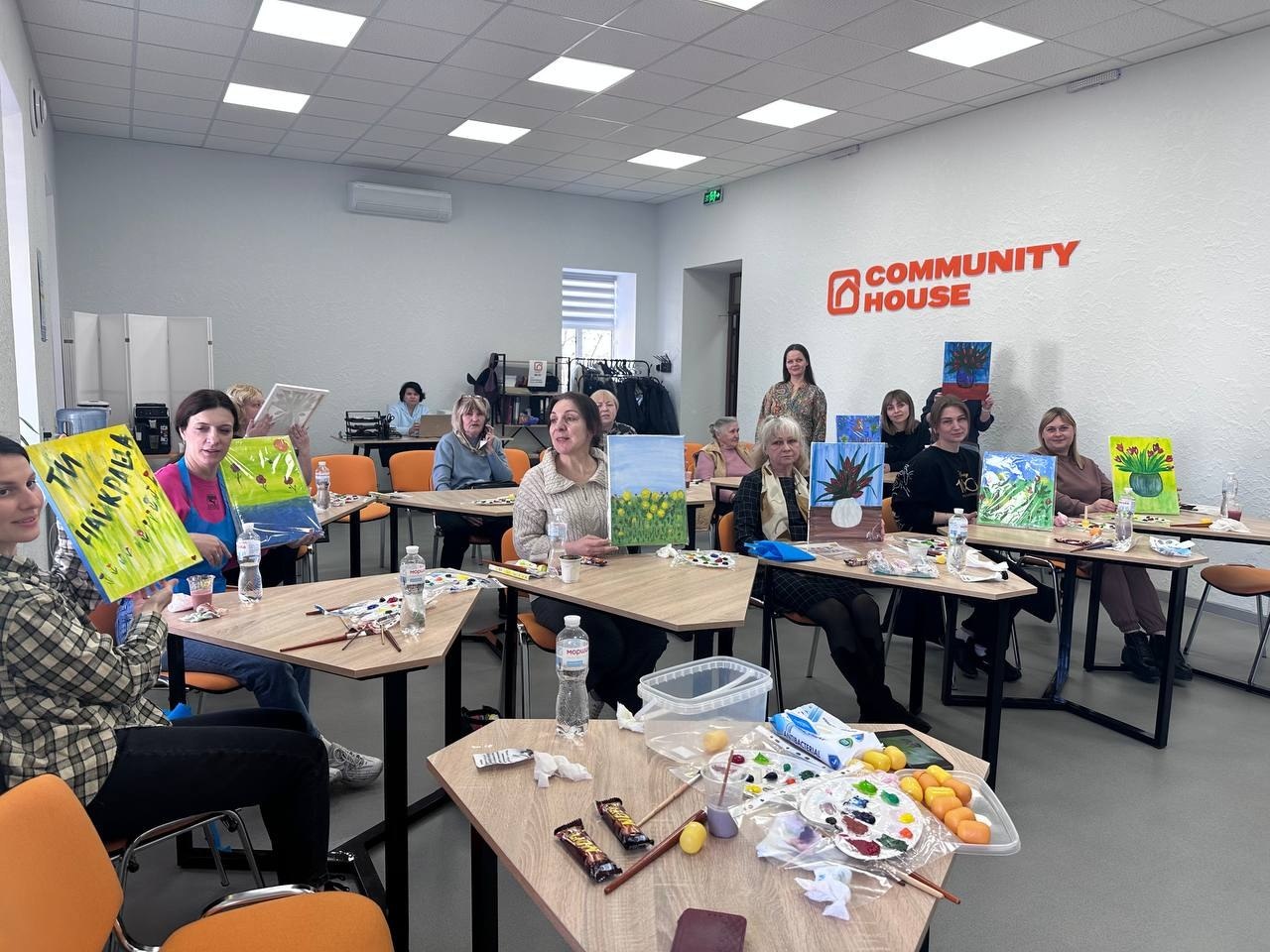
In Mykolaiv, UNHCR and The Tenth of April renovated the premises, transforming it into a venue for legal counselling, psychosocial support, training, workshops and other community activities. Similar spaces supported by UNHCR and The Tenth of April also operate in the cities of Odesa and Izmail. “This community space is for local NGOs and other community groups to hold activities and help displaced people integrate. We also offer mentoring and training for social workers and community groups. Our goal is to show people that they have somewhere to go where they can be heard and get support,” explains Nataliia, who manages the Mykolaiv Community House.
Around 15 NGOs use the space daily. Nataliia describes how people often arrive feeling isolated and uncertain about what comes next, but gradually open up as they receive support and connect with others through the activities.
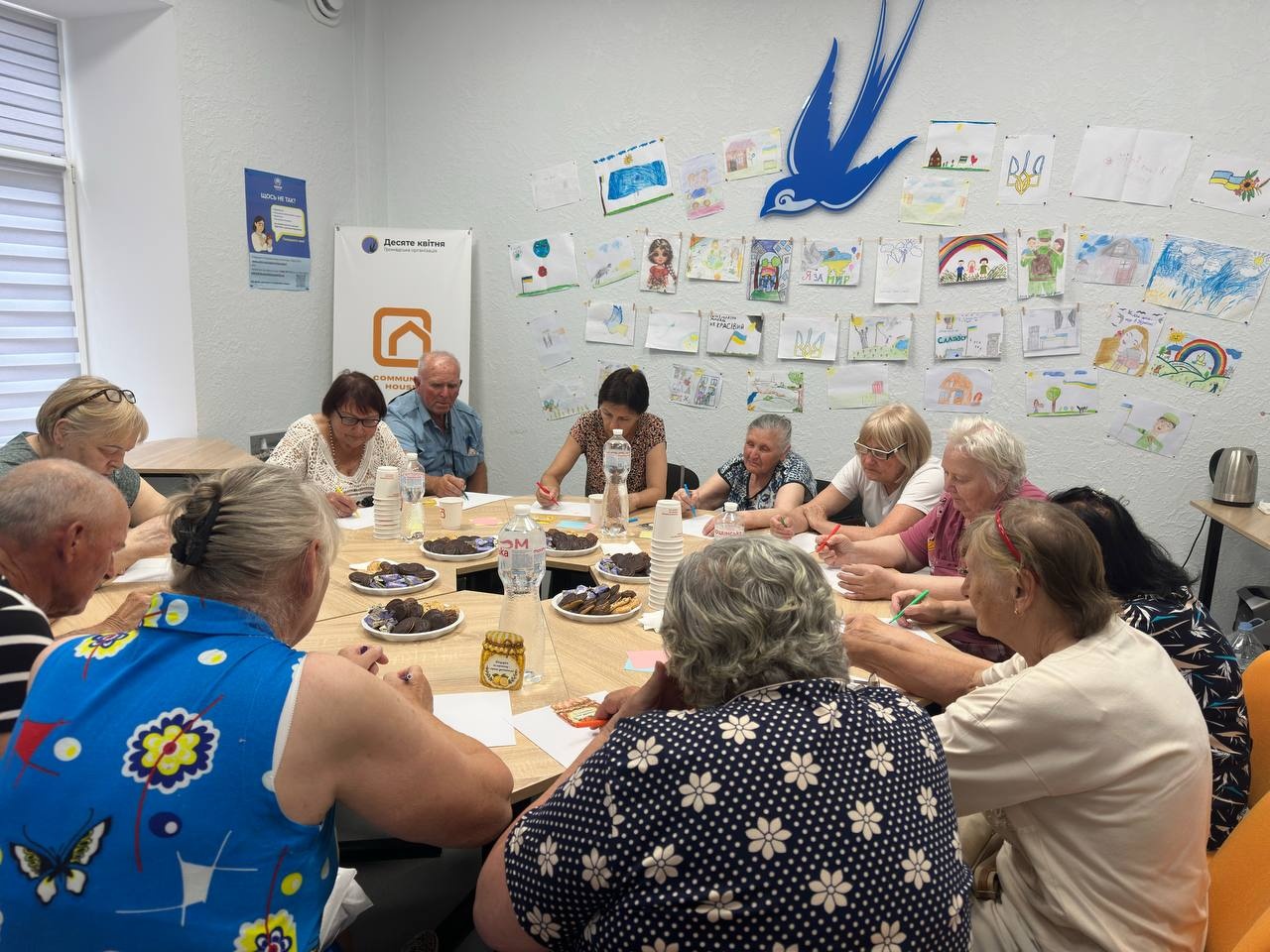
Since opening on in March, the Mykolaiv Community House has held over 120 events, attended by more than 2,000 people. Alyona first joined an awareness session on online safety and fraud. During the visit, she also had an opportunity to speak with a legal counsellor about the monthly assistance for internally displaced people that she had stopped receiving. “I could not understand why I was no longer receiving the monthly IDP benefit,” she explains. “The legal counsellor helped me understand the difficult procedures. I had other questions too, and everything was explained and answered,” she explains.
But the practical advice was only one part of what Alyona found at the centre. With her husband still in Kherson and much of her familiar support left behind, having somewhere to meet other people from her region has helped ease the isolation and constant stress of displacement. “Many of us come from Kherson region. We are internally displaced, and we have all been affected by what we have been through. Coming here is like finding a new home,” she says.
The Community House cannot replace the home Alyona was forced to leave behind or take away the fear she feels while her husband remains in Kherson. But it gives her a place where she can be heard, find practical support and connect with people who understand what she is going through. “To come here and socialize is such a relief,” she says. “The psychosocial support is very important. Without it, everything would be much worse.”