



A psychologist’s story of healing and hope on the frontline
A psychologist’s story of healing and hope on the frontline

Iryna has worked as a psychologist for UNHCR’s NGO partner Proliska since the start of the full-scale Russian invasion, helping the most affected people to cope with trauma of the ongoing war.
For Iryna, the war started 11 years ago in 2014 when she had to flee her home in the city of Donetsk and move to another part of Donetsk region that remained under Ukraine’s control. In February 2022, the Russian full-scale invasion forced her to flee for her life again - this time settling in the city of Dnipro, which has become a humanitarian hub for thousands of people displaced from frontline areas.
Instead of despair, Iryna — who holds a degree in psychology — chose action. She joined UNHCR’s partner NGO Proliska, where she now supports people bearing the invisible scars of the war that leaves deep wounds on their mental health.
“Being twice displaced myself, I know exactly how it feels to lose something when you leave. We can help ourselves and recover, only when we help others. You become equals and you talk to each other like equals. I understand them and they understand me, this helps people to open up,” Iryna explains.
Her work often requires visiting communities close to the front line or meeting people in acute shock immediately after the aerial attacks, that have significantly intensified in Ukraine in recent months. As a part of a Proliska’s mobile team – and alongside other specialists who provide assistance at attack sites – Iryna helps people to find strength and meaning to move on. Shock, despair, grief, fear, sleepless nights, or emotional numbness — these are just some of the conditions, Iryna witnesses daily.
One boy she met had spent four days in a basement with his parents, unable to come out due to shelling.
“They survived on pickles and water,” Iryna recalls. “When the boy finally came out, he stuttered, was pale and shaking. He couldn’t speak much, but he drew. He drew the ladder they used to climb down to the basement, and what he felt there. I continue to work with him and his parents. Our task is to encourage them to move on and give them tools, so they know what to do now.”
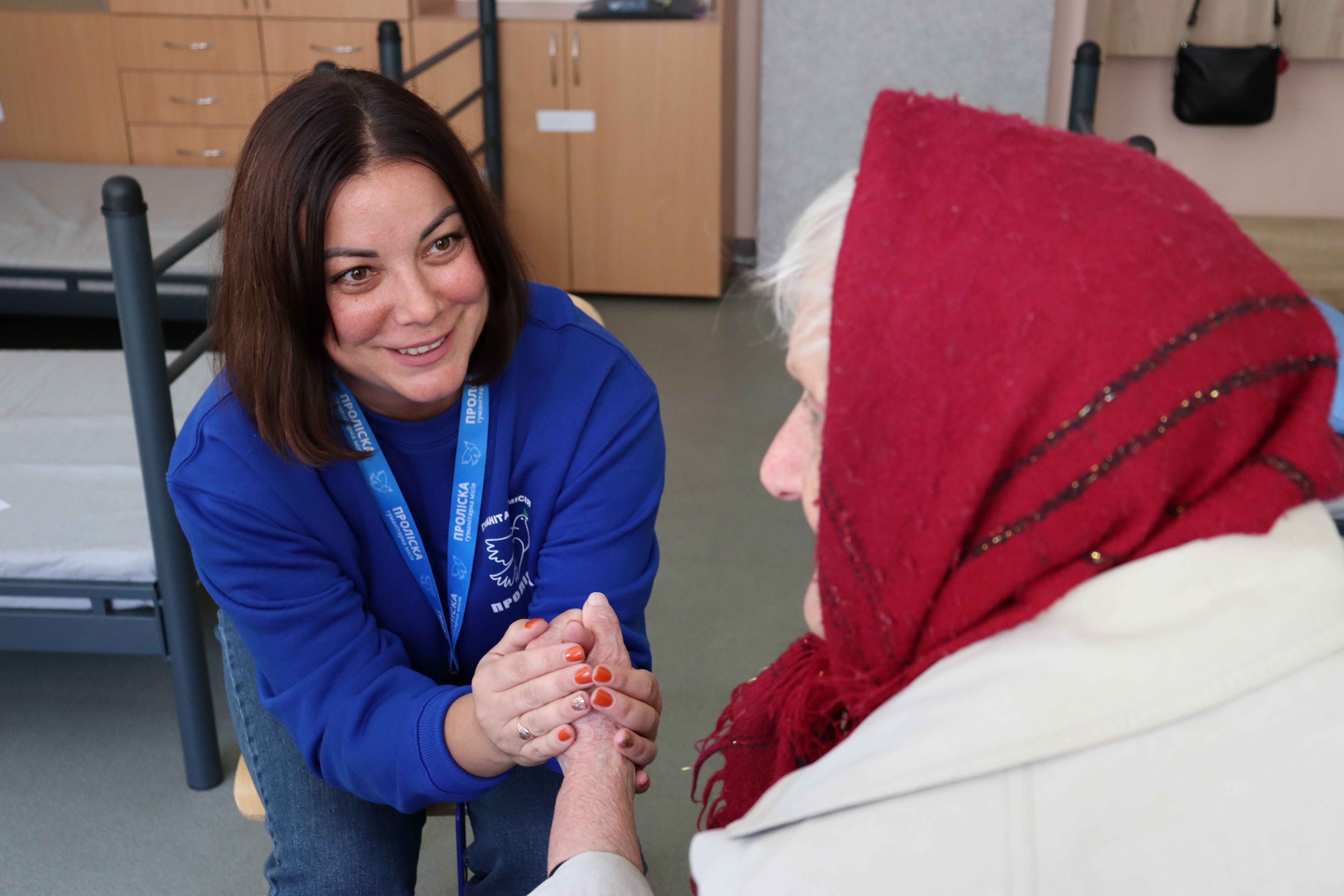
Children often seek her out first, grabbing her hands or hugging her when she arrives.
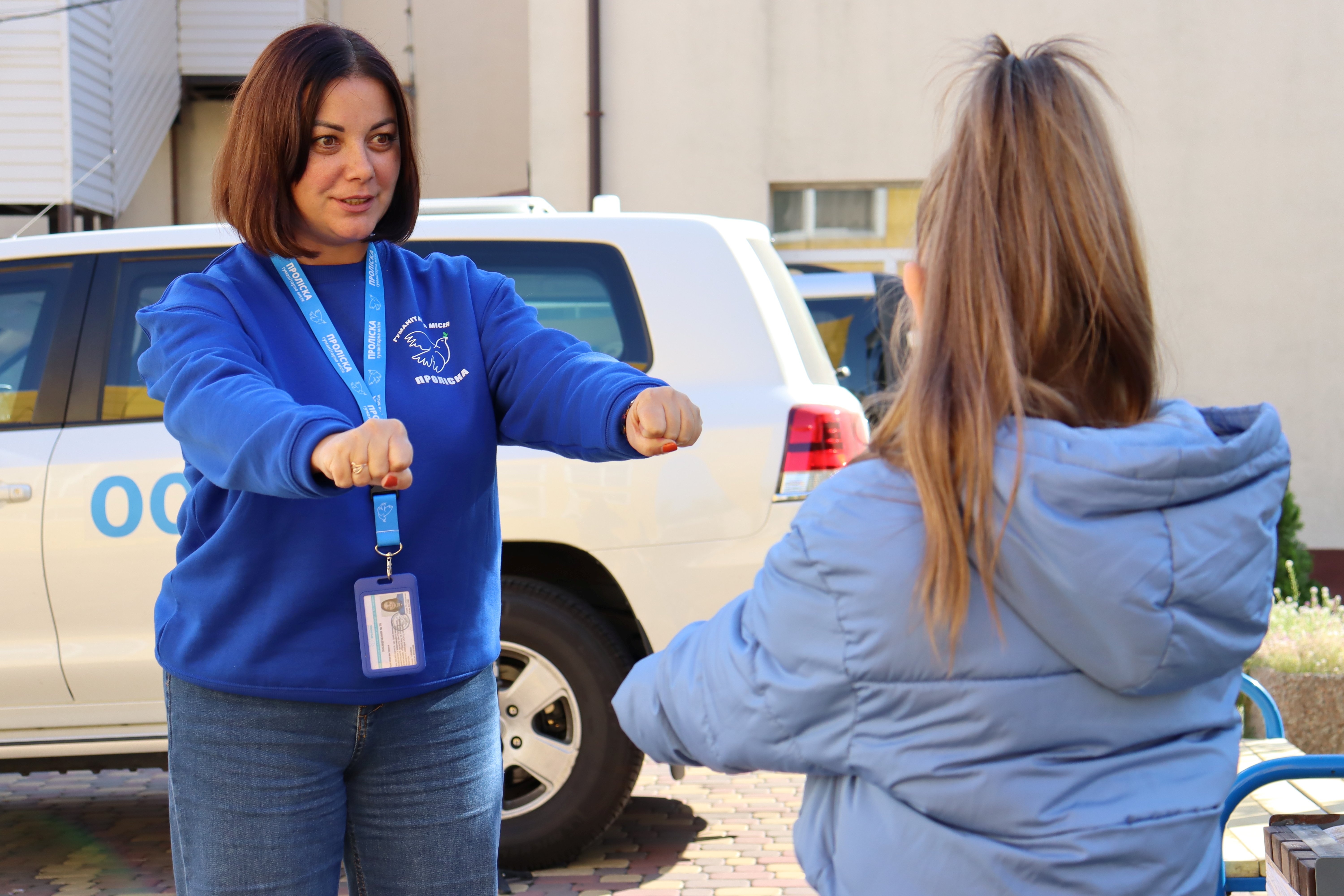
“They want the support, their parents cannot provide at that moment, because the parents themselves are off-balance and scared,” she says. “We stabilize the parents as much as the children, showing them breathing techniques or simple exercises so that the whole family can move forward together.”

Older people face different challenges. Many are alone, because their children have been displaced in Ukraine or gone abroad, and some have held on to homes near the frontline until evacuation became unavoidable.
“Evacuation is not just a change of place of living. This is a deep emotional turning point. Our role is to help people not only go through the loss of their home, but also to find themselves in the current moment and move forward.”
The UN estimates that about 10 million people in Ukraine require mental health support as the full-scale war is now approaching its fourth year. Since the start of the invasion, UNHCR, jointly with six national NGO partners, has supported over 300,000 people with psychosocial assistance, including directly after attacks or following evacuations.
"Our psychosocial teams work with thousands of people every month. We meet people in transit centers, on evacuation buses, in community hubs, and directly in frontline areas. Half of our interventions are individual consultations, while the other half are group or family sessions, including peer-to-peer support and art-based activities for children and adults,” says Mariia Vlasenko, Assistant Mental Health and Psychosocial Support Officer at UNHCR Ukraine, and explains further: “Psychosocial support is never isolated — it is linked to our broader protection work, including legal aid, social assistance, and referral to specialized services. The needs of people affected by displacement and war are complex and interconnected, and our approach is to help people recover and start rebuilding their lives."
Despite the constant uncertainty and danger, Iryna from Proliska continues her work with quiet determination. Each small sign of recovery is for her a reminder of the power of human resilience.
“The greatest value of my work is not only helping ‘here and now’. What warms my heart is when, after evacuation or shelling, I meet these people again – on the street or in a new city. They recognize me, come up to me, call me, share how their lives are going. And that warms me more than anything.”


