



Building inclusion from the ground up: How IDP councils help displaced Ukrainians rebuild their lives
Building inclusion from the ground up: How IDP councils help displaced Ukrainians rebuild their lives

Yana Burlutska, 44, head of the Voznesensk IDP Council, who has personally experienced displacement, having fled Luhansk in 2014 and Kharkiv in 2022.
Across Ukraine, more than eight hundred councils of internally displaced people (IDPs) are working within local authorities to ensure that those who fled the war can take an active part in community life and decision-making.
True to the vital concept of ‘people protecting people’ and supported by UNHCR, the UN Refugee Agency, and its partner Stabilization Support Services, the councils provide a platform for dialogue between displaced people, communities and local authorities. They help shape solutions on housing, livelihoods, education, and social protection. They amplify the voices of displaced people in local planning and ensure that recovery and integration efforts reflect their real needs and lived experiences.
Advocacy that makes a difference
When 44-year-old Mariana Putiatina fled Kharkiv with her two children in March 2022, she brought only a few essential belongings. “We were traveling on an evacuation train. We knew where we were going, but we didn’t plan to stay this long. We took only what was necessary. My daughter has diabetes, so my backpack was full of insulin, test strips, and medicine,” she says.
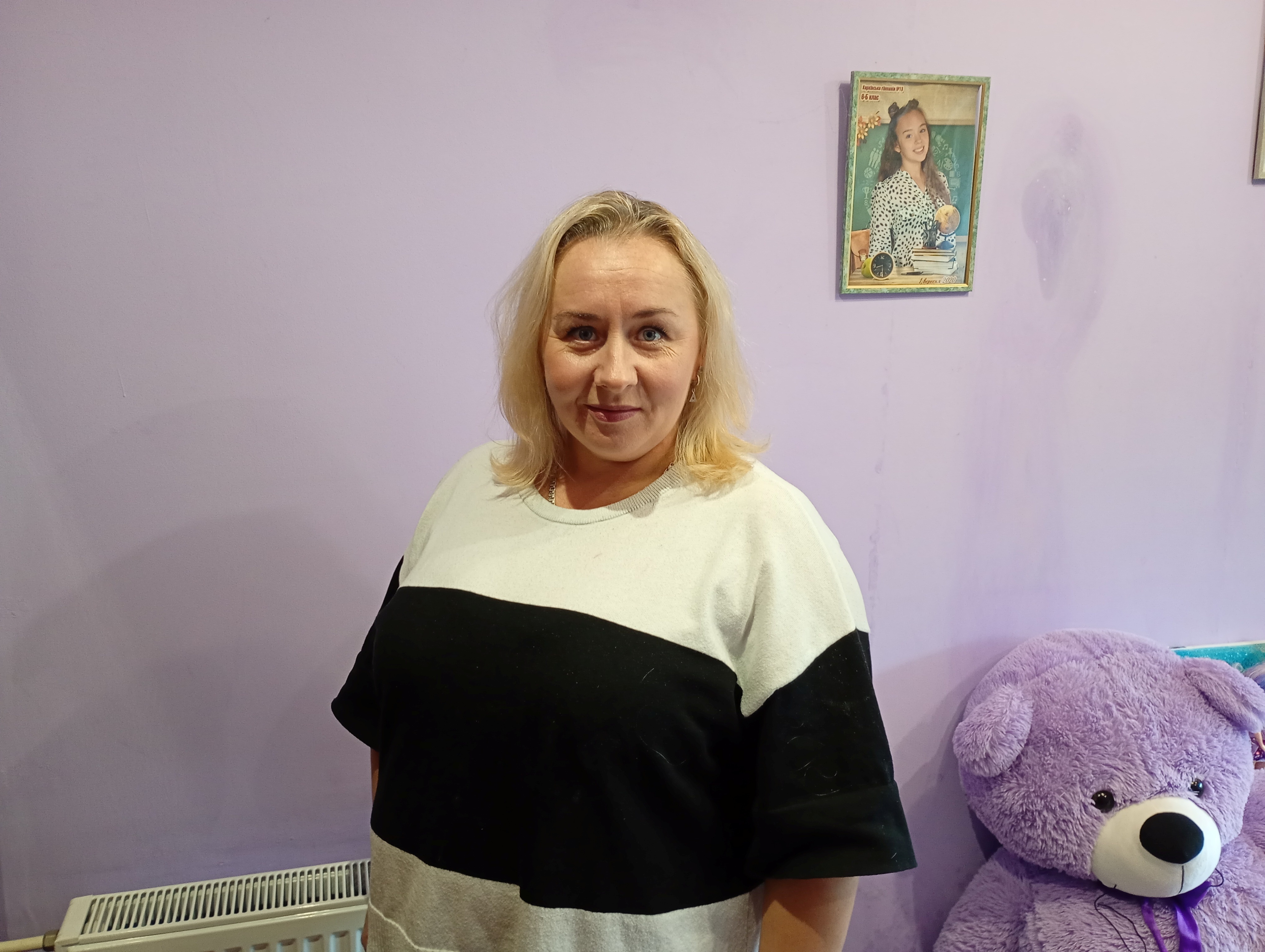
Mariana’s family arrived in Kalush, a small city in western Ukraine, where her sister lived. Mariana found a job, but as living costs rose and her daughter’s medical needs remained constant, it became harder to make ends meet. A much needed helping hand came through one-time financial assistance for displaced children with diabetes, provided by the local council.
The vital support that Mariana and her child received was the result of hard work by the local IDP council, led by Valeriia Prudnikova, who arrived from Bakhmut in 2022.
After evacuating with her two children and elderly mother, Valeriia settled in Kalush and gradually became a community leader, writing appeals, attending council meetings, and talking to local officials.
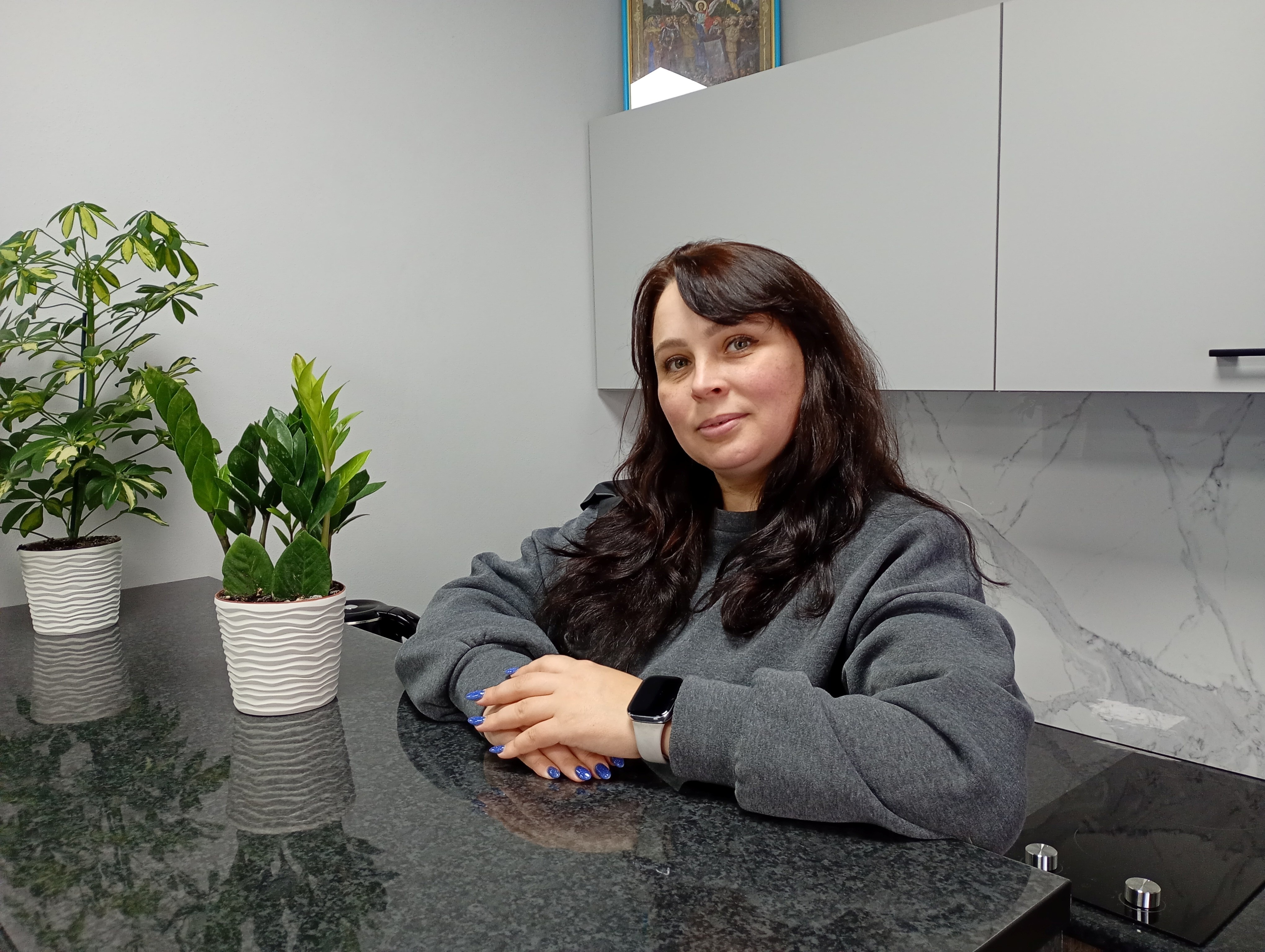
“My work goes beyond the official duties. I help displaced people connect with the right organizations, guide them on where to turn for support, and try to make them feel part of the community, like organizing trips for families who wouldn’t be able to go otherwise,” explains Valeriia.
With support from the Stabilization Support Services, the Kalush IDP Council reviewed the local social assistance programmes and identified gaps where IDPs were unintentionally excluded. Working with local authorities, they successfully advocated for changes to the one-time financial aid and proposed amendments to six existing procedures.
The IDP Council was heard – local authorities supported their initiative. As a result, the eligibility criteria were expanded, and between March and September 2025, displaced residents received assistance worth 252,000 UAH in total (approximately 6,000 USD).
For Mariana and her daughter with diabetes, this support was crucial: “My daughter has a severe form of diabetes. The state only provides insulin for free. Everything else - needles, vitamins, sensors - we have to buy ourselves. That’s why having this kind of support was substantial for me,” Mariana explains.
In the IDP Council, Valeriia is not only seeing the policy changes as the biggest victory — it’s the sense of belonging it created for her fellow displaced people. “When people see that local authorities listen, they start to feel part of the community again,” she says.
Building opportunities from within
Hundreds of kilometers south, in Voznesensk, Mykolaiv region, another IDP Council is helping newcomers find stability and hope.
Yana Burlutska, 44, knows firsthand what displacement feels like — she was forced to flee twice, first from Luhansk in 2014, then from Kharkiv in 2022, finally settling in Voznesensk after a total of eight relocations. Here, she quickly became involved in the IDP council, first as a member and later as its leader.

Determined to make information accessible to all, Yana created dedicated communication channels on Viber, Facebook, and Telegram. “But to truly help people, it’s not enough just to share information - you also need to create opportunities,” she says.
This year, Yana as head of the Voznesensk IDP Council organized two forums. One focused on employment with experts sharing job openings, advice on retraining and grants for starting a business – and as a result, 42 displaced people in the community found work. Another forum focused on the issue of housing, with explanations from banks and municipal representatives on temporary accommodation, home purchase programs, and compensation for damaged property.
“This resulted in 25 displaced families securing their own homes. Without our social media channels and constant outreach, many wouldn’t have known these opportunities even existed,” Yana explains.
For Anastasia, 32, who arrived from Nova Kakhovka in Kherson region with her two children, the IDP council’s channels and forums were life-changing. “Our departure from Novaya Kakhovka was very difficult. The city was occupied on February 24, 2022, so I had to hide in the basement. I was leaving alone, with two children. Voznesensk felt like home -small, quiet, and welcoming. Then I saw a message from Yana in a local chat group. I told her I was looking for work, and a few days later she called.” Anastasia remembers.
For Anastasia, the contact with the head of IDP council led to employment – and this means much more than just financial stability. “I found a job in a local kindergarten thanks to the advice I received through the council. And it’s not only about money, it’s about purpose, connection, and dignity,” she says.

Across Ukraine, more than eight hundred IDP Councils are turning participation into action — proving that when displaced people have a voice, entire communities grow stronger. Supported by UNHCR and SSS, these Councils are helping transform displacement into a story not only of loss, but of leadership, cooperation, and hope.
UNHCR and Stabilization Support Services, have so far supported the establishment of and provided capacity development for over 100 IDP councils across Ukraine. Through continuous capacity-building initiatives, including specialized trainings on leadership, advocacy, community engagement, and project management, UNHCR and its partners help councils enhance their effectiveness and sustainability.
Building on these successes, the third National Forum of IDP Councils will bring together representatives of IDP councils all over Ukraine to share best practices, exchange experiences, and strengthen the impact of their work. The forum, taking place on 14–15 November 2025, will focus on aligning approaches to integrating displaced people into communities, and influence national policy — ensuring that the voices of internally displaced people are heard and their needs meaningfully addressed.
The Charity Foundation “Stabilization Support Services” has contributed to the story with the materials.


