



The Third National Forum of IDP Councils gathered practitioners and policymakers to explore further strengthening of the councils’ influence locally
The Third National Forum of IDP Councils gathered practitioners and policymakers to explore further strengthening of the councils’ influence locally

On 14-15 November, The Third Ukrainian National Forum of IDP Councils was held in Kyiv, bringing together more than 350 participants, including internally displaced people (IDPs) and IDP Council members from across the country as well as representatives of the Office of the President of Ukraine, the Government, the Parliament, local authorities, international organizations and donors.
The event was organized by UNHCR’s NGO partner Stabilization Support Services (SSS) and supported by UNHCR, and the International Research & Exchanges Board (IREX), in partnership with the Ministry of Development of Communities and Territories of Ukraine.
While the first national forum in 2023 focused on the official recognition and shared vision of the role of IDP Councils, and the second forum in 2024 focused on strengthening capacities and coordination mechanisms, this third forum specifically zoomed in on how IDP councils can meaningfully influence recovery, development and local policy in their communities. It provided not only a platform for dialogue but also very concrete sharing of experiences and good practices.
There are currently more than 800 IDP Councils operating across Ukraine, functioning as consultative and advisory bodies to help local authorities understand needs of displaced people and support their inclusion into communities. Some 100 of the councils are supported directly by UNHCR and partner SSS through different types of capacity building.
Following the forum, a package of recommendations for national and local authorities will be developed, based on the experience and practice of IDP councils and to help further strengthen the IDP Councils role in local democracy.
“Today, IDP Councils unite more than 13,000 people — this is a powerful and necessary force. When the enemy wages war against civilians, millions of displaced people suffer the most: older persons, people with disabilities, single mothers, mothers with many children, and residents of frontline areas. The state, civil society, and partners provide support, but caring also means listening to people and advocating for their interests. This is why the role of IDP Councils is incredibly important today: they ensure systematic advocacy, integration into new communities, coordination with donors, and give people the sense that they are not left alone with their challenges,” said Iryna Vereshchuk, Deputy Head of the Office of the President of Ukraine.

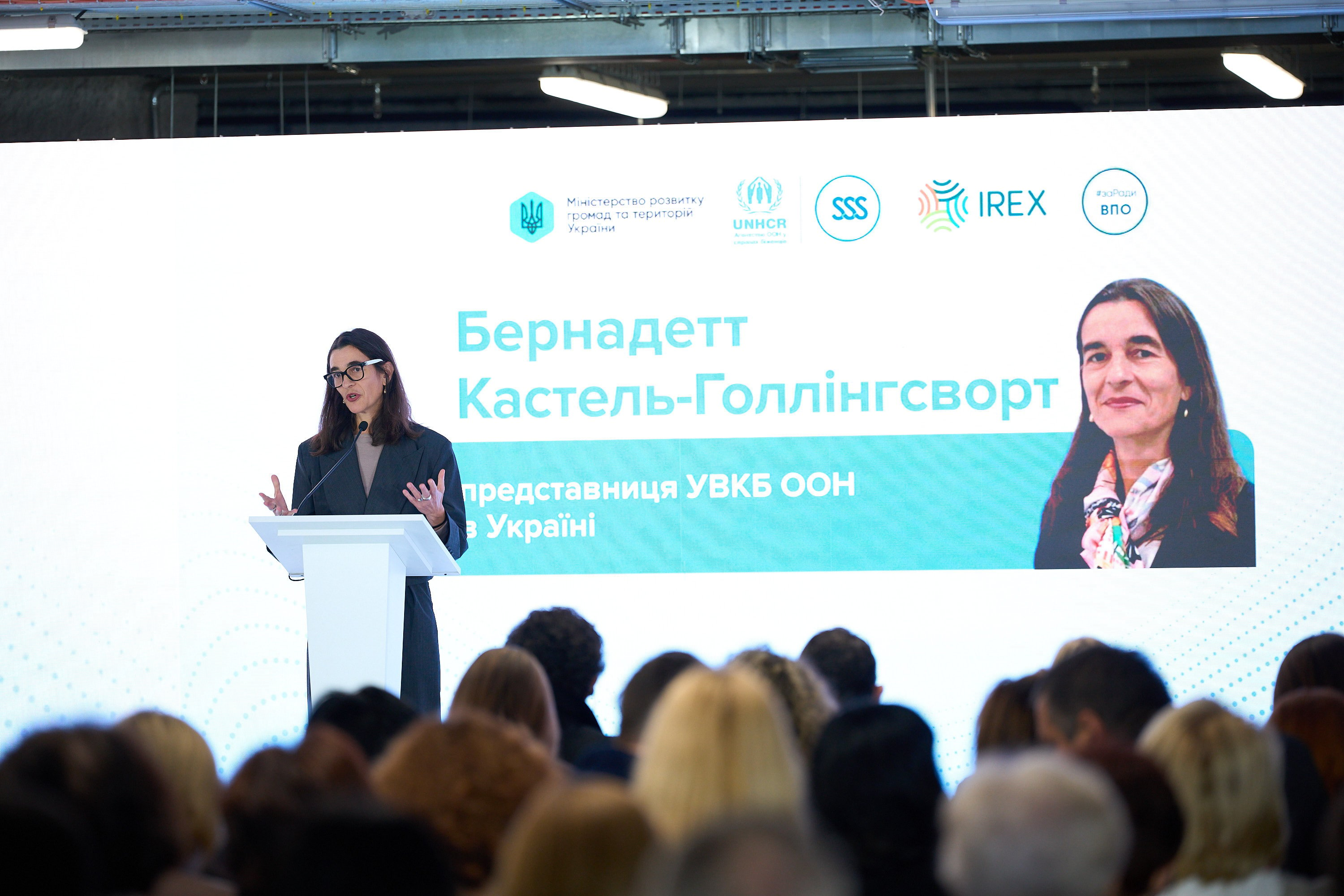
“IDP Councils have become a powerful example of how displaced people can shape the future of their communities and inform national policies. Their lived experience, leadership, and personal understanding of people’s needs provide an essential foundation for effective and inclusive local solutions. For UNHCR, supporting these councils is a strategic commitment to strengthening Ukraine’s resilience and ensuring that the voices of displaced people continue to guide the country’s recovery,” said Bernadette Castel-Hollingsworth, UNHCR Representative in Ukraine.
“In 2018, when I initiated the development of the IDP Council concept, none of us could imagine that in seven years this idea would grow into such a large, expert, and motivated network. We believed that displaced people in Ukraine could restore their rights, that life in war-affected communities could improve, and that together we could achieve more. Then our partners and our government believed in us and gave IDP Councils a chance. Today, the network is more than an idea, more than a project, more than one organization. You have influence — and the right to decide how to use it,” said Olha Ivanova, Director for Development and Advocacy at SSS.

The Ukrainian network of IDP councils has become a best practice model for situations with internal displacement, being recognized internationally and discussed amongst experts and policymakers across the world.


