



Coping with aerial attacks: UNHCR’s emergency response supports people in Ukraine at the most critical time
Coping with aerial attacks: UNHCR’s emergency response supports people in Ukraine at the most critical time

Liudmyla, 68, stands outside her damaged apartment building in Kryvyi Rih after an aerial attack shattered windows and left her home exposed to the cold.
Liudmyla, 68, has lived in Kryvyi Rih in eastern Ukraine her entire life. Today, she lives by herself in an apartment on the fifth floor of a residential building that has been affected by repeated aerial strikes since the start of the full-scale Russian invasion.
Earlier this year, on 8 January, as bitter winter conditions gripped Ukraine, another attack hit the area around Liudmyla’s home. The blast shattered the windows in her bedroom and balcony, damaging the frames and leaving her home exposed to the winter cold.
“When the attack started, everything was flying above my head. It was very scary,” Liudmyla recalls.
Like many residents, she usually goes down to the basement during air raid alerts, even though it is not properly equipped: “Our shelter is not very comfortable, but it is still better than staying on the fifth floor.” But that day there was no time to reach safety. She remained inside her apartment when missiles struck, causing massive damage in her neighborhood.
Even before the air raid alarm ended, UNHCR and its NGO partners were on the site of the attack setting up a mobile humanitarian assistance point, assessing the damage and providing emergency assistance to the affected families. As part of its emergency response, UNHCR delivers legal and psychosocial aid, cash assistance, and materials for quick repairs to seal damaged homes and protect them from cold, snow, and rain.
“It was raining and snowing, and they brought everything right away: film, boards, blankets,” Liudmyla says.
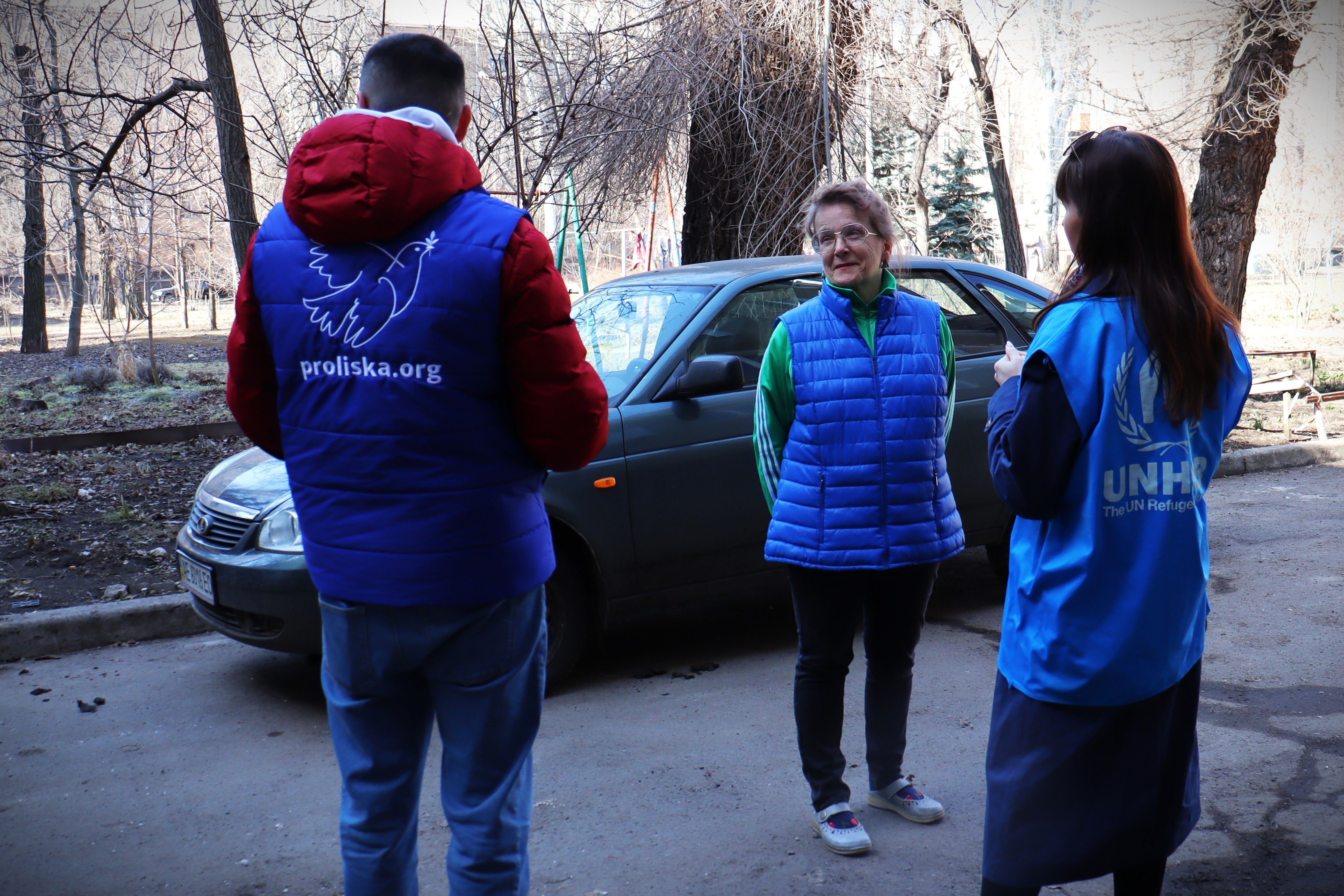
UNHCR and its partners respond within hours after the aerial attacks, helping people to receive the most critical assistance.
With materials provided by UNHCR’s partner Proliska, she covered the broken windows in her apartment herself, using plastic sheeting, tape, and cloth. The support came at a critical time. For the entire month of January, the building had no heating after the boiler room was damaged, while electricity was available only intermittently.
“We had no heating, broken windows, and only electricity every other day,” she says. “I filled bottles with hot water just to stay warm.”
In addition to emergency shelter support, UNHCR’s partner Right to Protection helped Luidmyla and other residents to register for the state compensation programme. Many older people face difficulties accessing such services due to limited digital skills or lack of smartphones. With this assistance, Liudmyla was able to submit her application and is now waiting for a damage assessment.
For now, more substantial repairs remain on hold. “It is very difficult to fix anything when you are still living here,” she explains. “We will wait for warmer weather and for support.”
Despite the hardship, Liudmyla reflects on the resilience of her generation who lived through many crises, including the collapse of the Soviet Union and the economic difficulties of the 1990s. These challenges, she says, have taught people to endure — but not to accept.
“It does not mean we are used to this war,” she says. “It is still scary, even in the fifth year.”
For Liudmyla, hope is simple: “One day there will finally be peace, and we will be able to live. Because now we cannot plan even for tomorrow.”
Across Ukraine, with support from donors like the European Union, UNHCR is able to support people immediately after the attacks, providing emergency shelter materials alongside legal aid, cash assistance and psychosocial support. So far, since the start of the full-scale Russia invasion, UNHCR has provided over half a million people with materials for quick repairs, ensuring they can stay in their homes even during the coldest months.


