



A journey to safety: many evacuees arriving to western Ukraine are highly vulnerable and need specialized care
A journey to safety: many evacuees arriving to western Ukraine are highly vulnerable and need specialized care

As the full-scale war continues in Ukraine with Russian shelling and attacks being a daily reality, not least along the more than 1,000-kilometer frontline, people continue to flee or are supported to evacuate from their villages in frontline regions. According to authorities, more than 150,000 people were evacuated in the last half of 2025.
However, in Lviv, one of the main railway hubs in western Ukraine, the evacuation trains from frontline regions no longer arrive in overwhelming waves – underlining that many internally displaced people prefer to stay as close to home as possible, even within their own region.
Instead, the evacuation trains now arrive to the West in smaller numbers — but often carrying older people, people with disabilities or mobility issues, and those who waited until there was nothing left to stay for.
Behind every arrival is a story of loss, fear, and resilience, as well as a network of volunteers who have not stopped working since the first day of the full-scale invasion.
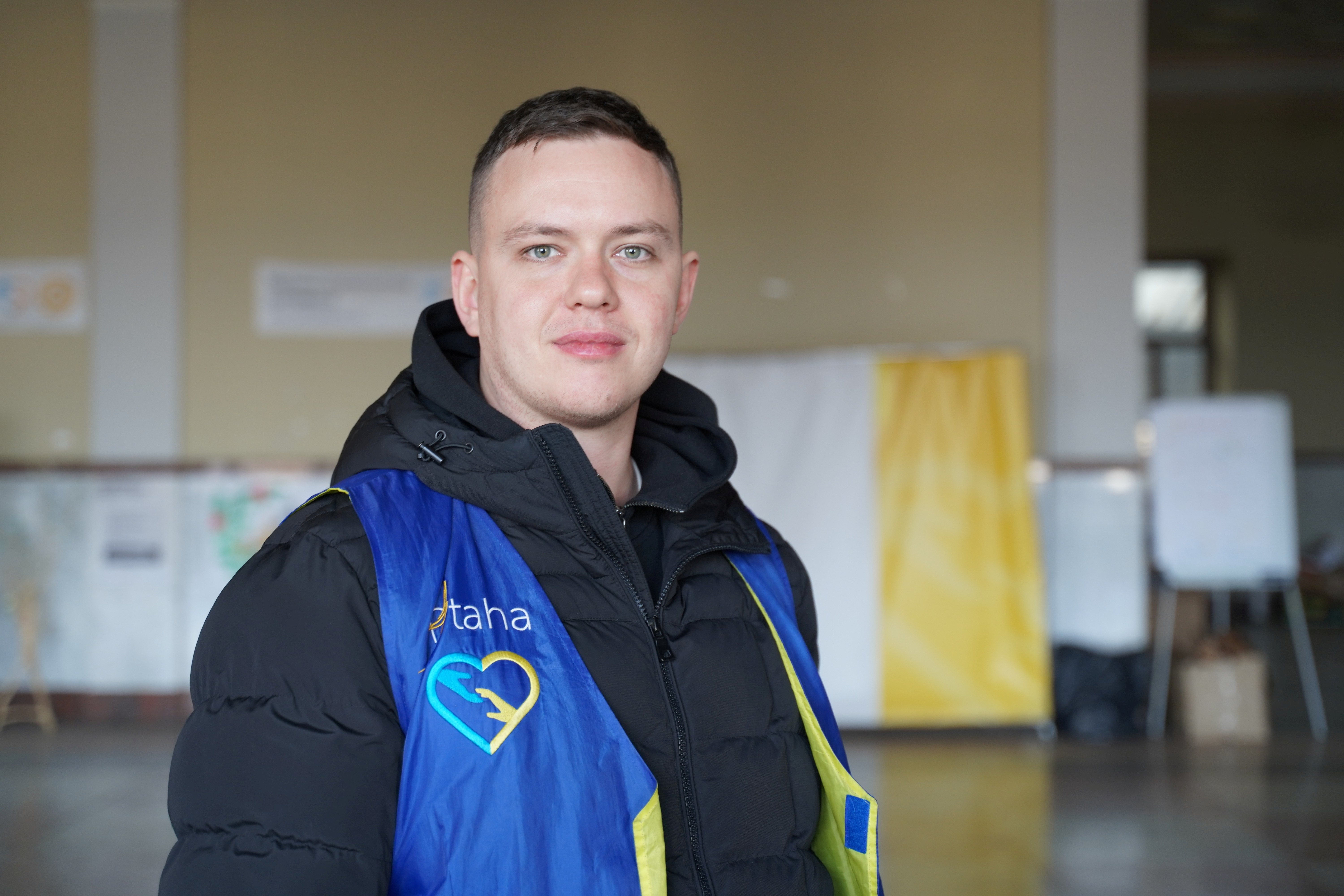
“The people arriving today are those who had nowhere else to go — their homes destroyed, their villages under constant shelling. Some people arrive without knowing what to do next,” says Valentyn Bordun, co-founder of the volunteer organization Ptaha Ukrainy, that has been on site to support every single day since February 2022.
His team meets evacuees at the train station, helps with immediate needs, provides food, hygiene kits and other basic aid, and connects them to shelter and support services.
Specialized accommodation remains a challenge
The profile of evacuees has changed, and with it, the nature of support.
"Now we see the arrival of those who waited long hoping for improvement of the situation, and these people are in need of stronger support,” he explains.
Many of those arriving today are older, or living with disabilities, or in need of ongoing care. For them, evacuation does not end at the station. It begins with a more complicated process—one that depends not only on safety, but on whether they can live with a degree of independence. Finding that balance is one of the main challenges.
Despite these challenges, volunteers and UNHCR’s partners were able to help Andrii Kochera from Prosiana in the Dnipropetrovsk region, whose evacuation required extra coordination and specialized support.
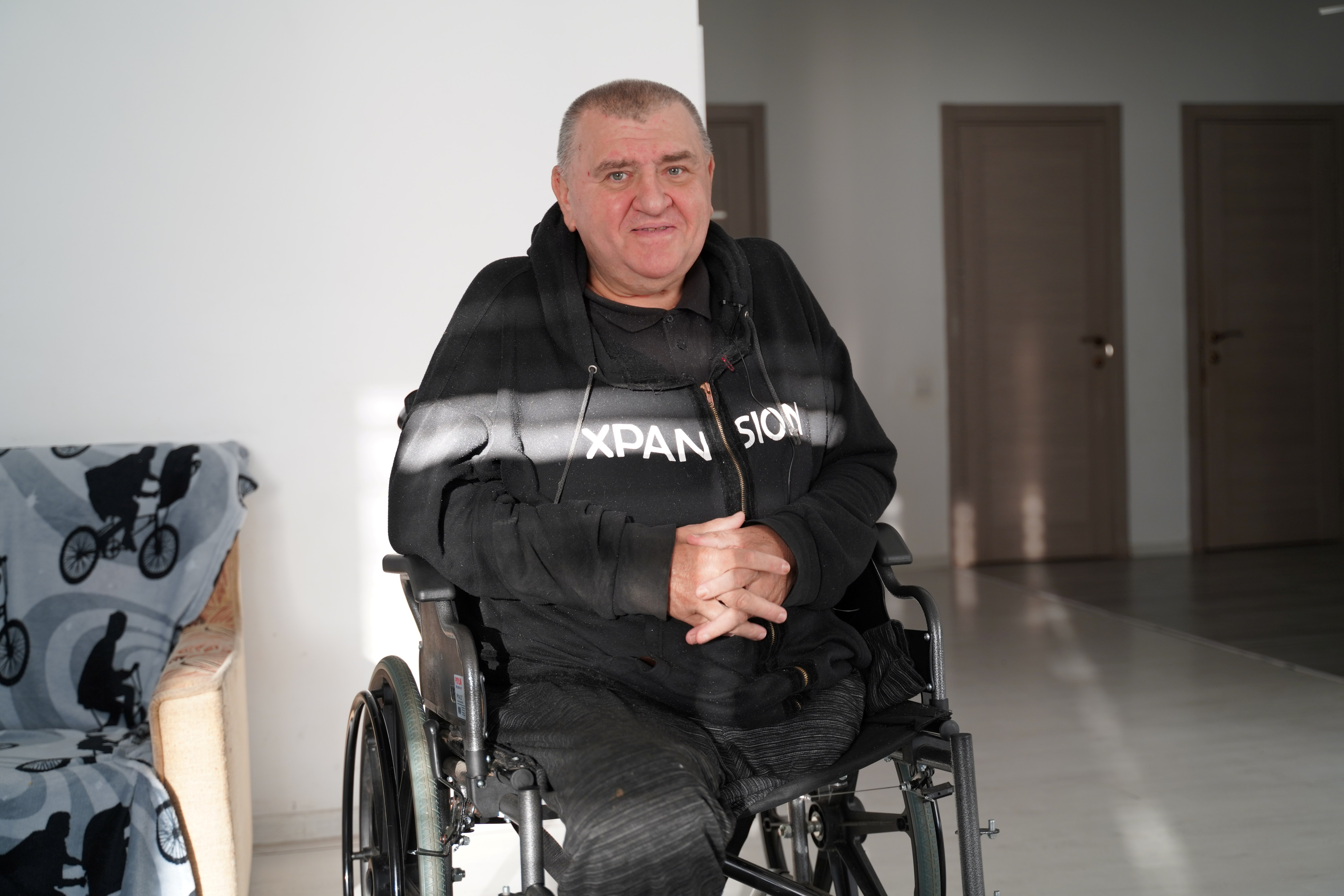
Andrii was evacuated in late summer of 2025, together with his wife and sister. Living with a disability, leaving home was not simply a matter of packing a bag and boarding a train.
“We were first taken out in an armored vehicle to a safer district in the region. From there, we traveled by bus with more than 30 other people. It was crowded, but everyone understood why we had to leave,” Andrii recalls.
The family spent nearly two weeks in transit location waiting while humanitarian workers searched for accommodation that would be suitable for Andrii’s mobility needs. Eventually the family was relocated to Ternopil region where a collective site “Open Hearts” is designed for persons with disabilities.
“It was important to find a place where I could move independently and maintain, at least to some extent, the way I lived before. In a standard collective centre, it is very difficult to move around in a wheelchair, let alone meet other daily needs,” he explains.
Information and support available upon arrival
Since the start of the full-scale invasion, the volunteers in Ptaha Ukrainy have met more than half a million people at evacuation points.
“Each of those half a million cases is a separate story. A separate tragedy we try to support,” says Valentyn Bordun.
Through a UNHCR-supported project, Ptaha Ukrainy operates a hotline that provides crucial information on accommodation, documentation, employment, and immediate assistance. This service helps ensure that people arriving at transit points or collective sites know where to turn for help, even if they arrive unexpectedly or without any documents.
UNHCR and its NGO partners also remain actively engaged at interim evacuation points and collective sites for the most vulnerable internally displaced people – as well as in the transit centres set up by authorities in frontline regions. Besides providing emergency support such as cash assistance, psychological first aid and legal counseling, UNHCR and partners work to strengthen reception capacity when and where needed and to ensure that people with special needs are supported and referred to appropriate services and adequate accommodation.
Across Ukraine, UNHCR supports some 400 community-based organizations, like Ptaha, many led by internally displaced people themselves, who are doing vital work and activities to both ensure humanitarian support and promote inclusion and recovery of displaced people in host communities.
When staying becomes impossible
For some, the decision to leave comes only after a single moment makes staying longer impossible. Tetiana Morozova lived in Bakhmut, Donetsk region, under constant shelling. “You could not tell day from night anymore,” she recalls.
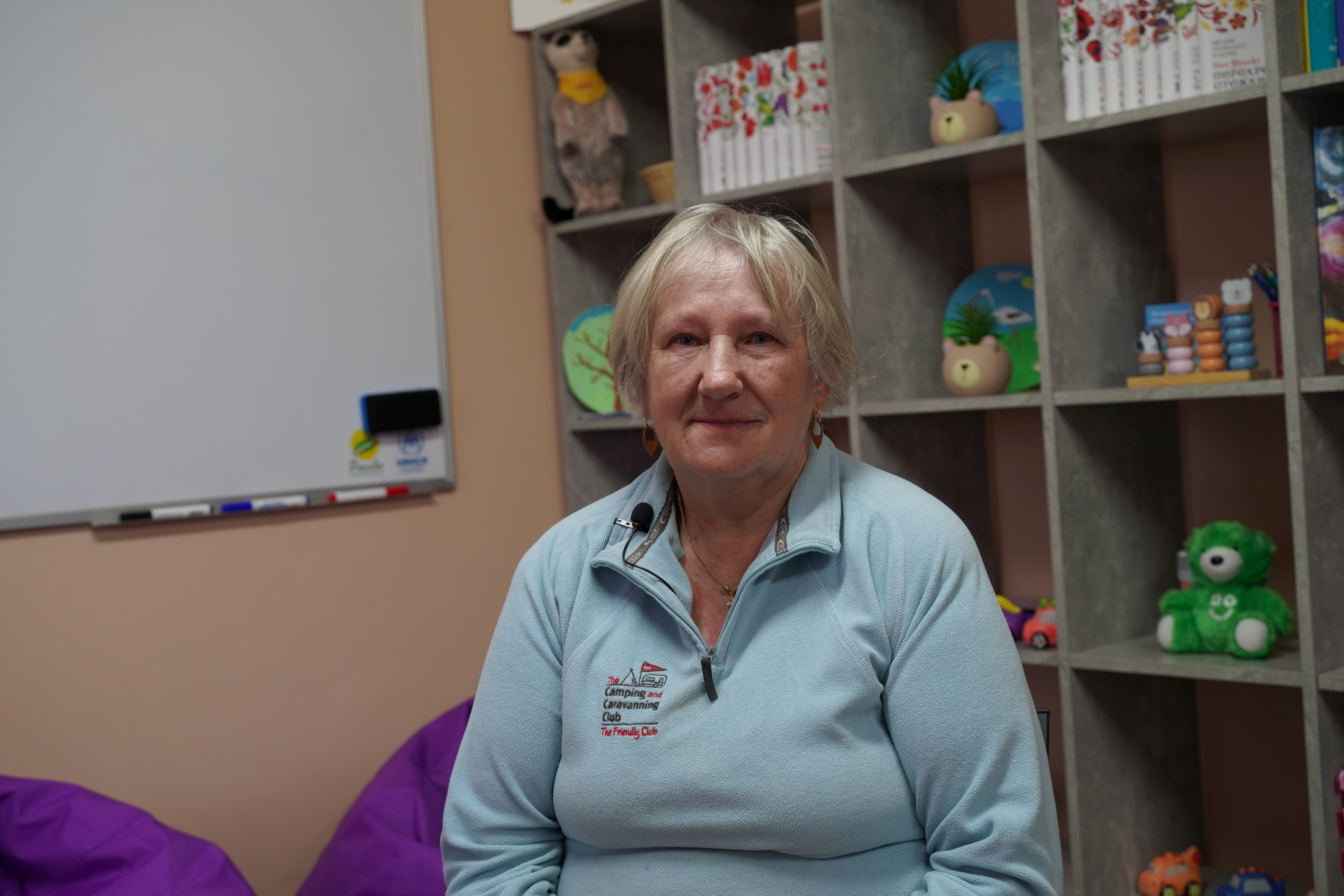
One day, a rocket struck the building where she and a friend were staying. Her friend was severely injured and taken for treatment further west. Shortly after, Tetiana followed. “This was the last drop,” she explains. “Staying longer would mean to be ready to die.”
With no family members to rely on, the two women chose to remain together. They now live in Khmelnytskyi Crisis Social Services Centre, which supports evacuees from frontline regions who are left alone in difficult life circumstances.
“We were welcomed warmly. People helped us with documents and assistance,” says Tetiana who despite feeling safe and cared for, still long for home. “You always want to go home, even when it only exists in memory. There is nothing to return to now — only ruins.”


