
Our Latest Articles
The future is data (and it’s here already)
At the end of September 2024, world leaders are coming together in New York City to convene a variety of high-level events. Between 22-23 September, the Summit of the Future will take place, which has been described as a once-in-a-generation opportunity to mend eroded trust and demonstrate that international cooperation can effectively tackle emerging threats as well as opportunities.
Collaboration gone right – UNHCR and WFP take data sharing to the next level in Tanzania refugee camps
It is common practice for UNHCR, the UN Refugee Agency, and WFP, World Food Programme, to collaborate in some of the world’s most difficult humanitarian responses. While UNHCR is mandated to protect those forced to flee, WFP is responsible for delivering food and life-saving assistance in emergencies and protracted refugee situations. The two organizations work together to serve the most vulnerable populations. As part of this collaboration, UNHCR and WFP may need to exchange some information on the forcibly displaced populations to ensure they receive targeted food assistance in a dignified manner.
Costa Rica’s refugee and migrant workers: a boost for growth
Despite challenges like informality and wage gaps, the contribution of refugees and migrants to Costa RIca’s labour force has been significant to Costa Rica’s economic growth.

Ensuring everyone counts: working together to include stateless and displaced persons in civil registration systems
In today’s interconnected world, the ability to prove one’s identity isn’t just a legal formality—it’s a fundamental human right that unlocks access to a wide range of services and opportunities. For many, having a birth certificate or an ID card is something easily taken for granted. But for migrants, refugees, and stateless people, legal recognition is crucial for securing rights and accessing essential services. This is where Civil Registration and Vital Statistics (CRVS) systems play a pivotal role, ensuring that every person is recognized under the law, regardless of their circumstances.

Data-driven support for refugee self-reliance in East, Horn and Great Lakes of Africa
The role of data is crucial. Investing in data collection and analysis helps understand challenges, target interventions, and measure impact for refugees and host communities.

A Pen Through Time: Nicholas Morris’ 27-Year UNHCR Journey
In every journey, countless stories are born. Imagine being an envoy for over 27 years with a humanitarian organization like UNHCR – how many tales await narration? Beyond that, consider the wealth of valuable information one can accumulate for research or organizational purposes. Nicholas Morris was one such precious staff member who worked for UNHCR from 1973 until 2001, with hundreds of fascinating stories to share.
Biometrics innovation: Transforming the way we collect fingerprints at UNHCR
In 2002, UNHCR introduced biometrics, and leveraged the technology to manage the identity of the people it serves effectively. By capturing up to 10 fingerprints, 2 irises and a face photo during the initial encounter, biometrics play a crucial role from confirming an individual’s physical presence to providing assistance. UNHCR’s Biometric Identity Management System (BIMS) serves a diverse user base including UNHCR staff, partners, governments, and soon refugees themselves through self-service applications, all in a user-friendly manner. While BIMS has undergone countless improvements throughout the years, the biometric scanner devices used have remained largely unchanged.
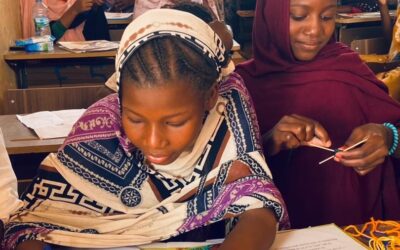
Measuring foundational learning in forced displacement: field insights and lessons
As part of a larger holistic learning measurement project to address the lack of data on learning outcomes of refugee children, UNHCR piloted a learning assessment in Mauritania.

Transforming lives through education: a brighter future for refugee children
Imagine a world where every child, regardless of their circumstances, has the chance to learn, grow, and succeed. For refugee children, education is not just a right; it’s a pathway to self-reliance. Over the past decade, we’ve seen a global movement recognizing the urgency of integrating refugee children into national education systems as swiftly as possible. Yet, the reality is stark: many refugee children are still missing out on this vital opportunity. Around a third of primary school-aged refugee children remain out of school (UNHCR, 2023). It’s time to change that.

Aligning public and private interests to advance financial inclusion for displaced persons and their hosts
What makes for effective public-private partnerships when it comes to advancing financial inclusion? Having common goals, trust, and knowing the strengths and limitations of partners.

A century of mobility: A glimpse into the history of refugee travel documents
By Charalampia Armpounioti and Amanda Stovall © UNHCR/Jose Cendon The idea of travel documents for refugees dates back to Fridtjof Nansen, first High Commissioner for Refugees, who introduced the Nansen passport. An exhibition aimed to shed light on the history of...

The private sector increases work-based integration for Venezuelan refugees and migrants in Colombia
Effectively integrating refugees and migrants in labour markets boosts productivity, increases the availability of skilled workers, and drives economic growth.