Hungary
Hungary
In Hungary, UNHCR collaborates with the government and a broad network of partners to support Ukrainian refugees, advocating for access to social protection for all Temporary Protection beneficiaries and working with stakeholders to align Hungary's asylum system with European Union and international law.


Are you a refugee, asylum-seeker or stateless person looking for help? Visit the HELP site to find support and services from UNHCR.
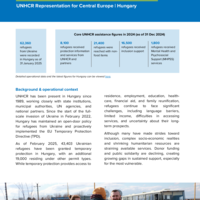
UNHCR has been present in Hungary since 1989, working alongside government institutions, municipalities, civil society, and UN agencies to strengthen national protection and inclusion systems.
Hungary is a party to the 1951 Refugee Convention and its 1967 Protocol, as well as the 1954 and 1961 Statelessness Conventions, and applies the EU Temporary Protection Directive. Since the onset of the full-scale invasion of Ukraine, tens of thousands of people have found safety in Hungary under this framework.
UNHCR supports authorities in upholding fair asylum procedures, including through renewed refugee status determination training for asylum officials after a decade-long pause, and through strategic litigation before the European Court of Human Rights, reinforcing safeguards against detention, border pushbacks, and collective expulsions.
Through its partners, UNHCR provides refugees with specialized mental health and psychosocial support delivered by a flexible pool of experts, and promotes socio-economic inclusion through job fairs, employer engagement, and tailored guidance for businesses on hiring refugees. Alongside these efforts, UNHCR continues to support Hungary’s statelessness determination procedure, strengthen child protection, and prevent violence against women and children.
The Hungary multi-country office covers activities in Albania, Bosnia and Herzegovina, Croatia, Hungary, Kosovo (S/RES/1244 (1999)), Montenegro, North Macedonia, Serbia and Slovenia.
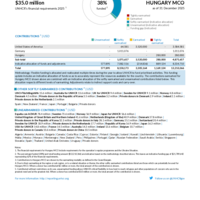
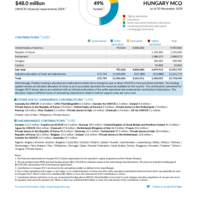
Population and financial overview
Data on population and financials are available at the multi-country office level, which oversees operations across several countries.