



Improved Access to Banking Services for Refugees in Serbia, and Further Steps Needed
Improved Access to Banking Services for Refugees in Serbia, and Further Steps Needed

Over the past year, access to banking services for refugees and asylum seekers in Serbia has improved, following the Recommendation of Measures issued by the Commissioner for the Protection of Equality to the banking sector. So far, 18 out of 20 banks have responded, stating that they will provide services without discrimination. The UN Refugee Agency (UNHCR) will continue working on further improvements in cooperation with financial institutions, Serbian Commissariat for Refugees and Migration (SCRM), the Commissioner and all relevant stakeholders, as concluded at the roundtable “Financial Inclusion of Refugees: Next Steps,” organized by UNHCR.
Access to banking services, primarily payment accounts, is essential for the life, integration, and economic survival of people forced to leave their countries due to conflict and persecution, who are starting anew in Serbia. Refugees and asylum seekers have a fundamental need for payment accounts to receive and use monthly wages or financial assistance. This is their basic right, linked to material reception conditions defined in the Law on Asylum and Temporary Protection.

“We express our sincere appreciation to the Commissioner for the Protection of Equality for the recommended measures, as well as to other partners, because we can gladly state that all individuals who sought UNHCR’s support this year successfully opened payment accounts. While occasional challenges remain, they are significantly fewer than in previous years and typically stem from banks’ risk management practices or difficulties in recognizing personal documents of forcibly displaced persons,” underlined Soufiane Adjali, UNHCR Representative in Serbia.
He further noted that, moving forward, it will be important to enable refugees to visit bank branches and open accounts independently – just like any other client – without the need for UNHCR or partner mediation, as well as to facilitate access to other banking products important for their quality of life, such as credit and savings.
It was emphasized that some banks, in communication with UNHCR, noted their readiness to provide mentoring and credit support to refugee entrepreneurs, and that it would be desirable for more financial institutions to offer such cooperation. This would increase the number of refugees starting businesses, thereby contributing to their new beginnings in Serbia and to the domestic economy.

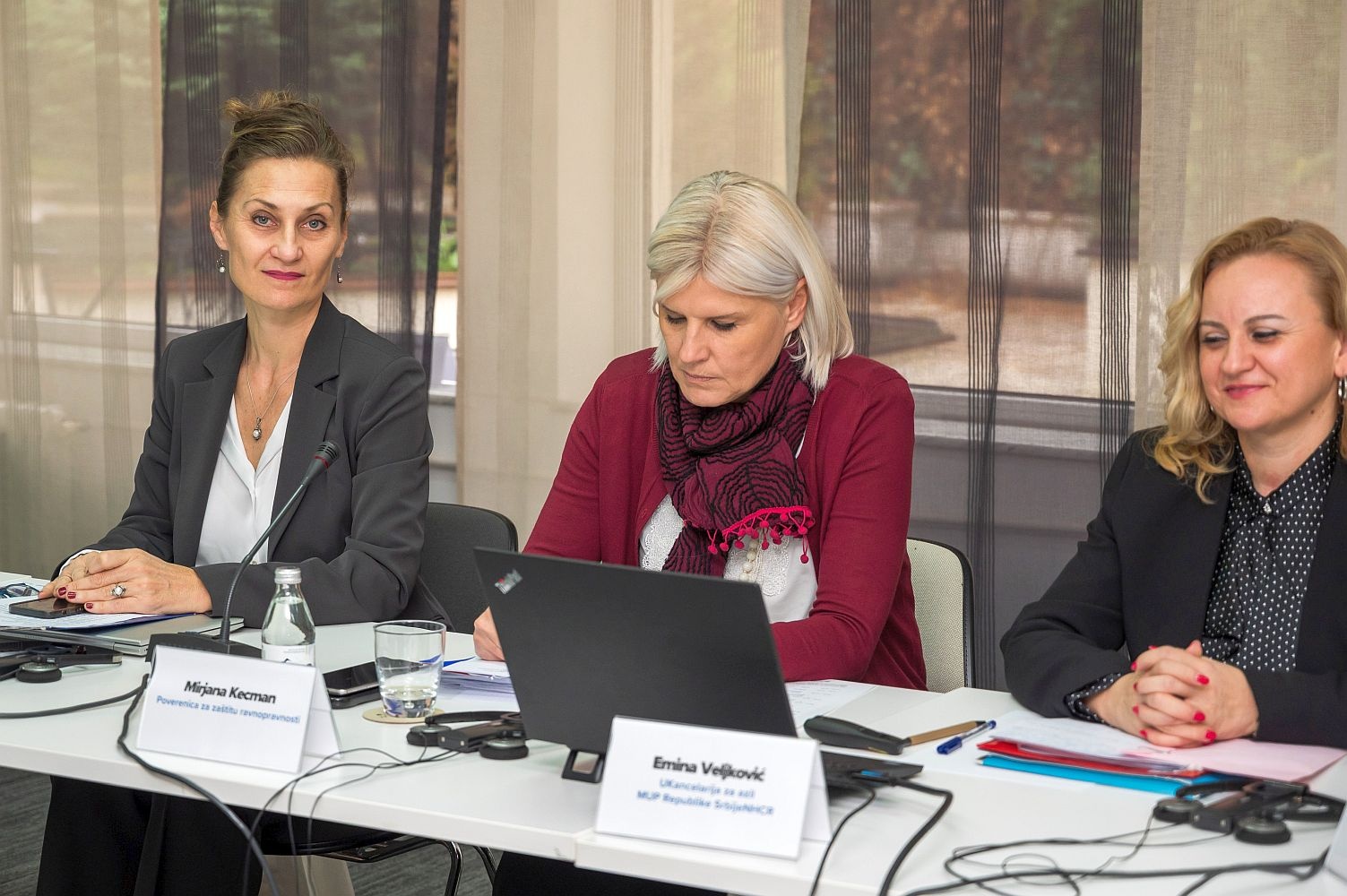
“It is commendable that banks have taken measures and actions in line with the Commissioner’s recommendation, after which we have not received complaints on this basis. It should be borne in mind that access to banking services is an important step toward exercising all other rights of refugees prescribed by law. In this sense, the measures banks take to improve the accessibility of their services represent an important segment in improving the position of these people,” said Mirjana Kecman, Assistant to the Commissioner for the Protection of Equality.
UNHCR, in cooperation with the Association of Serbian Banks, will further work on informing bank employees through workshops, training sessions and sharing information related to personal documents, rights, and the status of refugees in Serbia.
In line with the conclusions of last year’s meeting on this topic, UNHCR, SCRM, and the Asylum Office of the Ministry of Interior remain available to banks with their expertise and data to jointly contribute to further improving the financial inclusion of forcibly displaced persons.
Roundtable conclusions are available here.
***
This activity is organized within the project "EU Support to Migration Management: Fostering the Integration of Refugees and Migrants," implemented by UNHCR Serbia in partnership with IOM Serbia and SCRM, with the support of the European Union. The organizer is solely responsible for content that does not necessarily reflect the official views of the European Union.


