



Cash assistance allows single mother to start rebuilding her life
Cash assistance allows single mother to start rebuilding her life

For 30-year-old Olena, life as she knew it was turned upside down in February 2022. Already a few days before Russia’s full-scale invasion began, she saw soldiers moving close by her small village of Kokhanivka in Kherson region in southeast Ukraine. Shortly after, the area was under occupation.
For Olena and her then husband, their two daughters, Sofiia (12) and Dasha (11), were the main reason they decided to flee – but it was not an easy decision.
“It was extremely difficult, as we had to think about our parents. They didn’t want to leave. My father told me that he would not throw away what he had built his whole life,” Olena recalls.
For many months, the family was displaced. First in Kherson city, and then they went to Zhytomyr in central Ukraine, where they had relatives. Communication with their parents was limited, as it was difficult getting phone and internet connection under occupation.
When Olena’s hometown was retaken by Ukraine later in 2022, she wanted to return immediately – but as the entire area was heavily mined, the authorities asked them to wait. In January 2023, they were finally able to return.
“This is home, and we wanted to come home,” she says.

But the family returned to a village that was significantly damaged from the fighting and occupation.
“Our house was partially destroyed. Windows were blasted out, and there were holes in the roof, but the biggest challenge was that we had no electricity for eight months. People with generators were kindly sharing, so we could survive,” Olena remembers.
The family managed to find solar panels for electricity. Authorities and demining organizations continued the demining work and awareness raising, including for the children in the community. They received support from humanitarians, including UNHCR, the UN Refugee Agency, and its NGO partners. When she and her husband divorced, Olena and her daughters moved into another house in the village, and slowly started to get back on their feet. But once again, everything changed, when the Kakhovka Dam in southern Ukraine was destroyed in June 2023.
“This is home, and we wanted to come home.”
“There was massive flooding in the village. Many houses close to the river were completely flooded and damaged, and people could not stay there. We were lucky, our house still stands, but we have not had functioning water piping since.”
Olena is working at the village’s Point of Invincibility – a public facility, where local residents can find a warm space as well as electricity and internet access during the power outages that are regularly caused by the Russian attacks. This work allows her to cover her rent – but she is also relying on support from her parents and brother to provide for the small family. For a year and a half she has not been able to afford the repairs of the water piping, meaning the house had no running water.
In early 2024, Olena was enrolled for cash assistance from UNHCR, finally allowing her to pay for the proper repairs and installation of water piping – so that she and her daughters have access to running water in their house again.
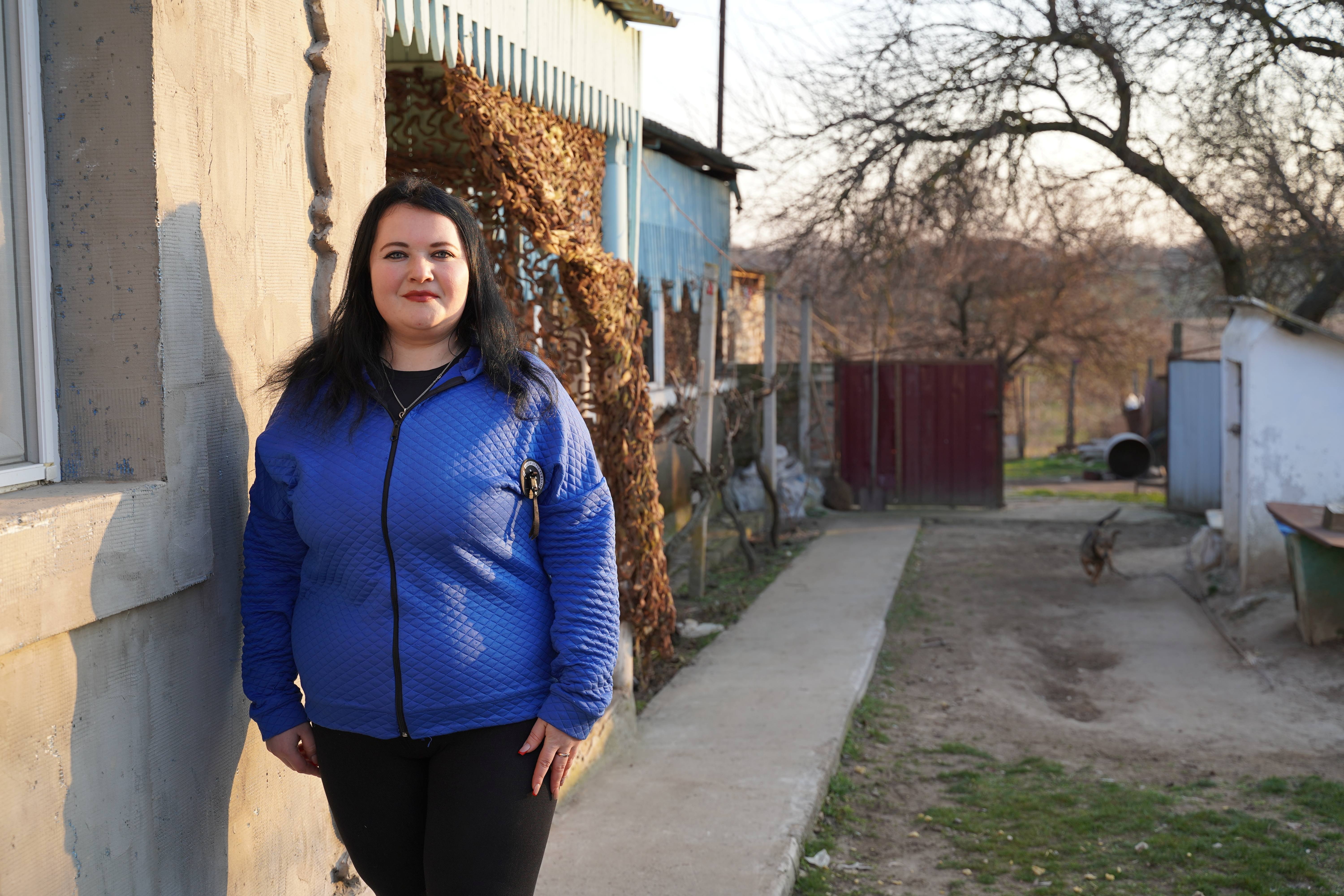
In Ukraine, UNHCR operates its largest cash assistance programme. Since the beginning of the full-scale invasion, more than 2.2 million people, including internally displaced people and returnees like Olena have been supported with crucial cash assistance. 72% of them are women and children. This is possible thanks to the strong and flexible support from Germany as well as other government and private donors. With cash assistance, people have the dignity of choice to cover their most pressing needs, and at the same time it boosts the local economy and recovery efforts.
“I wish for people around the globe to never face what Ukraine has faced. I want peace. Here and across the world. But we are grateful to all the people, and all the international partners and others who have been helping us repair and rebuild. Not just us, but also others in the village, who have received support,“ says Olena.


