
Data Blog
Advancing the collection and use of data to inspire solutions for forced displacement

A new chapter for Afghan returnees: gains, gaps and the long road ahead
A post-return monitoring survey shows Afthan returnees gain jobs and earnings over time, but many still face gender gaps, unmet needs, and rising debt.

Collecting data on the forcibly displaced is essential for better inclusion
The pathway towards the inclusion of refugees, IDPs, and stateless persons in national systems starts with mainstreaming them into national statistics exercises. But more is needed. Experience shows these populations need champions to ensure their inclusion in national development plans.
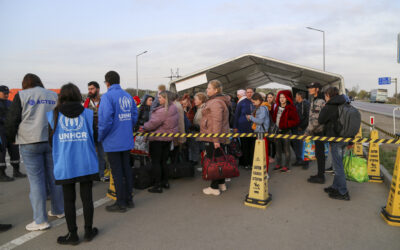
The Power of Now: Nowcasting Refugee Population Figures at UNHCR
UNHCR developed a Nowcasting dashboard to provide an estimate of actual forced displacement figures when official figures are unavailable with an accuracy of close to 99% compared to officially published figures at the global level. These nowcasts are incredibly important in the humanitarian sector as they inform UNHCR and its partners of the rapidly changing situation in almost real-time and enable more efficient decision-making such as emergency resource allocation.
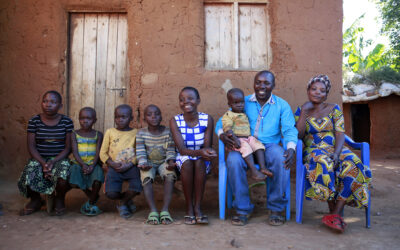
Refugee children are disproportionately poorer (and thus more vulnerable) than other household members and as a result require a larger share of social assistance to meet their basic needs
There is scope for improving the targeting of refugee child poverty, with potentially substantial gains in children’s wellbeing, if data exercises are designed to allow for intra-household poverty calculations.
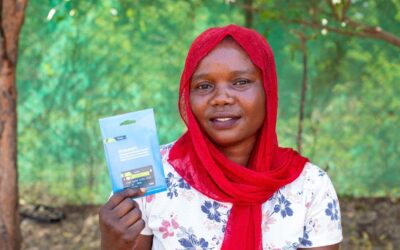
Gaining ground on refugee financial inclusion through advocacy, innovation and partnerships
Refugees’ financial needs evolve over time. Access to affordable and useful financial services ena-bles their socioeconomic inclusion and helps them better plan for their future.
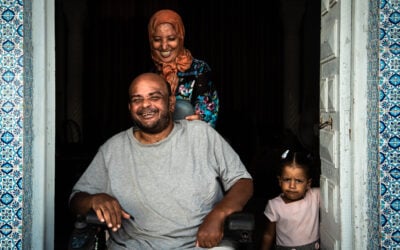
More countries are including refugees in national health systems, and development partnerships are key to the process
To include refugees sustainably and effectively, there must be a well-supported health system capable of meeting the needs of refugees and host communities.
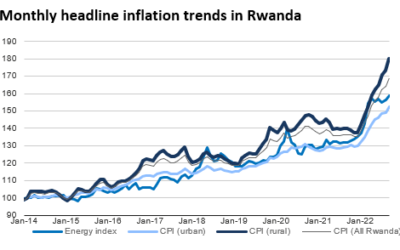
Building shock responsive assistance for refugees in Rwanda: a tale of inflation and chronic vulnerabilities
A shock-responsive assistance distribution system that allows for adjustments of assistance could be more effective in helping refugee communities cope with changes in the wider economy.
Rwanda lacks recent data on employment, skills, consumption – the cornerstones of good socio-economic programming
Reliable data is essential when planning appropriate solutions for refugees and surrounding communities. Data gaps are potential obstacles when advocating for the involvement of development partners to invest in effective programmes.

Five approaches for more refugee-friendly cities
On World Cities Day, UNHCR celebrates the mayors and local authorities who show solidarity with their refugee, internally displaced and stateless residents.
Social protection and humanitarian systems must work together to boost resilience and meet the needs of the forcibly displaced
While in the past emphasis lay on camps serviced by humanitarian actors, we now know that inclusion of refugees, IDPs, and stateless people in the hosting context is not only a good option, but a necessity to achieve better protection outcomes and to lay the ground for solutions.

Are education recovery systems including the forcibly displaced?
Sondous, 8, a Syrian refugee who has lived in Zaatari camp, Jordan, her whole life. The COVID-19 Global Education Recovery tracker (GERT) is a joint effort between the World Bank, UNICEF, and UNHCR to track the operational status of schools over the last two years....
About the blog
The UNHCR Data Blog brings attention to data and research on protecting the rights and wellbeing of people forced to flee. It is also a forum to discuss research innovations in data-scarce forced displacement settings.
Useful links
UNHCR Data Transformation Strategy 2020 – 2025
UNHCR Socioeconomic Data and Analysis
Guidance on Registration and Identity Management
Registration and Identity Management at UNHCR
Socioeconomic Assessment Toolkit
Orientation for the early stages of planning a socioeconomic survey
Guidance on sampling household level surveys from UNHCR proGres registration data