



Timely support helps refugee families meet urgent needs across Kenya
Timely support helps refugee families meet urgent needs across Kenya

For years, Nyanzira Hellen worried less about her own health than about how she would afford the food her doctor said she needed.
After fleeing insecurity in Burundi and rebuilding her life in Kakuma, the 63-year-old refugee supported her family by selling vegetables while her husband worked as a boda boda rider. But after her husband died and a leg injury left her with a disability, even following medical advice became difficult.
“The doctor always tells me that because of hypertension, I need a balanced diet,” she says. “I ask myself, where will I get this without money? Things like milk, fish, legumes and other foods are not easy for me to afford.”
When she received targeted cash assistance through UNHCR, supported by the Kenya Humanitarian Fund, she was able to buy food she had long gone without and travel for hospital check-ups.
“The support came when I needed it. It helped me buy things I could not afford before and made it easier for me to go for my hospital check-ups.”
Hellen is one of around 78,000 vulnerable refugees in Kakuma receiving targeted cash assistance through support from the Kenya Humanitarian Fund. In Dadaab, around 29,000 refugee families are also benefiting from the programme, helping households meet urgent needs with dignity while giving them the flexibility to decide what matters most.
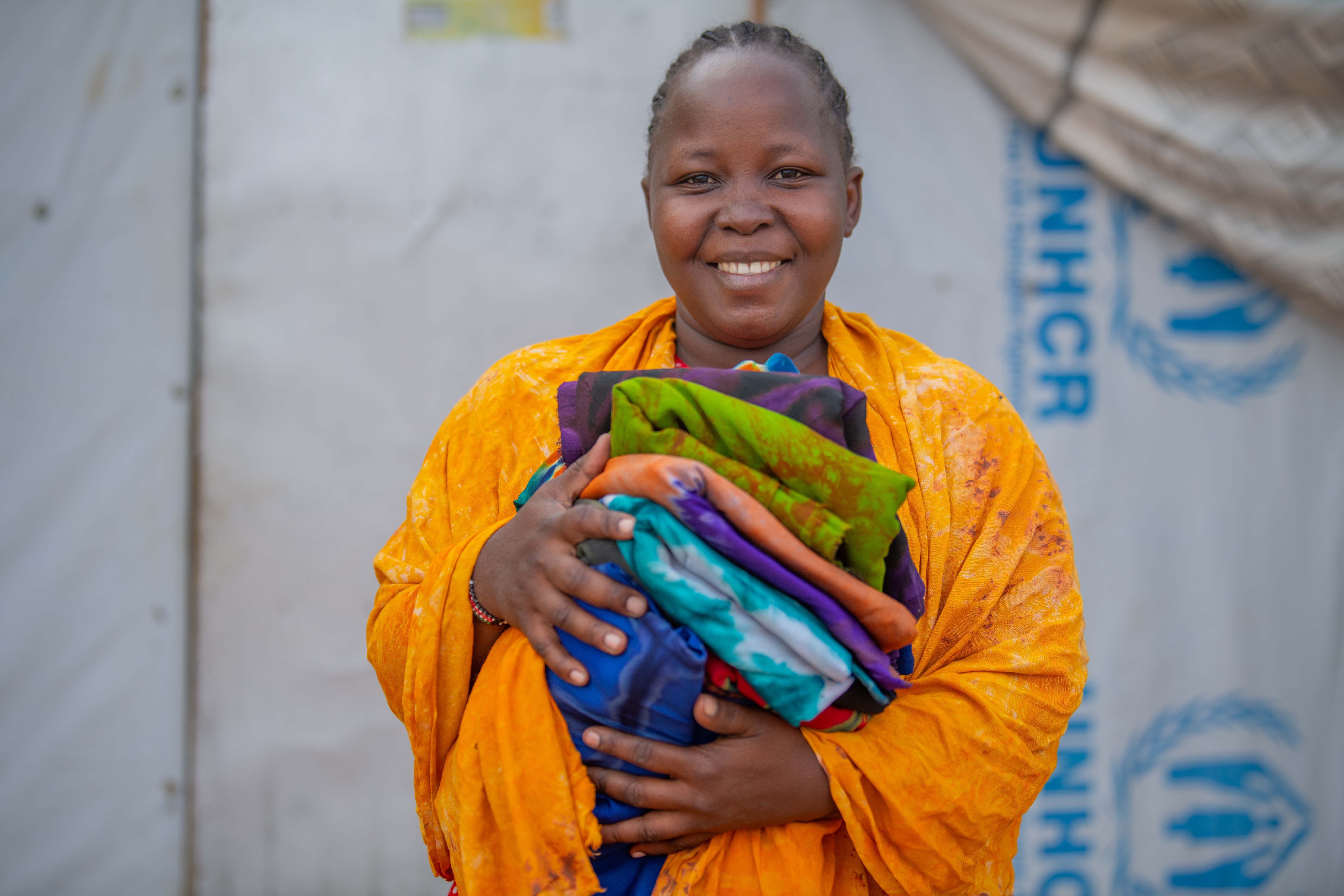
Ellah Loice runs a tie-and-dye business from her home in Hagadera, Dadaab
More than 700 kilometres away in Dadaab, South Sudanese refugee Ellah Loice is planning to use the assistance to strengthen the small tie-and-dye business she runs from her home.
After her husband was killed, Ellah fled conflict in South Sudan and now supports her four-year-old son and younger brother on her own.
“The first thing I will do is buy more fabric and dyes for my tie and dye business. If I have enough materials, I can produce more, sell more and continue teaching other women. That means I can support my son and my younger brother while helping others build their own skills.”
For families like Hellen and Ellah, cash assistance provides the flexibility to pay for healthcare, buy food, cover transport costs or invest in livelihoods while supporting local markets.

UNHCR Kenya representative Fatima Mohammed Cole launches road rehabilitation activities in Kakuma.
Support from the Kenya Humanitarian Fund extends beyond cash assistance. In Kakuma, the funding is helping protect children from malaria by strengthening community health interventions that have reached nearly 60,000 children under the age of 10.
It is also supporting the rehabilitation of key community roads, improving access to schools, health facilities and water points while creating short-term income opportunities for thousands of refugees and members of the host community.
Together, these interventions are helping vulnerable refugee families meet urgent needs today while strengthening essential services that benefit both refugees and the communities hosting them.


