
Our Latest Articles

A new chapter for Afghan returnees: gains, gaps and the long road ahead
A post-return monitoring survey shows Afthan returnees gain jobs and earnings over time, but many still face gender gaps, unmet needs, and rising debt.
Project Flow: Solarizing water systems for refugees and their hosts through innovative finance
Congolese refugees who fled the violence in the Democratic Republic of the Congo (DRC) to Burundi, use a water point at a hosting site in Rugombo, Cibitoke Province, in March 2025. © UNHCR/Charity NzomoWith Project Flow, UNHCR is pioneering a smarter way to solarize...
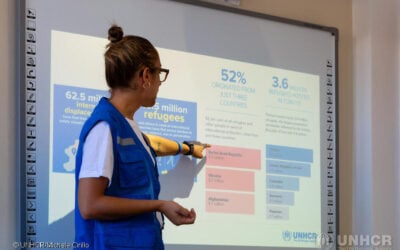
Launch of UNHCR’s Statistical Quality Assurance Framework (SQAF)
By Edgar Scrase and Hyunju Park A UNHCR staff member presents key findings from the 2023 Global Trends Report. UNHCR/Michele Cirillo Released in June 2025, the new UNHCR Statistical Quality Assurance Framework for Official Statistics (SQAF) is a significant step...
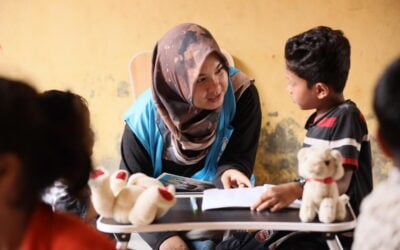
Bridging classrooms: teacher-led innovations on the front line and global lessons on refugee education
Teachers step up when formal systems fall short, according to global evidence that shows what works in refugee education.
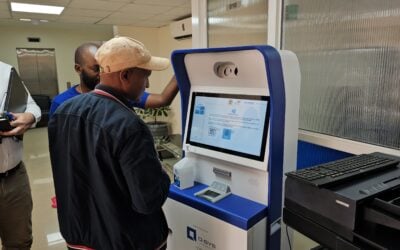
LISA: transforming refugee verification through self-service
By Simon Pierre Diouf and Kelvin Miami A refugee reads the privacy notice before proceeding with verification. © UNHCR/Arnold Snell UNHCR’s Regional Bureau for the East and Horn of Africa and the Great Lakes (EHAGL) is piloting a new self-service kiosk application...

UNHCR Records and Archives: Interesting Times
By UNHCR Records and Archives Section To borrow a Gen-Z phrase, International Archives Week ‘hit different’ in 2025. It was far from a celebration this year. As has been widely reported, the humanitarian sector has been facing a calamitous financial shortfall –...

Unlocking financial access for refugees: highlights from the June 2025 DLA Piper International–UNHCR panel in London
Financial inclusion is a cornerstone of recovery. In a recent event, UNHCR joined former refugee entrepreneurs, regulators, and financial service providers to exchange policy insights and share practical solutions that are helping refugees access the financial systems they need to rebuild their lives.
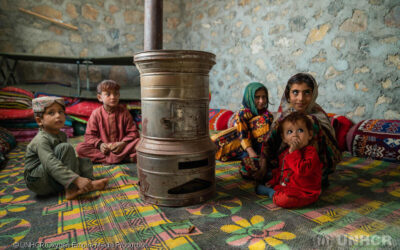
From Data to Action: OECD-UNHCR Datathon Harnessing Data for Forcibly Displaced and Stateless Children
By Andrea Pellandra and Alejandra Moreno Ramirez, UNHCR's Global Data Service The UNHCR Provided Earthquake-Resilient Shelters with Winter Heating in Barmal District, Paktika, Afghanistan. © UNHCR/Oxygen Empire Media Production In April 2025, UNHCR and...

Transforming UNHCR’s buildings to be physically accessible and inclusive
By Reham Fties, UNHCR Land and Buildings Officer Physically accessible entrance to UNHCR’s compound in Ouagadougou, Burkina Faso. ©UNHCR/Boro Lassina Over 20 years of my professional life has been fuelled by my passion for architecture and humanitarian work. After a...

The humanitarian funding crisis: a looming health catastrophe for refugees and their host communities
The current funding crisis is hitting public health and nutrition programmes hard, disrupting or dismantling vital services for refugees and host communities. The impact extends beyond individual hardship, undermining the stability and resilience of entire communities.
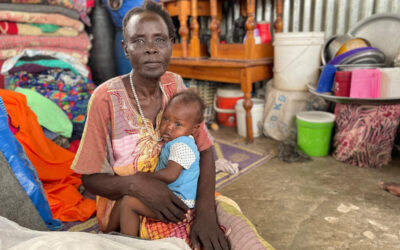
Measuring absorption capacity: a new tool for inclusive response and integration planning in South Sudan
As displacement continues to evolve across South Sudan and the region, a new methodology offers a scalable model for action – placing evidence at the heart of reintegration planning by linking service quality, capacity benchmarks, and new arrival data.

« Maintenant, j’existe » : les réfugiés au Tchad reçoivent un numéro d’identification national
By Simon Pierre Diouf and Mohamed Doumbia Lancement de l’opération d’enrôlement en vue de la délivrance des titres sécurisés aux réfugiés résidant au Tchad. ©UNHCR/Aristophane Ngargoune Un projet novateur visant à améliorer l'inclusion socio-économique des réfugiés...